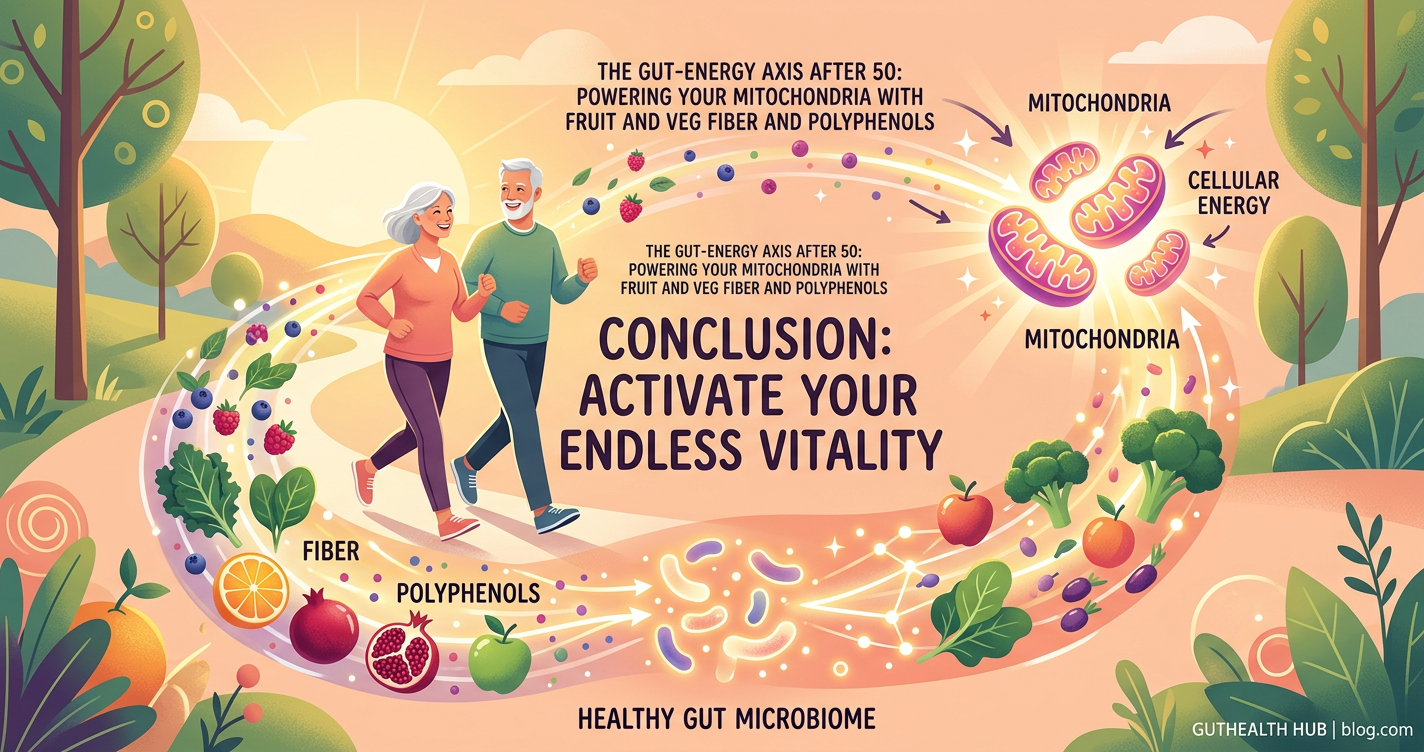
As we cross the threshold of 50, many of us begin to notice a subtle shift in our daily vitality. It is often dismissed as "just getting older"—that afternoon slump that feels a bit deeper, the slower recovery after a workout, or the mental fog that lingers longer than it used to. However, revolutionary research into the gut–energy axis suggests that this decline is not an inevitable consequence of old age. Instead, it is frequently a reflection of a breakdown in communication between our gut microbiome and our mitochondria, the cellular power plants responsible for generating nearly all the energy our bodies use.
To reclaim that youthful vigor, we must look beyond basic calorie counting and focus on the symbiotic relationship between what we eat and how our cells breathe. At the heart of this relationship are two nutritional powerhouses found abundantly in fruit and veggies: fiber and polyphenols. By understanding how these compounds manipulate our internal chemistry, we can effectively "tune" our metabolism to produce sustained, reliable energy well into our later decades.
The Microbiome-Mitochondria Connection: A New Frontier in Healthy Aging
For decades, the gut and the mitochondria were studied as separate entities. The gut was for digestion; the mitochondria were for energy. We now know they are inextricably linked in a bidirectional dialogue known as the "gut–mitochondria axis." In old age, this dialogue often becomes garbled. As the diversity of our microbiome shifts, the signals sent to our mitochondria can change from "produce energy" to "go into survival mode."
The Role of Short-Chain Fatty Acids (SCFAs)
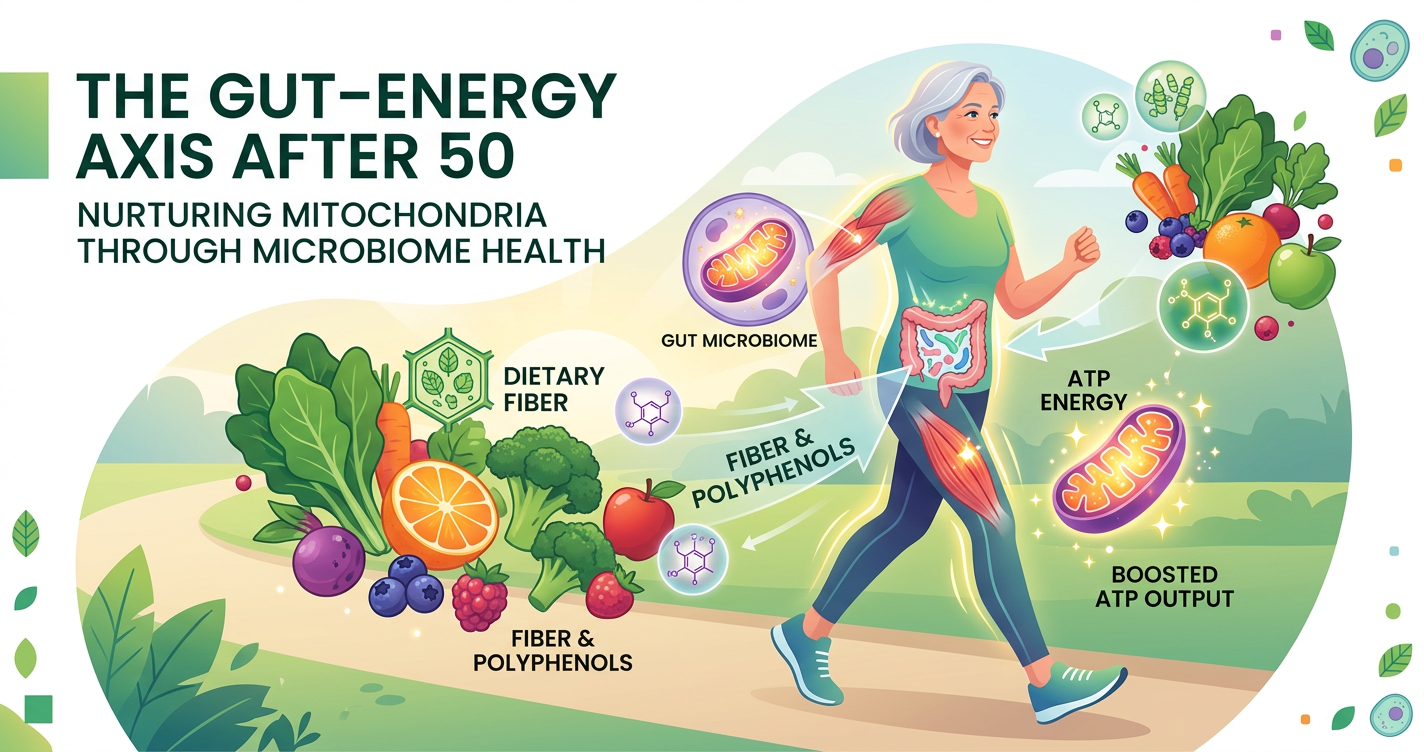
When you consume fiber-rich fruit and veggies, you aren't just feeding yourself; you are fermenting a specialized fuel source for your microbiome. When beneficial bacteria break down fiber, they produce metabolites called short-chain fatty acids (SCFAs), most notably butyrate, propionate, and acetate. These SCFAs act as signaling molecules that travel through the bloodstream and dock directly onto receptors in our mitochondria.
Butyrate: This is the primary fuel for the cells lining your colon, but its effects reach much further. Butyrate has been shown to enhance mitochondrial function by increasing the activity of enzymes involved in the electron transport chain—the process that generates ATP.
Propionate: This SCFA travels to the liver, where it influences glucose metabolism and helps regulate systemic energy availability.
Acetate: Readily crosses the blood-brain barrier, potentially fueling mitochondrial activity in the brain to combat age-related cognitive fatigue.
Mitochondrial Dynamics: Fusion and Fission
Mitochondria are not static beans; they are dynamic networks that fuse together to share resources or break apart to isolate damaged sections. In a healthy gut environment, the abundance of SCFAs promotes "mitochondrial biogenesis"—the creation of new, healthy mitochondria. Conversely, a diet low in fiber leads to a "leakier" gut, allowing pro-inflammatory compounds like lipopolysaccharides (LPS) to enter the blood. These compounds trigger mitochondrial fragmentation, leading to inefficient energy production and increased oxidative stress.
Why 50 is the Turning Point
After 50, the "buffering capacity" of our body decreases. Our microbiome naturally tends toward a state of dysbiosis (imbalance), and our mitochondria become less efficient at clearing out cellular waste. This is why the quality of fiber and the presence of polyphenols become non-negotiable. We are no longer just eating for hunger; we are eating for cellular maintenance.
Polyphenols: The 'Biological Spark Plugs' for Cellular Power
If fiber provides the raw materials for mitochondrial health through SCFAs, polyphenols act as the sophisticated software that optimizes the system. Found in the vibrant colors of fruit and veggies, polyphenols are plant-derived compounds that plants use to protect themselves from UV radiation and pests. When we consume them, they act as "hormetic" stressors—small amounts of stress that trigger a massive protective response in our cells.
Activating the Nrf2 Pathway
One of the most critical roles of polyphenols in old age is the activation of the Nrf2 pathway. This is the body’s master antioxidant switch. When you eat polyphenol-rich foods like blueberries, kale, or pomegranate, these compounds signal the mitochondria to produce their own internal antioxidants, such as glutathione. This is far more effective than taking a vitamin C supplement, as it empowers the mitochondria to protect themselves from the inside out against the "exhaust" they produce during energy production.
Urolithin A: The Gut’s Magic Trick
A fascinating discovery in recent years involves a compound called Urolithin A. It is not found in food directly. Instead, when we eat specific fruit like pomegranates, strawberries, and walnuts, our gut bacteria convert the ellagitannins (a type of polyphenol) into Urolithin A. This metabolite is one of the few known substances capable of inducing mitophagy—the process of recycling old, dysfunctional mitochondria and replacing them with new ones. For many people over 50, the "batteries" are simply old and corroded; Urolithin A helps the body throw away the old batteries and install fresh ones.
Optimizing the Polyphenol "Rainbow"
To maximize mitochondrial energy, variety is essential because different polyphenols target different aspects of cellular health:
Anthocyanins: Found in purple and blue fruit (blackberries, purple carrots), these improve insulin sensitivity, ensuring mitochondria have a steady supply of glucose and fats to burn.
Quercetin: Plentiful in onions and apples, this polyphenol acts as a senolytic, helping to clear out "zombie cells" that drain energy and cause inflammation.
Sulforaphane: Found in cruciferous veggies (broccoli, Brussels sprouts), it specifically boosts mitochondrial enzyme activity to detoxify the body.
Practical Strategies: Eating for the Gut-Energy Axis
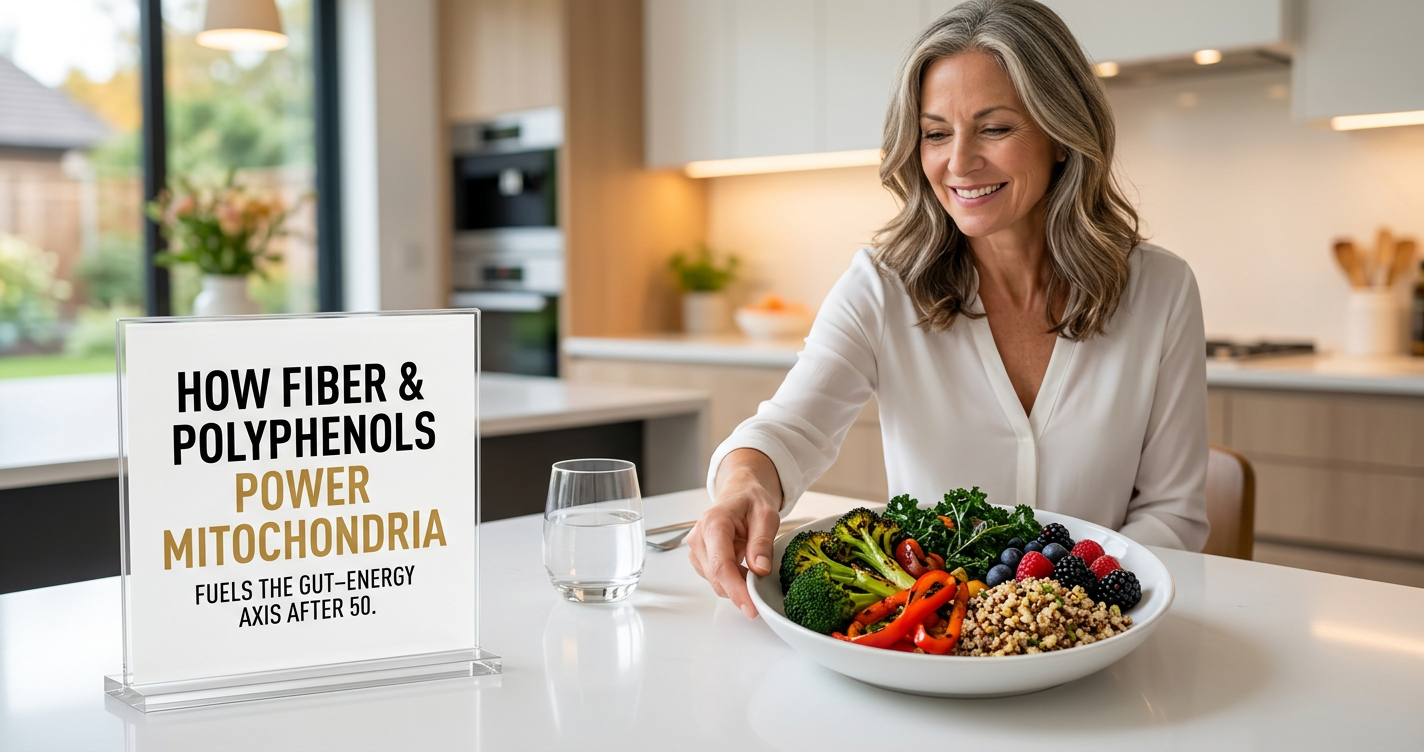
Understanding the science is the first step, but the real transformation happens in the kitchen. Transitioning to a diet that prioritizes the microbiome and mitochondria doesn't require a radical overhaul, but it does require intentionality. When we aim for better energy in old age, we must focus on high-density nutrition that services the gut-energy axis at every meal.
The "30 Different Plants" Challenge
Research suggests that individuals who consume at least 30 different types of plant foods per week have a significantly more diverse microbiome than those who eat fewer than 10. This diversity is the key to producing a wide array of short-chain fatty acids. This includes not just fruit and veggies, but also nuts, seeds, herbs, and spices. A spice like turmeric or cinnamon counts toward your 30, and both contain polyphenols that support mitochondrial efficiency.
Prebiotic Fiber: More Than Just Bran
Not all fiber is created equal. While all fiber is good for digestion, "prebiotic" fiber is the specific kind that gut bacteria love to ferment into those energy-boosting SCFAs. To fuel your mitochondria, prioritize these specific sources:
Jerusalem Artichokes and Chicory Root: Highest sources of inulin, a powerhouse prebiotic.
Legumes: Lentils and chickpeas provide resistant starch, which is fermented slowly in the large intestine, providing a steady drip of energy-related metabolites.
Slightly Under-ripe Bananas: These contain resistant starch that escapes digestion in the small intestine to feed the bacteria in the colon.
Asparagus and Leeks: Rich in fibers that specifically support the growth of Akkermansia muciniphila, a bacterium linked to leaner body mass and better mitochondrial health.
Cooking Methods and Bioavailability
How you prepare your fruit and veggies matters. While some nutrients are lost in cooking, others become more "bioavailable." For instance, lightly steaming broccoli increases the availability of certain polyphenols, while cooking tomatoes increases the levels of lycopene. However, to keep the fiber intact for your microbiome, avoid over-processing. A whole apple is better for your gut-energy axis than apple juice, as the juice removes the fiber "scaffolding" that slows down sugar absorption and feeds your bacteria.
The Importance of Hydration and Timing
Fiber requires water to move through the system and for bacteria to ferment it effectively. Furthermore, giving your gut and mitochondria a rest through time-restricted eating (e.g., an 11-hour eating window) can enhance the process of mitophagy. When the gut isn't busy digesting, the body can focus its energy on "cleaning" the mitochondria, ensuring that when you do eat your polyphenol-rich meal, your cellular engines are ready to fire on all cylinders.
In conclusion, the path to vibrant energy after 50 is paved with the fiber and polyphenols found in a diverse array of fruit and veggies. By feeding your microbiome, you are essentially providing the remote control for your mitochondria. You aren't just eating to live; you are eating to power your life at the most fundamental, cellular level. Start small—add one new vegetable to your cart this week—and watch as your internal power plants begin to hum with renewed life.