The Science of Cellular Fuel: Nitrates and Nitric Oxide Production
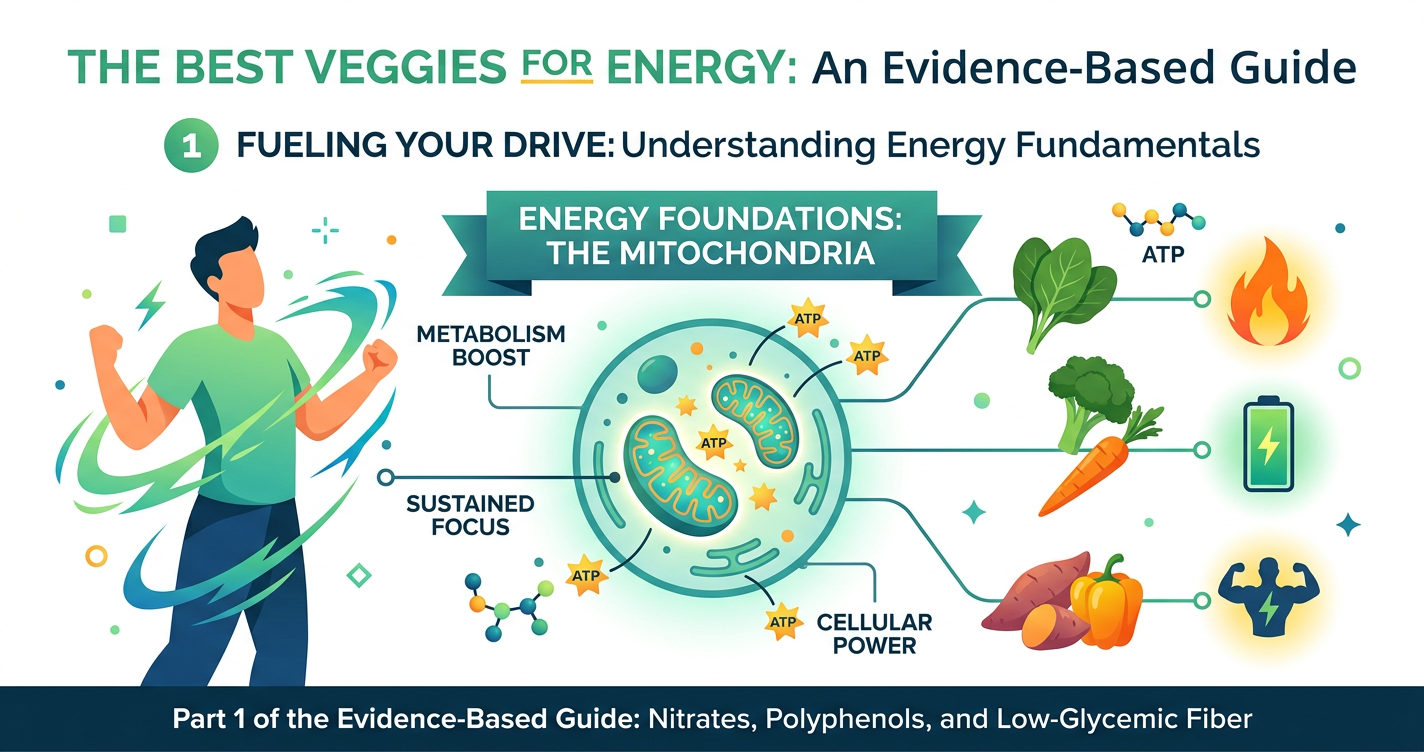
When discussing the best veggies for energy, we must start at the cellular level. Most people associate energy with caffeine or glucose, but true, sustainable physical energy begins with the efficiency of your mitochondria—the powerhouses of your cells. One of the most significant biological pathways for enhancing this efficiency is the nitrate-nitrite-nitric oxide pathway. This process converts dietary nitrates found in specific vegetables into nitric oxide, a signaling molecule that relaxes blood vessels and improves oxygen delivery to tissues.
The Power of Beets and Nitric Oxide
Beets are arguably the gold standard when it comes to nitrate-rich vegetables. Research has consistently shown that the inorganic nitrates found in beets can significantly lower the oxygen cost of exercise. This means your muscles can perform the same amount of work while consuming less oxygen, making your movements more efficient. When you consume beets, your saliva converts nitrates into nitrites, which are then converted into nitric oxide in the stomach and blood. This vasodilation allows for better nutrient delivery and waste removal from working muscles.
Leafy Greens: Arugula and Spinach
While beets get most of the glory, arugula actually contains a higher concentration of nitrates per gram. Arugula is often overlooked, but it is one of the best veggies for energy because it provides a rapid spike in nitric oxide levels. Similarly, spinach remains a staple for those seeking athletic performance and high daily energy levels. The nitrates in spinach help modulate mitochrondrial energy production, preventing the "leakage" of protons and ensuring that the energy your cells produce is used effectively rather than wasted as heat.
Beets: High in betalains and inorganic nitrates for stamina.
Arugula: The highest nitrate density among leafy greens.
Spinach: Rich in magnesium and nitrates for muscle function.
Swiss Chard: Provides a secondary source of nitrates and electrolytes.
Improving Mitochondrial Efficiency
Mitochondrial energy is the foundation of your vitality. When we consume nitrate-rich vegetables, we aren't just giving ourselves a temporary "boost." We are actually training our mitochondria to be more economical. Studies have shown that after just a few days of high-nitrate intake, the amount of ATP (the body's energy currency) produced per unit of oxygen consumed increases. This is why many professional athletes use beet juice concentrates before competitions—it’s a legal, evidence-based way to enhance endurance.
Stabilizing the Engine: Low-Glycemic Fiber and Metabolic Health
The second pillar of sustained energy is blood sugar management. If you rely on sugary snacks for energy, you will inevitably experience a "crash" as insulin levels spike and then plummet. The best veggies for energy are almost always low-glycemic vegetables. These foods provide a steady stream of nutrients without causing volatile swings in blood glucose, ensuring your brain and muscles have a consistent fuel supply throughout the day.
Cruciferous Power: Kale and Broccoli
Kale is a legendary superfood for a reason. As one of the premier low-glycemic vegetables, kale provides a dense matrix of fiber that slows the digestion of other foods in your meal. This slow release of energy is critical for avoiding fatigue. Furthermore, kale is rich in iron and vitamin C; the vitamin C actually helps the body absorb the plant-based iron, which is a key component of hemoglobin—the protein that carries oxygen in your blood.
The Role of Fiber in Energy Regularity
Fiber is often thought of only for digestion, but its role in energy is profound. Soluble and insoluble fiber found in vegetables like Brussels sprouts and asparagus prevent the "glucose roller coaster." When you eat a meal rich in fiber, the glucose enters your bloodstream at a measured pace. This prevents the brain fog often associated with post-meal insulin spikes. By choosing low-glycemic vegetables, you are essentially installing a long-range fuel tank in your body rather than a small, high-pressure one.
Kale: High fiber and high nutrient density for long-term satiety.
Broccoli: Contains sulforaphane, which supports cellular detoxification.
Asparagus: A natural diuretic that also provides steady energy via chromium.
Cauliflower: A versatile low-carb substitute that prevents energy dips.
Microbiome Health and Vitality
Recent research has linked the gut microbiome to overall energy levels. Low-glycemic fiber acts as a prebiotic, feeding the beneficial bacteria in your gut. These bacteria produce short-chain fatty acids (SCFAs), which can be used by the body as an additional energy source. A healthy gut means better nutrient absorption; if your gut is inflamed or imbalanced due to a high-sugar diet, you won't be able to extract the energy-boosting nutrients from your food effectively, regardless of how healthy you eat.
Protecting the Energy Factory: Polyphenols and Antioxidant Defense
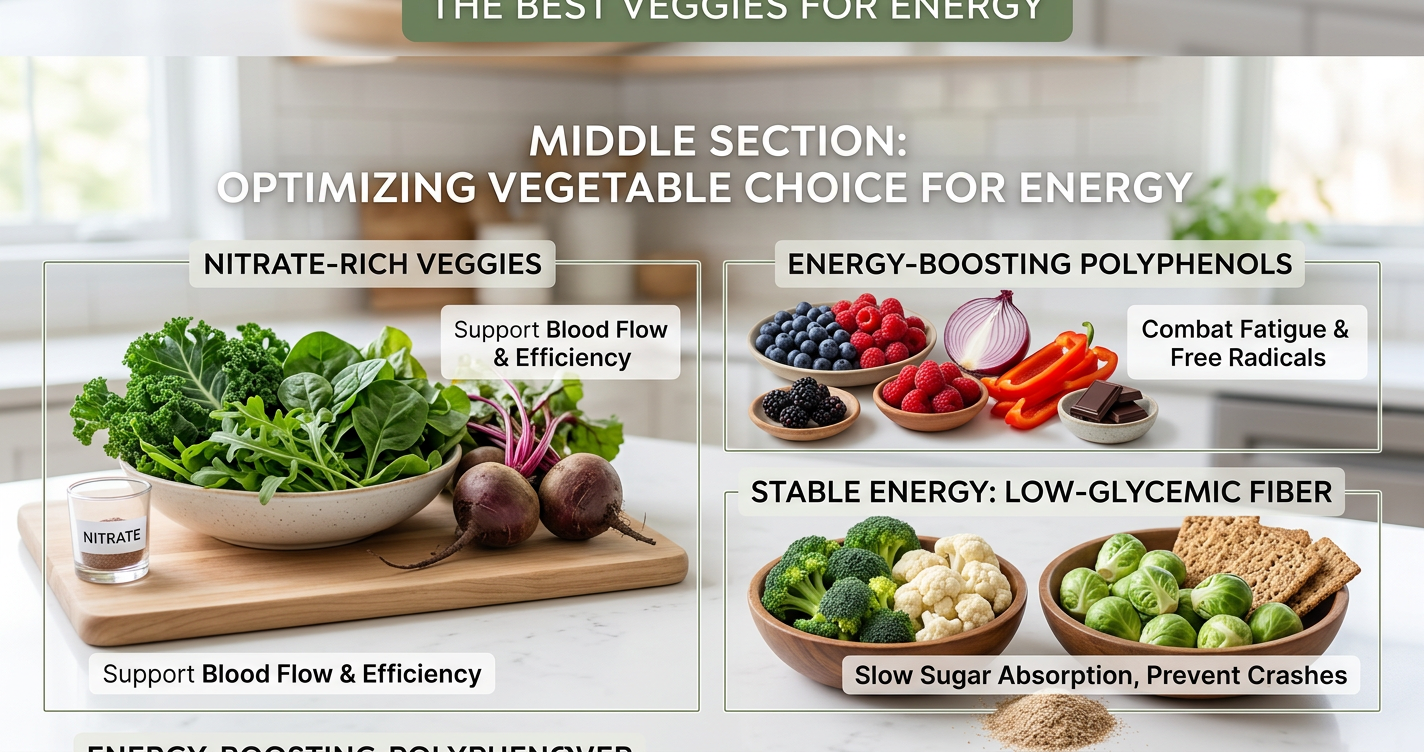
The final component of the energy equation is cellular protection. Metabolic processes naturally produce oxidative stress. If this stress isn't neutralized, it can damage the mitochondria and lead to chronic fatigue. This is where polyphenol-rich vegetables come into play. Polyphenols are bioactive compounds that act as antioxidants and signaling molecules, helping to protect and repair the "engines" of our cells.
Red Cabbage: The Anthocyanin Powerhouse
Red cabbage is one of the most cost-effective polyphenol-rich vegetables available. Its deep purple color comes from anthocyanins, a specific type of polyphenol that has been shown to improve cardiovascular health and reduce inflammation. By lowering systemic inflammation, red cabbage allows the body to redirect its resources toward energy production rather than constant immune repair. Incorporating red cabbage into your diet provides a protective shield for your cells, ensuring that your mitochondrial energy pathways remain clear and functional.
The Synergistic Effect of Phytonutrients
Many of the best veggies for energy contain hundreds of different phytonutrients that work synergistically. For example, the polyphenols in purple carrots or bell peppers don't just "kill" free radicals; they actually activate the body's own internal antioxidant systems (like the Nrf2 pathway). This makes your body more resilient to the stresses of work, exercise, and aging. When you eat a variety of colorful vegetables, you are covering all the bases of cellular defense.
Red Cabbage: Packed with anthocyanins for cardiovascular and cellular support.
Red Onion: High in quercetin, which helps with mitochondrial biogenesis.
Bell Peppers: Loaded with vitamin C and carotenoids for immune-linked energy.
Radishes: Provide a unique combination of sulfur compounds and nitrates.
Long-Term Energy and Anti-Inflammatory Eating
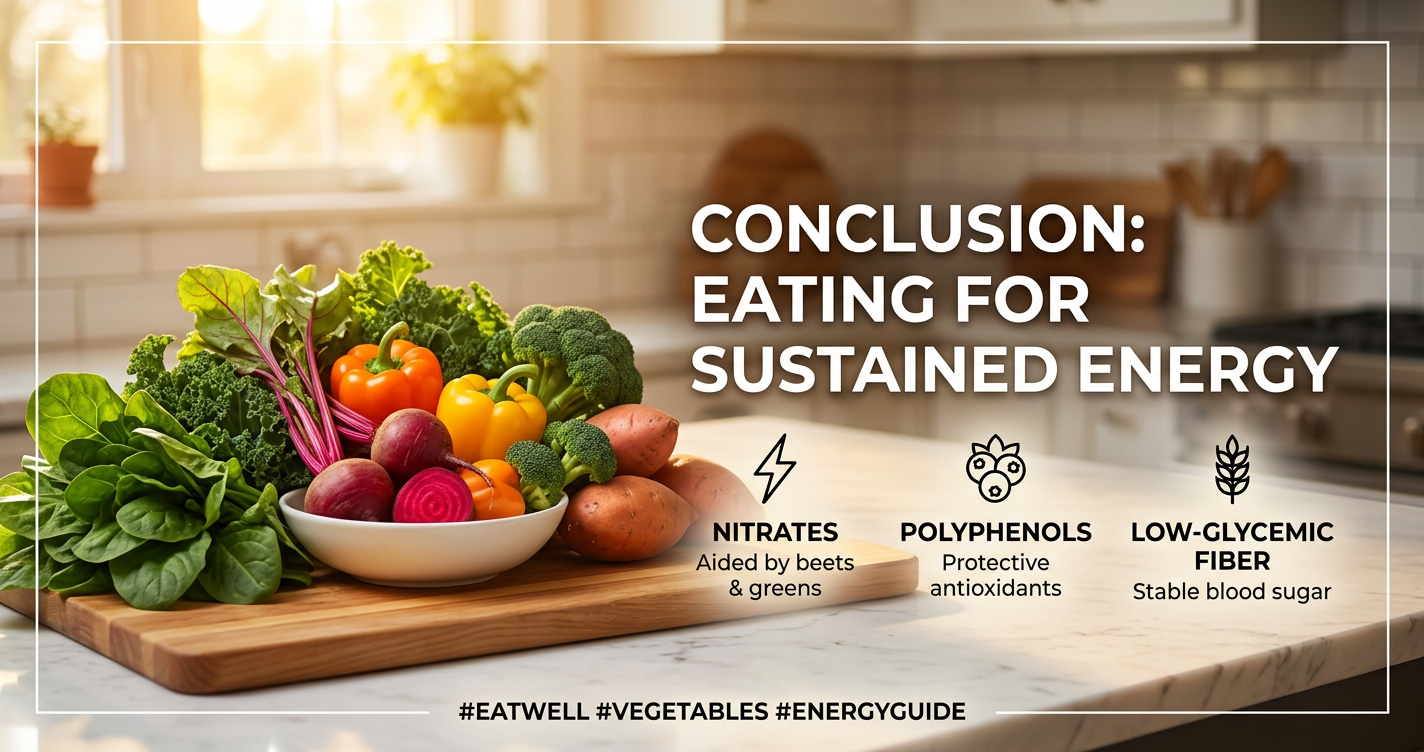
Energy is more than just feeling "awake"; it is the absence of biological friction. Chronic inflammation is the ultimate energy thief. By prioritizing polyphenol-rich vegetables, you are essentially reducing the friction within your biological systems. Whether it is the kaempferol in kale or the quercetin in onions, these compounds ensure that your body operates at peak efficiency. Over time, a diet rich in these vegetables can lead to higher baseline energy levels, better recovery from physical exertion, and improved mental clarity. The evidence is clear: the road to high energy is paved with the nitrates, fiber, and polyphenols found in the plant kingdom.