The Science of the Slump and the Power of the Plate
For decades, Maria followed the standard rhythm of the modern worker. A quick breakfast, a caffeine-fueled morning, a rushed sandwich for lunch, and then, like clockwork, the 2:00 PM wall. But as she crossed the threshold of 55, that wall started feeling less like a temporary dip and more like a total system failure. The "afternoon slump" wasn't just a sleepy feeling anymore; it was a profound exhaustion that demanded a 90-minute nap just to make it to dinner. Maria realized that if she wanted to enjoy her second act—traveling, gardening, and keeping up with her grandkids—she had to fix her energy levels from the inside out.
The 30-Day No-Naps Energy Reset was born out of necessity. Maria decided to ditch the quick-fix stimulants and instead turn to the foundational power of plants and fruits. The goal was simple: no daytime sleeping for 30 days, achieved by optimizing cellular fuel. To understand why Maria succeeded, we first have to look at what causes the slump. For many over 55, it’s a combination of insulin sensitivity changes, declining mitochondrial efficiency, and the "heavy" digestion of processed midday meals.
Unlocking the Power of Nitrates
One of the first shifts Maria made was focusing on nitrates. No, not the preservatives found in deli meats, but the naturally occurring inorganic nitrates found in leafy greens and root vegetables like beets. These compounds are converted into nitric oxide in the body, which helps dilate blood vessels and improve oxygen delivery to the brain and muscles. By starting her lunch with a "nitrate starter"—a small arugula salad or a shot of beet juice—Maria found her brain felt "sharper" during the hours it usually felt foggy.
The Role of Polyphenols in Cellular Aging
In addition to nitrates, Maria prioritized polyphenols. These micronutrients, abundant in berries, dark chocolate, and herbs, act as antioxidants that protect our mitochondria—the powerhouses of our cells. As we age, our mitochondria can become less efficient. By flooding her system with colorful plants, Maria was essentially giving her cells a tune-up. She swapped her afternoon "pick-me-up" coffee (which often led to a 4:00 PM crash) for a bowl of blueberries and walnuts, providing sustained fuel without the jitters.
Arugula and Spinach: High-nitrate greens for blood flow.
Beets: The ultimate stamina booster for the over-55 crowd.
Blueberries and Blackberries: Polyphenol-rich snacks that protect brain health.
Green Tea: A gentle source of caffeine paired with L-theanine for focused energy.
Strategic Snacking: From Blood Sugar Spikes to Steady Flow
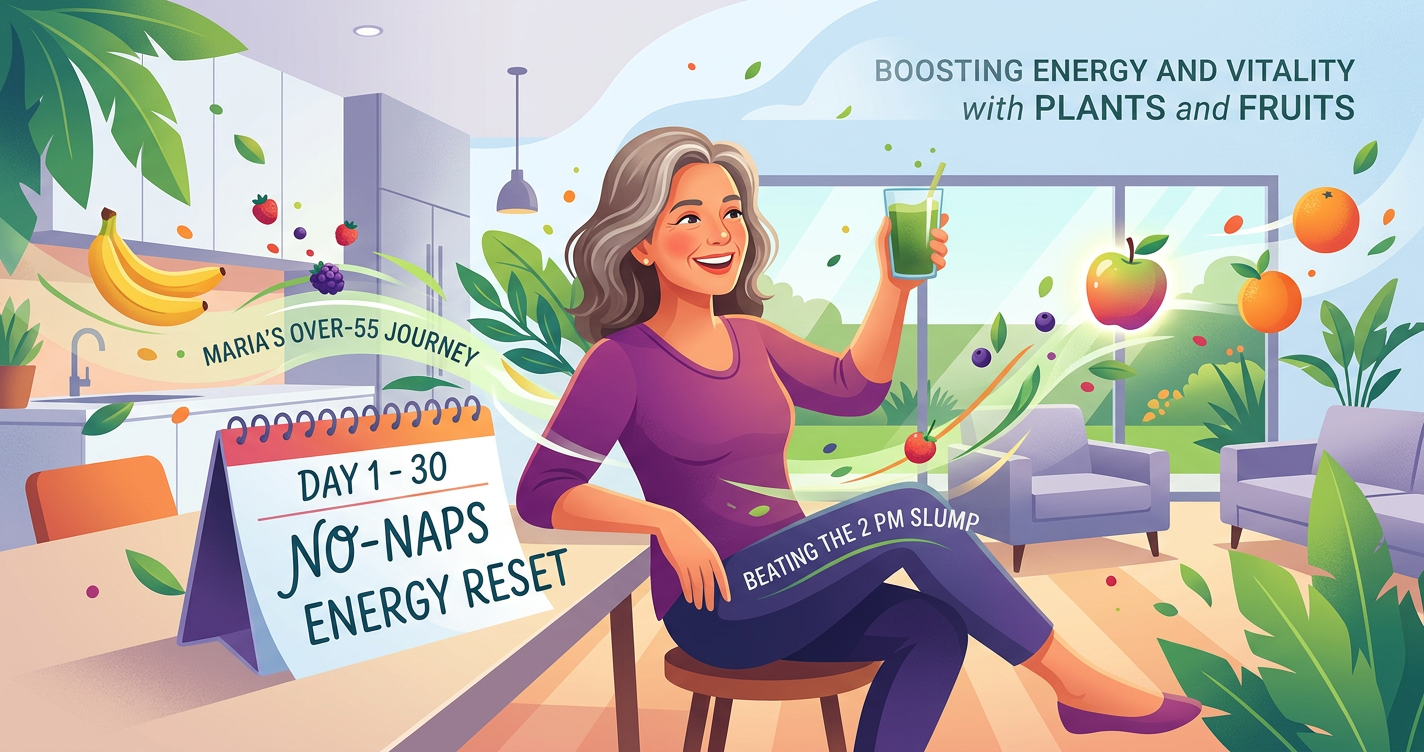
The biggest revelation in Maria’s 30-day journey was the impact of glycemic load. In her previous life, a "healthy" snack might have been a granola bar or a piece of white toast with honey. However, these high-glycemic choices caused a rapid spike in blood sugar followed by a devastating crash. This crash is the primary trigger for the afternoon slump. To achieve a no naps lifestyle, Maria learned to master low-glycemic snacks.
Low-glycemic eating isn't just about avoiding sugar; it’s about pairing carbohydrates with fiber, healthy fats, and protein to slow down the absorption of glucose. Maria began to view fruits not as a sugary treat, but as a fiber-rich delivery system for energy. Instead of drinking orange juice, she ate the whole orange. Instead of a banana alone, she paired it with almond butter. This small change meant her energy levels felt like a gentle rolling hill rather than a jagged mountain range.
The "Movement Snack" Revolution
Another tool in Maria’s arsenal was the concept of movement snacks. When the 2:00 PM fog traditionally rolled in, Maria’s instinct was to sit deeper into her recliner. Instead, she committed to five minutes of vigorous "movement snacking." This wasn't a full workout, but rather a short burst of activity designed to recirculate blood and reset her metabolism. A "snack" could be as simple as walking up and down the stairs three times, doing ten wall push-ups, or a series of dynamic stretches in the kitchen.
Clinical research suggests that these short bursts of activity can improve glucose clearance from the blood almost as effectively as a longer workout. For someone over 55, this is a game-changer for maintaining metabolic flexibility. Maria found that the combination of a low-glycemic lunch and a movement snack made the desire to nap almost entirely disappear by the second week of her reset.
Maria’s Favorite Low-Glycemic Power Combos
Apple Slices with Walnuts: The fiber in the apple and the healthy fats in the walnuts create a slow-burn fuel.
Greek Yogurt with Chia Seeds and Raspberries: High protein and high fiber to keep the "hunger hormones" at bay.
Hummus and Red Bell Pepper: Vitamin C for adrenal support and complex carbs for the brain.
Avocado on Sprouted Grain Bread: Healthy fats that signal to the brain that the body is satiated and energized.
Sustainability and the Long-Term Glow of Plant-Based Energy
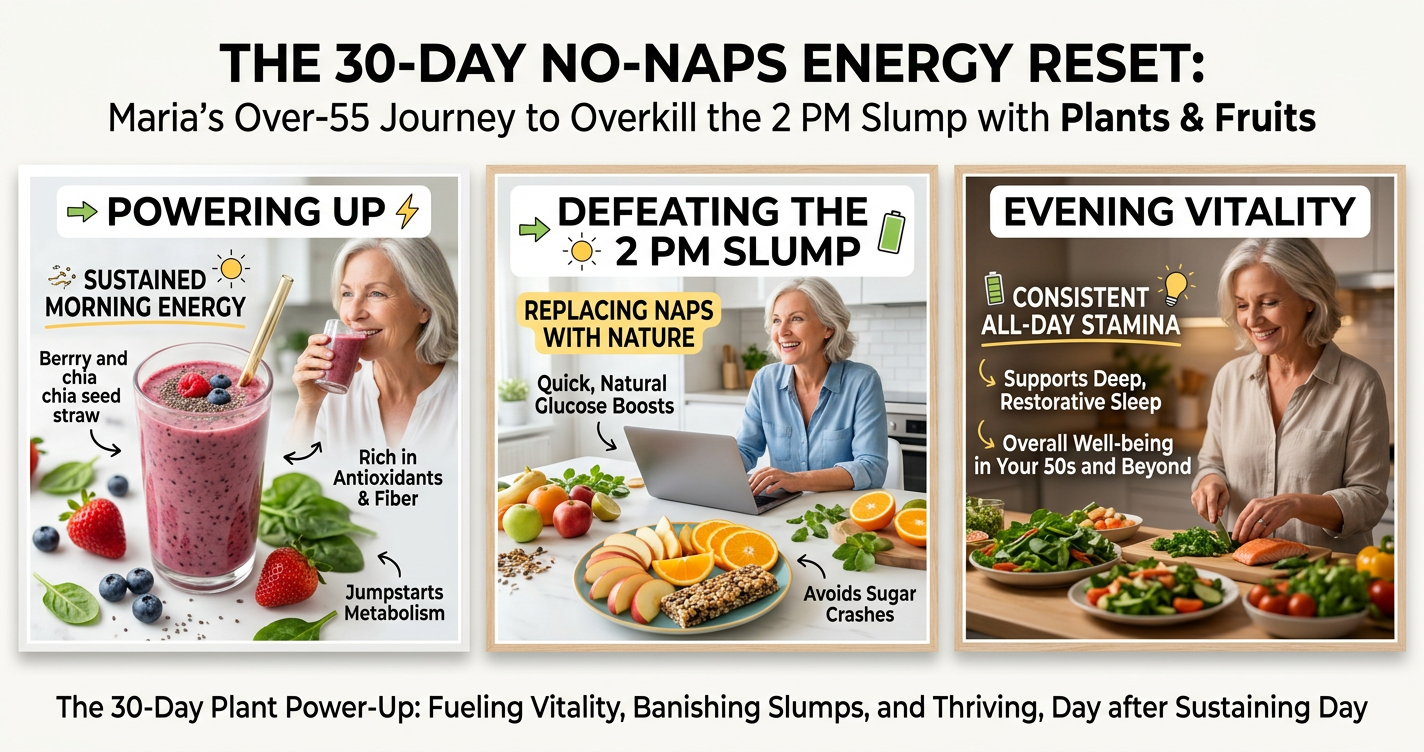
By day 30, Maria didn't just feel "less tired." She felt transformed. The most surprising benefit of focusing on plants and fruits wasn't just the lack of naps; it was the improvement in her sleep quality at night. Because she wasn't sleeping during the day and wasn't relying on late-afternoon caffeine, her natural circadian rhythm restored itself. She was falling asleep faster and waking up without the usual morning "hangover" feeling common in your 50s and 60s.
Maria’s journey proves that energy is not a finite resource that naturally disappears as we age. Instead, it is a product of our environment and our inputs. By choosing fruits and vegetables rich in polyphenols and nitrates, and by respecting the body’s need for steady blood sugar, anyone can reclaim their afternoons. The "no-naps" rule wasn't about deprivation; it was about liberation from the cycle of fatigue.
Maintaining the Momentum After 30 Days
As Maria moved beyond her 30-day challenge, she didn't go back to her old ways. The feeling of natural, vibrant energy was too addictive. She developed a "Plate Protocol" for her lunches: 50% leafy greens, 25% lean protein or legumes, and 25% complex carbohydrates, always finished with a piece of dark fruit. She kept her movement snacks as a non-negotiable part of her day, often taking a 10-minute walk after her largest meal to help with digestion.
For those looking to start their own journey, Maria’s advice is simple: don't try to change everything at once. Start by swapping your afternoon snack for something low-glycemic. Incorporate one high-nitrate food into your lunch. Notice how your body feels at 3:00 PM. Gradual shifts in nutrition lead to permanent shifts in vitality. You don't have to accept the afternoon slump as a permanent part of aging. With the right plants and a little intentional movement, your 50s, 60s, and beyond can be the most energetic years of your life.
In conclusion, the 30-Day No-Naps Energy Reset is more than a challenge; it's an education in how to listen to your body's signals. Maria found her spark again, not through a pill or a potion, but through the vibrant, colorful foods provided by nature. If you're feeling stuck in a cycle of fatigue, take a page out of Maria’s book. Your future, wide-awake self will thank you.