The Biological Blueprint of Cognitive Decline and the Role of Cerebral Blood Flow
As we cross the threshold of 50, many of us begin to notice subtle shifts in our mental clarity. It might manifest as a misplaced set of keys, the inability to recall a specific word during conversation, or a general feeling of "brain fog" that lingers after a long day. While society often dismisses these occurrences as inevitable signs of aging, modern neuroscience suggests a more complex biological reality. Central to our ability to maintain cognitive energy and mental sharpness is the efficiency of our cerebral blood flow.
The human brain is a metabolically demanding organ. Despite making up only about 2% of our total body weight, it consumes approximately 20% of our body's oxygen and glucose. This energy demand requires a sophisticated distribution system—a vast network of blood vessels that must remain flexible, dilated, and responsive. However, aging often brings about a reduction in "vascular elasticity." Just as pipes in an old house might become narrow or brittle, the microcirculation within the brain can become less efficient. When cerebral blood flow is compromised, the brain receives fewer nutrients and less oxygen, leading to a decline in the production of cellular energy.
At the heart of this process are the mitochondria, often referred to as the "powerhouses" of the cell. Mitochondria are responsible for converting oxygen and nutrients into adenosine triphosphate (ATP), the primary energy currency of the brain. To function at peak capacity, these tiny organelles require a steady, uninterrupted supply of oxygen. If blood flow slows down due to vascular stiffness or oxidative stress, mitochondrial efficiency drops. This internal "power brownout" is what we experience as cognitive fatigue or a lack of mental stamina. Fortunately, nature provides specific compounds—specifically nitrates and polyphenols—that act as biological keys to unlocking better circulation and revitalizing these cellular powerhouses.
The Decline of Nitric Oxide Production
One of the primary reasons cerebral blood flow decreases with age is the natural decline in the production of nitric oxide. Nitric oxide is a signaling molecule produced by the endothelium (the inner lining of blood vessels). Its primary job is "vasodilation," or telling the muscles surrounding your blood vessels to relax, which allows more blood to flow through easily. By the time we reach age 50, our body’s ability to produce nitric oxide naturally can drop by as much as 50% compared to our youthful years. This deficiency is a major contributor to the "sharpening" of the cognitive curve. By focusing on dietary strategies that boost nitric oxide levels, we can effectively "re-open" the pathways to the brain, ensuring that every neuron is adequately fueled.
The Synergy of Nitrates and Polyphenols: Nature’s Cognitive Fuel
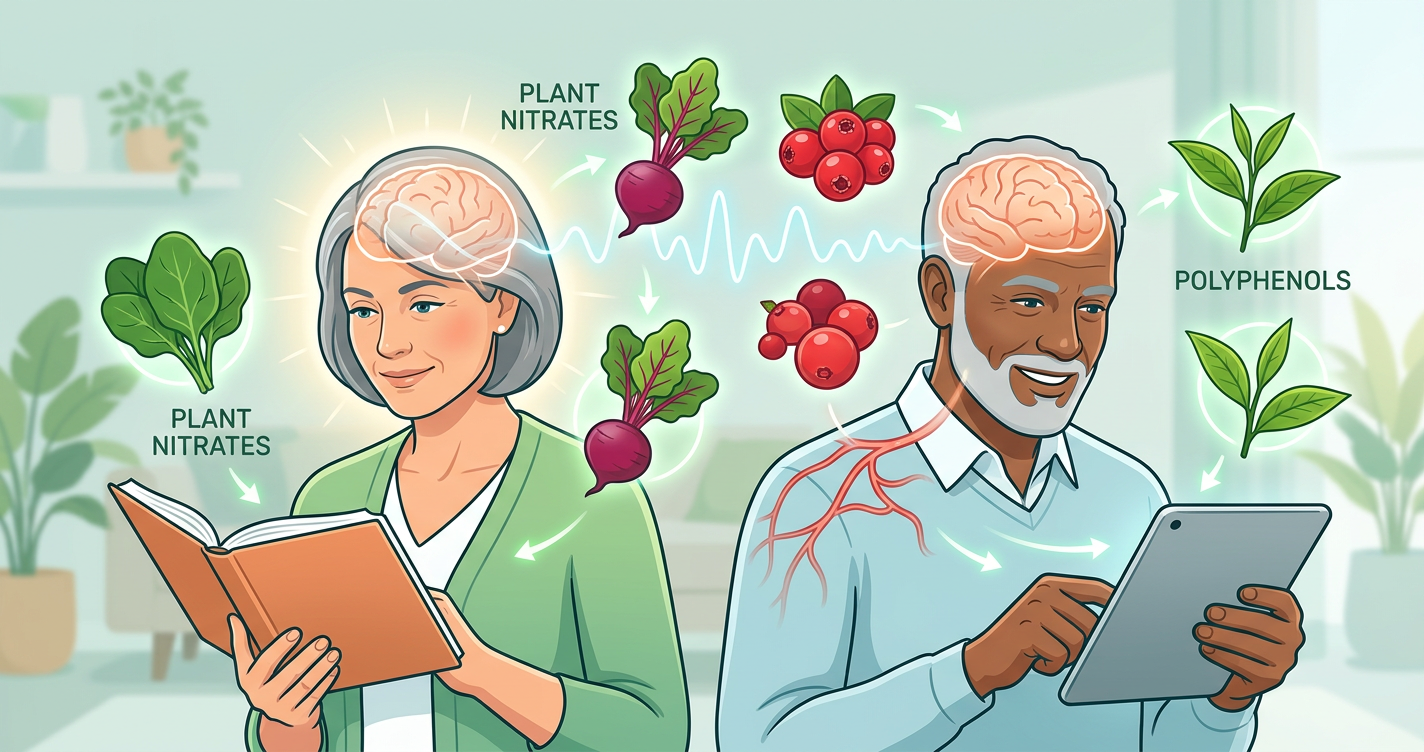
To combat the age-related decline in mental energy, we must look toward the plant kingdom. Two specific classes of compounds have emerged as frontrunners in nutritional neuroscience: dietary nitrates and polyphenols. While they work through different mechanisms, their synergy creates a powerful environment for brain health.
Nitrates: The Path to Increased Vasodilation
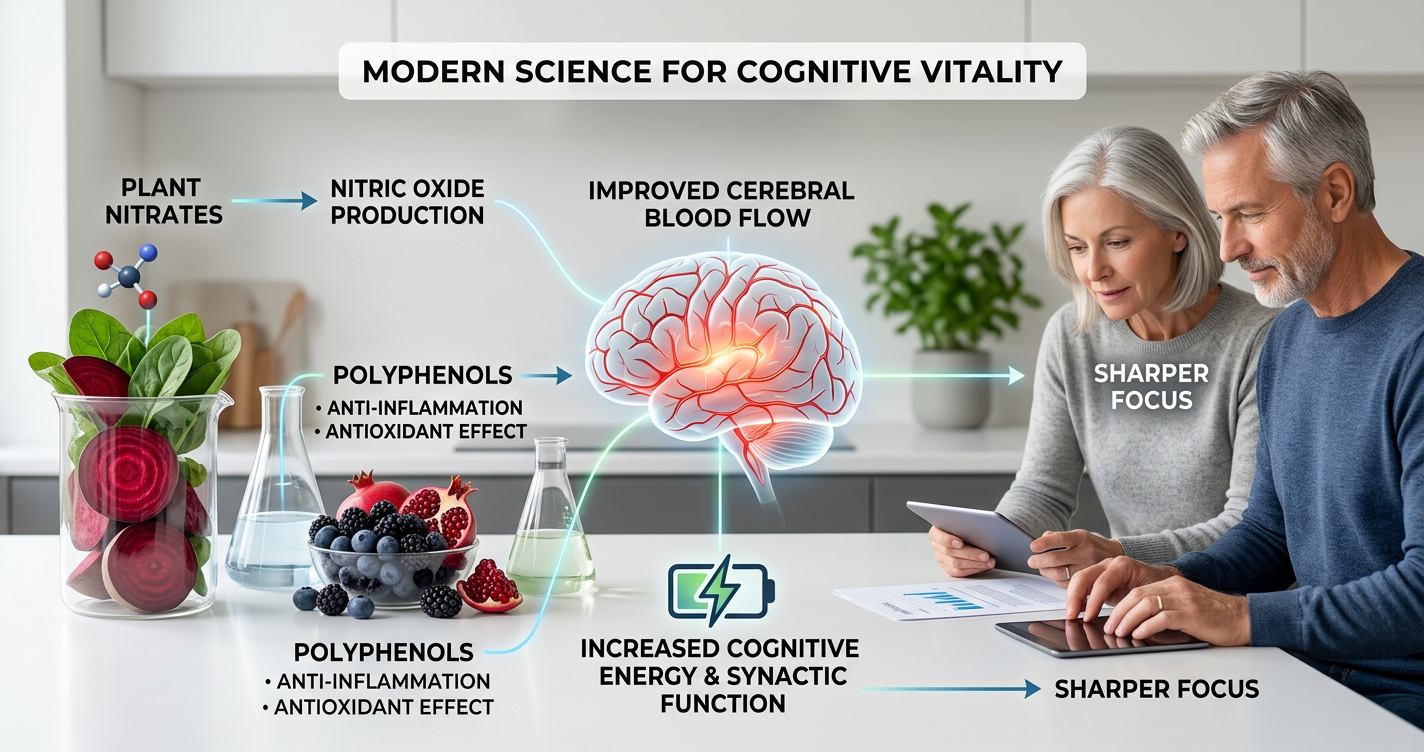
Dietary nitrates, found in high concentrations in root vegetables and leafy greens, are converted by the body into nitric oxide. This conversion starts in the mouth, where oral bacteria begin the process, and continues in the stomach and blood. Unlike the synthetic nitrates found in processed meats (which can be harmful), plant-based nitrates are accompanied by antioxidants that ensure they are converted into beneficial nitric oxide. When you consume foods rich in nitrates, your blood vessels become more flexible. In the context of the brain, this means specific areas associated with executive function and memory—such as the prefrontal cortex—receive a significant boost in oxygenated blood flow.
Beets: Perhaps the most famous source of nitrates, beets have been clinically shown to improve reaction times and executive function in older adults by enhancing blood flow to the brain's frontal lobes.
Arugula and Spinach: These leafy greens contain high concentrations of nitrates that help regulate blood pressure and improve the efficiency of our mitochondria.
Rhubarb: An underrated source of nitrates that aids in vascular health.
Polyphenols: Protecting the Microvasculature
If nitrates are the "openers" of the blood vessels, polyphenols are the "protectors." Polyphenols are bioactive compounds found in fruits and vegetables that possess potent antioxidant and anti-inflammatory properties. For individuals over 50, inflammation is a primary driver of cognitive decline. Chronic low-grade inflammation can damage the delicate capillaries in the brain, leading to "leaky" blood-brain barriers and reduced cognitive energy. Polyphenols help neutralize the free radicals that cause this damage.
Flavonoids, a sub-category of polyphenols found in berries, have an affinity for the hippocampus—the brain's memory center. They help stimulate the production of Brain-Derived Neurotrophic Factor (BDNF), a protein that acts like "Miracle-Gro" for your brain, supporting the growth of new neurons and strengthening existing synapses. When combined with the increased blood flow provided by nitrates, polyphenols ensure that the brain is not only getting more fuel but is also protected from the oxidative "exhaust" that energy production generates.
Mitochondrial Support and Energy Efficiency
Mitochondrial health is the bridge between blood flow and focus. When you provide the body with a rich variety of plant compounds, you are essentially optimizing the "fuel-to-energy" ratio. Polyphenols improve the quality of mitochondria through a process called mitophagy—clearing out old, damaged mitochondria and replacing them with new, efficient ones. This means that with every breath you take and every beat of your heart, your brain is extracting more energy more efficiently. This is the physiological basis for sustained cognitive energy throughout the day.
Practical Strategies for Enhancing Focus After 50
Understanding the science is the first step; the second is implementation. To truly move the needle on your cognitive health, you need a consistent intake of these "brain-boosting" nutrients. However, modern life—and the modern diet—often makes it difficult to consume the necessary volume of fresh produce required to see a therapeutic effect.
Building a "Brain-First" Diet: Beets and Berries
The most effective strategy is to focus on the "Beets and Berries" protocol. Incorporating beets and berries into your daily routine provides a high-impact combination of nitrates and polyphenols.
Morning Ritual: Start with a berry smoothie. Blueberries, blackberries, and strawberries are rich in anthocyanins, which have been shown to cross the blood-brain barrier and improve neuronal signaling within hours of consumption.
Lunch or Dinner: Add roasted beets or a raw beet slaw to your meals. The nitrates in beets provide a sustained release of nitric oxide that can prevent the "mid-afternoon slump" often associated with declining cerebral blood flow.
The Problem with the Modern Produce Aisle
While fresh food is always the gold standard, there are challenges. The nutrient density of our soil has declined over the last several decades, meaning a beet today may not contain the same level of nitrates as a beet from 50 years ago. Furthermore, the sheer volume of vegetables required to reach the "therapeutic" levels found in clinical studies can be overwhelming for most people. This is where high-quality supplementation can play a vital role in a longevity-focused lifestyle.
Bridging the Gap: KaraMD Pure Nature Fruit & Veggie Supplement
For those looking for a convenient way to ensure they are getting a wide spectrum of these essential nutrients, a whole-food-based supplement can be a game-changer. The KaraMD Pure Nature Fruit & Veggie Supplement is designed specifically to fill these nutritional gaps. It provides a concentrated blend of many of the foods we've discussed, such as beets, greens, and nutrient-dense fruits. By utilizing a supplement like Pure Nature, you are providing your body with a consistent supply of the polyphenols and building blocks needed to support nitric oxide production and mitochondrial health. It serves as a form of "nutritional insurance" for your brain, ensuring that even on days when your diet isn't perfect, your cognitive machinery has the fuel it needs to function.
A Holistic Approach to Cognitive Longevity
Finally, remember that nutrition works best when supported by other healthy habits. Physical exercise is one of the most powerful ways to acutely increase cerebral blood flow and stimulate nitric oxide production. Even a brisk 20-minute walk can significantly boost oxygen delivery to the brain. Combined with a diet rich in plant nitrates and polyphenols—and supported by targeted supplements like those from KaraMD—you can create a powerful ecosystem for mental clarity. Aging may be inevitable, but the "fog" doesn't have to be. By focusing on your vascular health and cellular energy today, you can enjoy a sharper, more focused mind well into your 50s, 60s, and beyond.