Understanding the Decline of Mitochondrial Efficiency in Maturity
As we cross the threshold of 50, many of us begin to notice a subtle yet persistent shift in our vitality. It is often dismissed as a standard byproduct of "old age," but at the microscopic level, what we are actually experiencing is the waning efficiency of our mitochondria. Often described as the powerhouses of the cell, mitochondria are responsible for generating adenosine triphosphate (ATP), the universal energy currency that fuels every biological process from muscle contraction to cognitive function. However, as the decades pass, these tiny organelles face increasing oxidative stress and a decreased capacity for repair, leading to what scientists call mitochondrial dysfunction.
The relationship between mitochondrial health and aging is foundational. When cellular energy production dips, the systemic effects are widespread. We feel it in our lingering fatigue after a day of work, our slower recovery times after exercise, and even in the "brain fog" that can cloud our mental clarity. This decline isn't just about feeling tired; it’s about the integrity of our cellular infrastructure. Fortunately, emerging research in nutritional science suggests that we are not helpless in this process. By focusing on a plant based diet rich in specific micronutrients, we can provide our mitochondria with the raw materials they need to maintain peak performance well into our later years.
The Role of Oxidative Stress and the Aging Cell
To understand how to protect our energy, we must first understand the enemy: oxidative stress. Mitochondria produce energy through a process called oxidative phosphorylation. A byproduct of this process is the creation of reactive oxygen species (ROS), or free radicals. In a youthful body, antioxidant defense systems neutralize these free radicals efficiently. However, in old age, the balance shifts. The accumulation of ROS damages the mitochondrial DNA (mtDNA), leading to a downward spiral of energy production. This is where the power of veggies and fruits becomes non-negotiable.
Why 50 is a Critical Turning Point
Statistical data suggests that mitochondrial density and function can drop by as much as 50% between the ages of 20 and 70. The 50s represent a "tipping point" where lifestyle interventions have the highest impact. By shifting toward a diet heavy in plant-derived nutrients, we can mitigate the structural decay of these organelles. The goal is mitochondrial biogenesis—the birth of new mitochondria—and the optimization of existing ones. This is achieved through a combination of caloric mindfulness and the targeted intake of phytonutrients found in leafy greens and colorful produce.
ATP Production: The primary goal of mitochondrial health is maintaining high levels of ATP.
Metabolic Rate: Efficient mitochondria support a healthy metabolism, preventing age-related weight gain.
Cellular Longevity: Healthy mitochondria signal the cell to repair itself rather than undergo premature apoptosis.
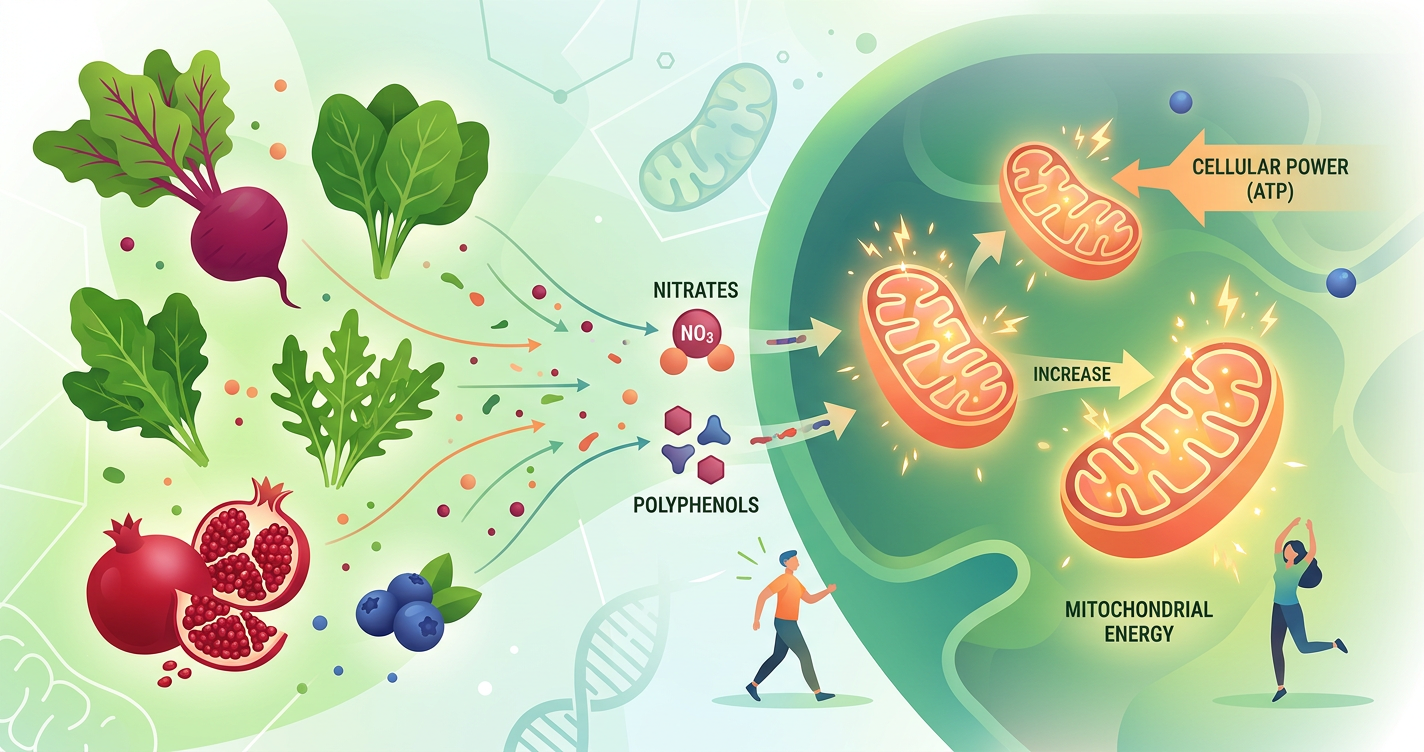
The Nitric Oxide Revolution: Leafy Greens and Beets
One of the most significant breakthroughs in geriatric nutrition is the discovery of the nitrate-nitrite-nitric oxide pathway. Nitric oxide is a signaling molecule that plays a crucial role in vasodilation—the widening of blood vessels. This process ensures that oxygen and nutrients are efficiently delivered to the cells, and that metabolic waste is removed. As we age, our body’s natural ability to produce nitric oxide via the L-arginine pathway declines significantly. This is where plant-based nitrates come into play as a vital "backup" system for cellular energy.
Leafy greens such as arugula, spinach, and kale, along with root vegetables like beets, are the gold mines of dietary nitrates. When we consume these plants, bacteria in our mouths convert nitrates into nitrites. Once swallowed, these are further converted into nitric oxide. This boost in nitric oxide has a direct effect on mitochondrial efficiency. It reduces the "oxygen cost" of exercise, meaning your mitochondria can produce the same amount of energy while using less oxygen. For someone over 50, this translates to increased stamina and a reduced feeling of breathlessness during physical activity.
The Power of Beets and "Nature's Pre-Workout"
Beets have earned a reputation as a superfood for athletes, but their benefits are perhaps even more profound for those in their middle and later years. The high concentration of nitrates in beets has been shown to improve the efficiency of the mitochondrial respiratory chain. In clinical studies, participants who consumed beet juice showed improved muscle contraction speed and increased endurance. This isn't just for marathon runners; it's for the 60-year-old who wants to garden for three hours without back pain or the 55-year-old who wants to take the stairs instead of the elevator.
Leafy Greens: The Mitochondrial Guardians
While beets provide a concentrated burst of nitrates, leafy greens provide the consistent, daily support needed for vascular health. Spinach and Swiss chard, in addition to nitrates, contain chlorophyll and magnesium. Magnesium is a critical co-factor for ATP synthesis; without it, the energy produced by mitochondria cannot be utilized by the body. By consuming a large salad of mixed leafy greens daily, you are essentially providing your cells with a "tune-up," ensuring that the blood flow to your vital organs remains robust and your cellular energy remains stable.
Vasodilation: Improved blood flow decreases the workload on the heart.
Nutrient Delivery: Better circulation means more glucose and oxygen reach the mitochondria.
Efficiency: Nitrates allow for higher ATP yield per molecule of oxygen consumed.
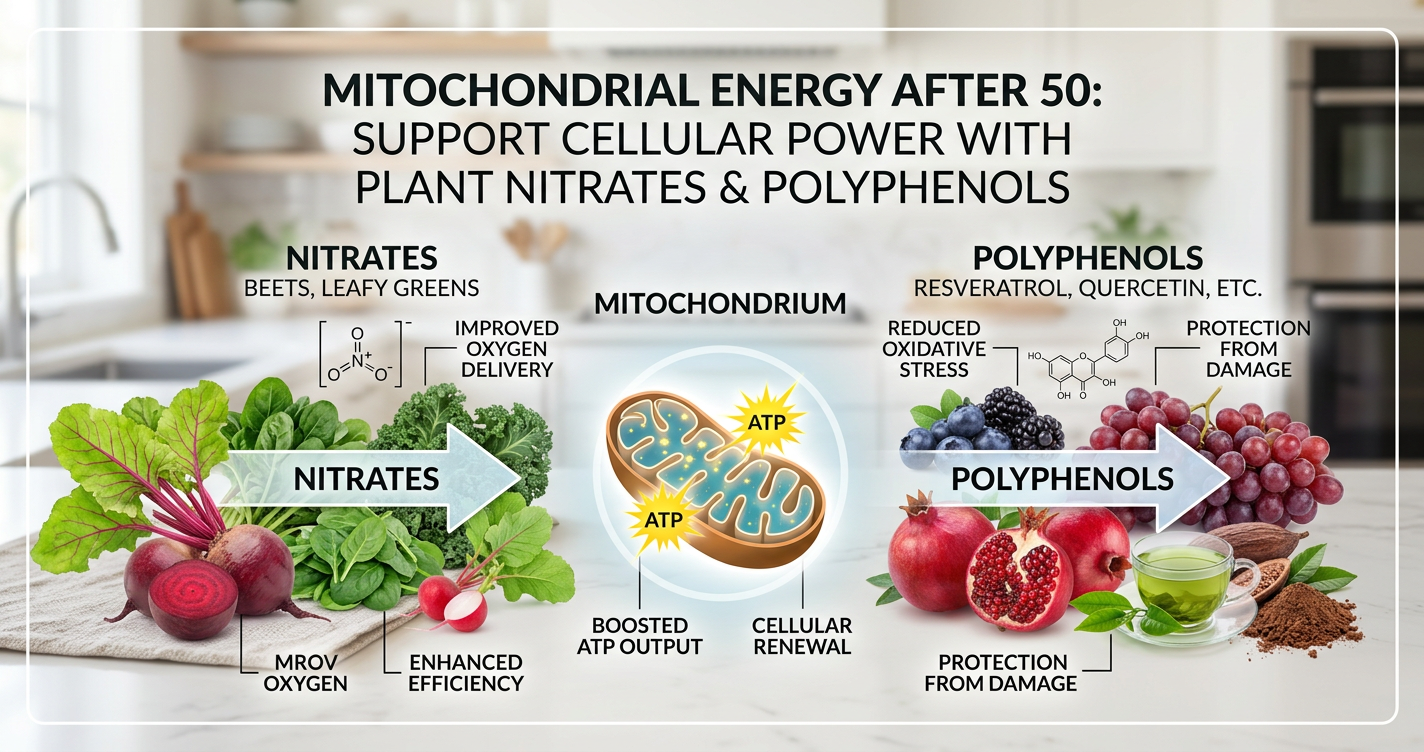
Polyphenols: Harnessing the Protective Power of Fruit and Veggies
Beyond nitrates, the plant kingdom offers another class of compounds essential for mitochondrial health: polyphenols. These are the colorful pigments found in fruit, vegetables, and herbs that act as powerful antioxidants and signaling molecules. For those concerned with energy after 50, polyphenols like resveratrol (found in grapes), quercetin (found in onions and apples), and anthocyanins (found in berries) are indispensable. These compounds don't just "mop up" free radicals; they actually communicate with our DNA to turn on longevity genes like SIRT1, which stimulates the production of new mitochondria.
The beauty of a plant based diet lies in its diversity. Each color represents a different class of polyphenols, each with a unique role in supporting cellular energy. For instance, the polyphenols in pomegranate—specifically urolithin A—have been shown to trigger mitophagy. Mitophagy is the cellular equivalent of "taking out the trash," where the body identifies and recycles damaged mitochondria. By clearing out the broken machinery, the cell can operate with only the most efficient energy producers, drastically reducing systemic fatigue.
The Synergy of Fruit and Vegetable Combinations
To maximize cellular energy, one should not look for a "magic pill" but rather a "magic plate." The interaction between different polyphenols often yields synergistic effects. For example, consuming vitamin C-rich citrus fruits alongside polyphenol-heavy berries can enhance the bioavailability of these compounds. Furthermore, the fiber found in whole veggies and fruit supports a healthy gut microbiome, which is increasingly recognized as a regulator of mitochondrial function through the gut-muscle axis.
Practical Strategies for Daily Vitality
Implementing these changes doesn't requires a radical lifestyle overhaul, but rather a series of intentional choices. Start your day with a smoothie containing high-nitrate leafy greens and a handful of antioxidant-rich berries. Incorporate roasted beets or a beet-based slaw into your lunch. For dinner, ensure that at least two-thirds of your plate is covered in colorful veggies like broccoli, bell peppers, and purple cabbage. Over time, these small dietary shifts accumulate, leading to a noticeable increase in baseline energy and a decrease in the signs of cellular aging.
Mitophagy: Polyphenols help the body recycle old, tired mitochondria.
Gene Expression: Plant compounds can activate "survival genes" that protect cellular power.
Inflammation Reduction: By lowering systemic inflammation, polyphenols prevent the "energy drain" caused by a hyperactive immune system.
In conclusion, the path to vibrant energy after 50 is paved with the nutrients found in a diverse, plant-forward diet. By leveraging the nitric oxide boost from nitrates and the protective qualities of polyphenols, we can support our mitochondria at their foundational level. We don't have to accept a decline in vitality as an inevitability. Instead, we can fuel our cellular engines with the best that nature has to offer, ensuring that our later years are just as energetic and fulfilling as our youth.