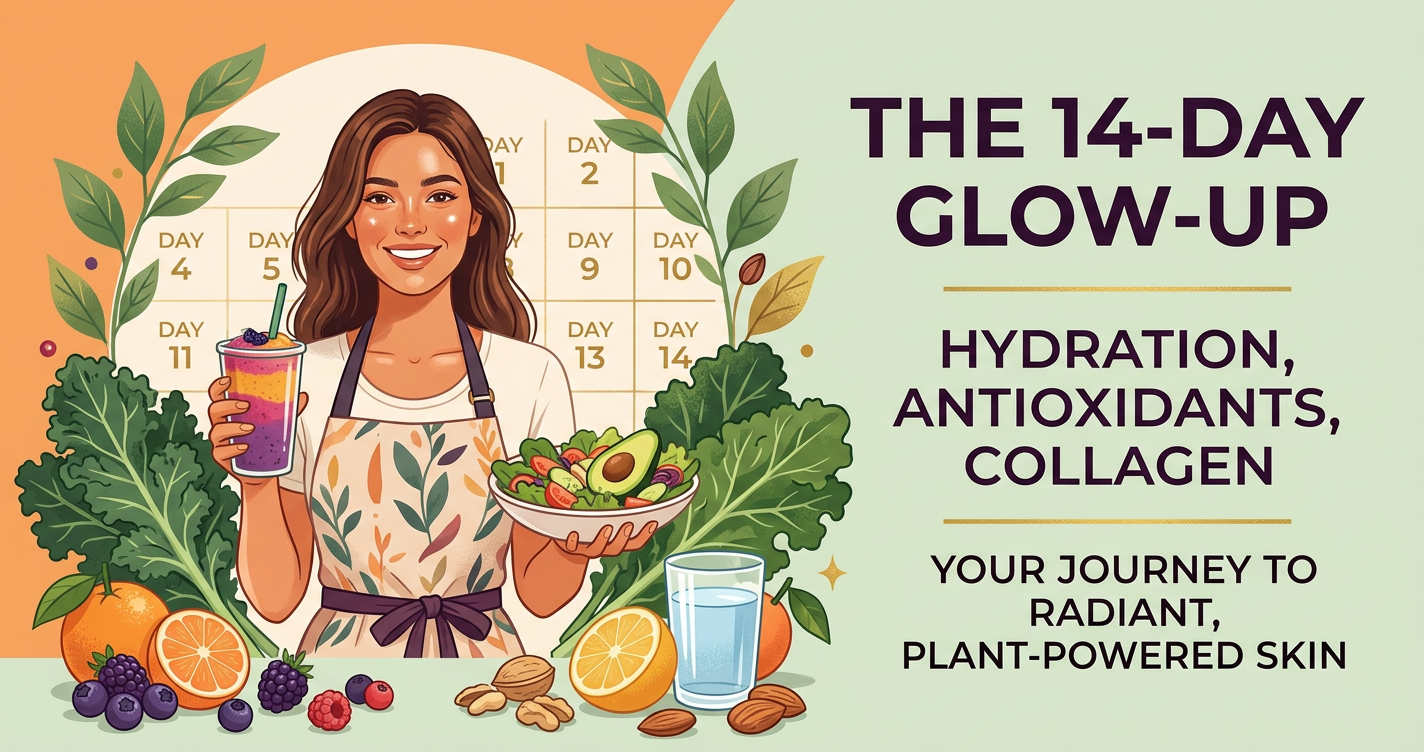
The quest for radiant, youthful skin often leads us to expensive serums, clinical treatments, and multifaceted skincare routines. However, modern dermatological science is increasingly confirming an ancient wisdom: true beauty begins on the inside. What we consume dictates the biological building blocks available for skin repair, hydration, and protection. Adopting a plant-based diet for skin health isn't just a trend; it is a scientifically backed approach to reducing inflammation, boosting collagen, and achieving a natural "lit-from-within" glow.
In this comprehensive guide, we will explore how to improve skin quality with a plant-based diet through a meticulously designed 14-day protocol. This plan isn't about deprivation; it’s about flooding your system with polyphenols for skin protection, ensuring vitamin C collagen synthesis, and leveraging the power of omega-3 ALA skin health. We will examine the intricacies of the gut–skin axis and identify the most potent anti-inflammatory foods for clear skin. By the end of these two weeks, you will understand how hydrating fruits and vegetables, silica-rich foods for skin, and plant-based collagen support can transform your complexion from the cellular level up.
Section 1: The Bio-Science of Plant-Powered Skin: Why Plants Change Your Complexion
To understand why a plant-oriented approach is so effective, we must first look at the biology of the skin. The skin is the body's largest organ, serving as a protective barrier against environmental stressors. To maintain its integrity, it requires a constant supply of micronutrients that the body cannot always produce on its own.
The Gut–Skin Axis: The Internal Mirror
The gut–skin axis refers to the complex biochemical signaling between our gastrointestinal microbiota and our skin cells. Research shows that an imbalance in gut bacteria (dysbiosis) often manifests as inflammatory skin conditions like acne, rosacea, and eczema. Plant-based diets are naturally high in fiber, which acts as a prebiotic, feeding the beneficial bacteria in your gut. When your gut is healthy, systemic inflammation decreases, leading to clearer, calmer skin.
Polyphenols: Your Internal Sunscreen
Plants are rich in polyphenols for skin, which are phytochemicals that help plants defend themselves against UV radiation and pathogens. When we consume these compounds—found in berries, green tea, and dark chocolate—they act as internal antioxidants. They help neutralize free radicals generated by sun exposure and pollution, preventing the breakdown of DNA and structural proteins in the skin. This biological shield is vital for preventing premature aging and hyperpigmentation.
Vitamin C and Collagen Synthesis
While many people look for animal-derived collagen supplements, the body is actually its own collagen factory. The critical catalyst for this process is vitamin C collagen synthesis. Without adequate Vitamin C, the body cannot cross-link the amino acids needed to form collagen fibers. Citrus fruits, bell peppers, and strawberries provide the high-octane fuel your fibroblasts need to keep skin firm and elastic. By focusing on plant-based collagen support, you provide the precursors (proline, glycine, and Vitamin C) without the environmental or digestive baggage of animal products.
Hydration Beyond Water: The Role of Structured Water
Drinking eight glasses of water is important, but consuming hydrating fruits and vegetables like cucumbers, watermelon, and celery offers something more: cellular hydration. These foods contain "structured water" bound with minerals and vitamins, which allows the liquid to be absorbed more slowly and effectively by your cells, leading to a plumper, more hydrated epidermis.
Essential Fats: Omega-3 ALA Skin Health
The skin’s lipid barrier is what keeps moisture in and irritants out. A plant-based diet for skin provides Alpha-Linolenic Acid (ALA), a type of omega-3 fatty acid found in flaxseeds, chia seeds, and walnuts. Omega-3 ALA skin health is characterized by reduced redness and a softer texture, as these fats help lubricate the skin from within and reinforce the cell membranes.
Section 2: The 14-Day Step-by-Step Skin Transformation Plan
This plan is divided into two phases. The first seven days focus on detoxification and calming inflammation, while the final seven days focus on rebuilding and fortifying the skin structure.
Phase 1: Days 1–7 – The Anti-Inflammatory Reset
The goal of the first week is to eliminate common dietary triggers—such as refined sugars and high-fat dairy—and replace them with anti-inflammatory foods for clear skin.
Day 1-2: Gut Priming. Focus on high-fiber legumes (lentils, chickpeas) and fermented foods like kimchi or kombucha. This initiates the gut–skin axis signaling for repair.
Day 3-4: Maximum Polyphenols. Incorporate three servings of dark berries and two cups of organic green tea daily. You are building up your internal defense against oxidative stress.
Day 5-7: Deep Hydration. Every meal should include hydrating fruits and vegetables. Start your day with a smoothie containing cucumber and spinach, and end with a hydrating salad of leafy greens and citrus.
Phase 2: Days 8–14 – Rebuilding and Radiance
Now that inflammation is reduced, we focus on plant-based collagen support and structural integrity.
Day 8-10: Silica and Strength. Introduce silica-rich foods for skin such as oats, leeks, and green beans. Silica is a trace mineral that strengthens the connective tissues and improves skin elasticity.
Day 11-12: Collagen Co-Factors. Focus heavily on vitamin C collagen synthesis. Eat raw bell peppers, kiwis, and steamed broccoli. Combine these with plant proteins like organic soy or pumpkin seeds to provide the amino acid base for collagen.
Day 13-14: The Glow Finish. Double down on omega-3 ALA skin health. Add two tablespoons of ground flaxseeds to your breakfast and snack on walnuts to seal in the moisture you've built over the last two weeks.
Daily Non-Negotiables for the 14-Day Plan
To see real results in skin quality, consistency is key. Regardless of the specific day's focus, ensure you are hitting these targets:
At least 2 liters of filtered water daily.
No refined sugar (which causes glycation, the hardening of collagen fibers).
At least one serving of cruciferous vegetables (broccoli, kale, cauliflower) for hormone detoxification.
A minimum of 8 hours of sleep to allow for cellular turnover.
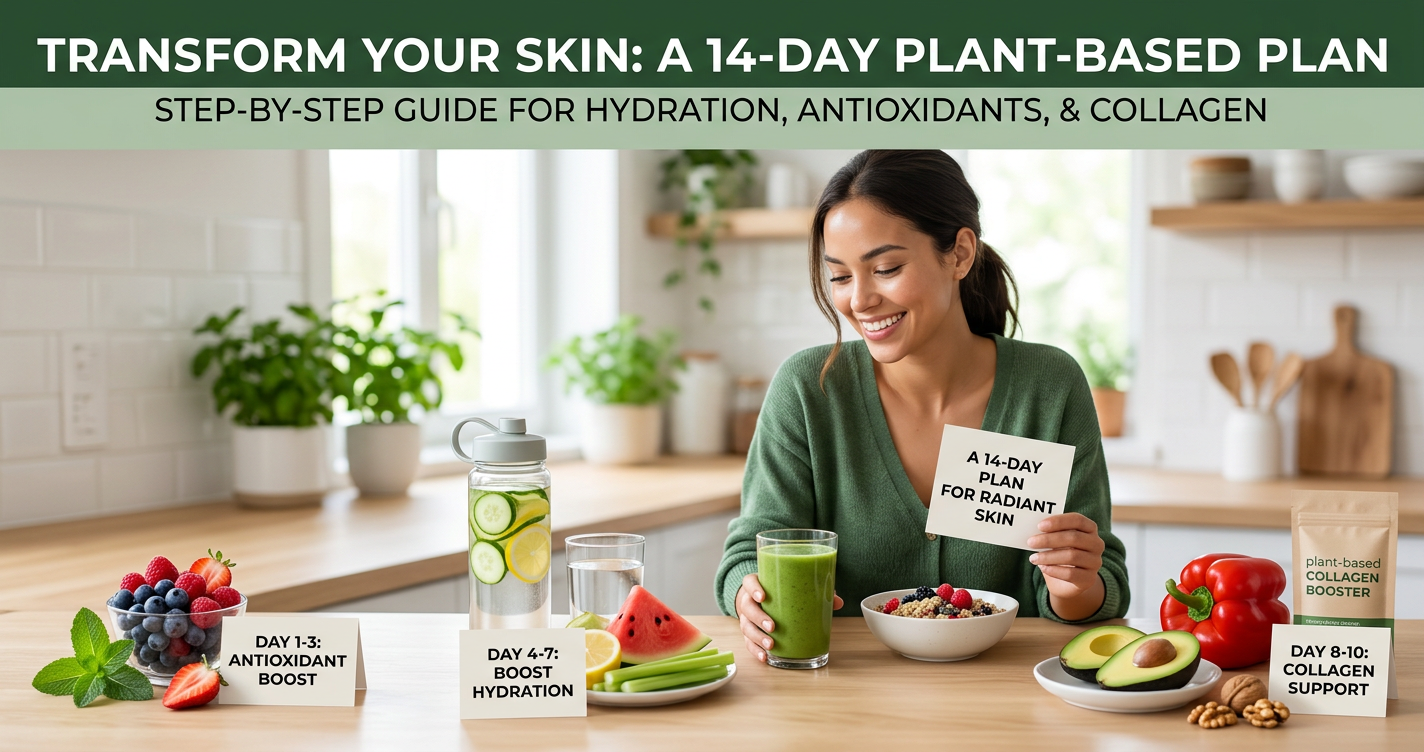
Section 3: Long-Term Maintenance: Sustaining Your Plant-Based Glow
Completing a 14-day plan is a fantastic kickstart, but how to improve skin quality with a plant-based diet permanently requires a lifestyle shift. Here is how to maintain your results for years to come.
Mastering the Grocery Store
When shopping for a plant-based diet for skin, think in colors. The pigments in plants (carotenoids, anthocyanins, chlorophyll) are the very antioxidants that protect your skin. A cart filled with deep purples, vibrant oranges, and dark greens ensures a wide spectrum of polyphenols for skin health.
Cooking for Bioavailability
Some skin-loving nutrients are better absorbed when cooked, while others should be eaten raw. For example, lycopene (found in tomatoes), which protects against sun damage, is more bioavailable when cooked with a healthy fat like avocado oil. Conversely, Vitamin C is heat-sensitive; to maximize vitamin C collagen synthesis, enjoy your citrus and peppers raw or lightly steamed.
Addressing Specific Skin Concerns
If you have specific issues, you can tailor your long-term plant-based habits:
For Acne: Focus on anti-inflammatory foods for clear skin like turmeric and ginger, and ensure your zinc levels are high by eating seeds and legumes.
For Aging Skin: Prioritize plant-based collagen support and silica-rich foods for skin to maintain thickness and bounce.
For Dry Skin: Maximize omega-3 ALA skin health and increase your intake of healthy fats from nuts and seeds.
The Holistic Picture
While diet is the foundation, it doesn't exist in a vacuum. The benefits of hydrating fruits and vegetables can be undermined by chronic stress or excessive sun exposure without topical protection. To truly honor the gut–skin axis, incorporate stress-management techniques like yoga or meditation, which lower cortisol—a hormone that can break down collagen and trigger breakouts.
Conclusion: Your Skin as a Reflection of Vitality
Improving skin quality is not about a temporary fix; it’s about providing your body with the superior fuel it needs to function at its peak. By following this 14-day plan, you are doing more than just clearing up a few blemishes; you are fundamentally changing the environment in which your skin cells live. From the omega-3 ALA skin health benefits to the structural reinforcement of silica-rich foods for skin, a plant-based approach offers a comprehensive toolkit for lasting radiance. Embrace the power of plants, and watch as your skin transforms into its most vibrant, healthy version.