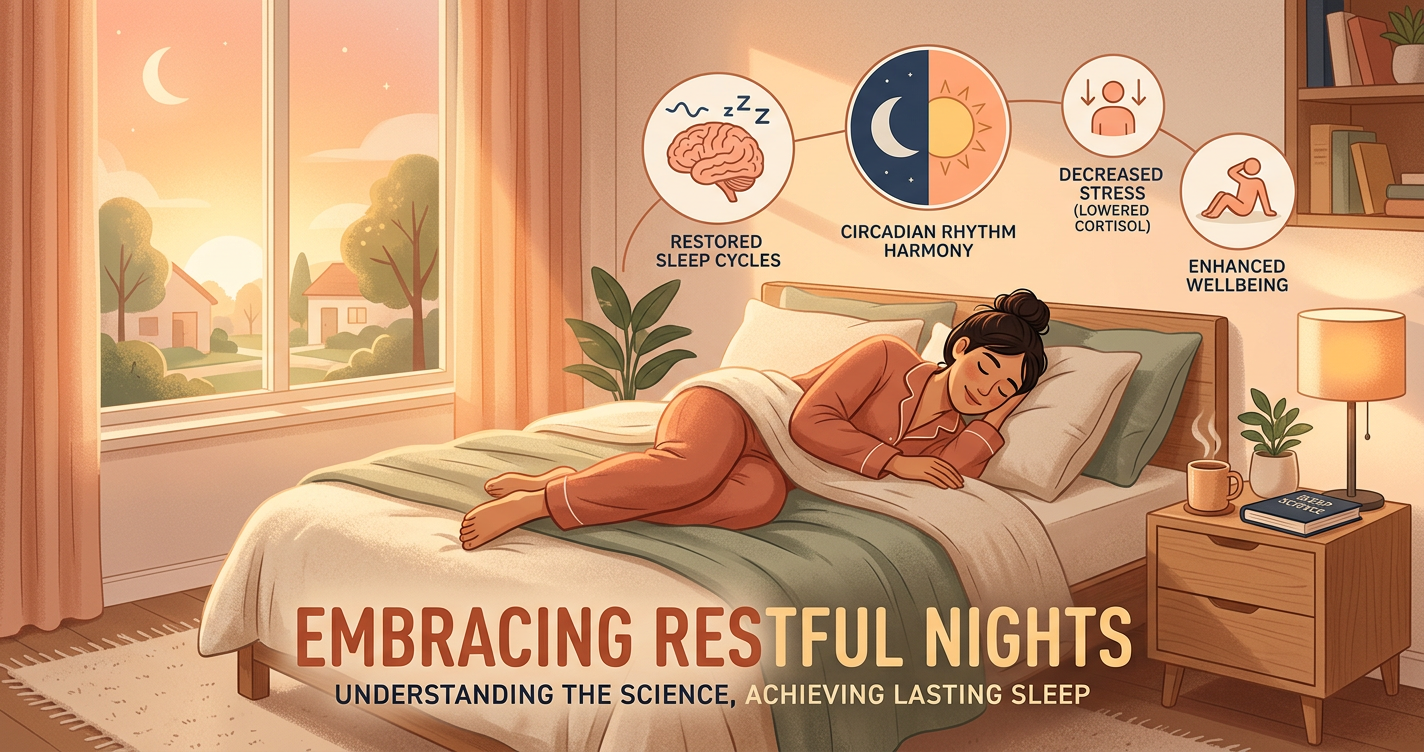
It is a phenomenon experienced by millions: the sudden, jarring transition from deep slumber to wide-eyed alertness in the dead of night. You glance at your bedside clock, and it reads somewhere between 3:00 AM and 4:00 AM. While it may feel like a supernatural occurrence or a sign that something is profoundly wrong, waking up at 3 AM is actually a deeply biological event rooted in the complexities of human physiology and psychology. Understanding why this happens requires a dive into the architecture of our sleep cycles, the influence of our hormones, and the modern stressors that disrupt our natural rhythms.
The Architecture of Sleep and the Circadian Rhythm
To understand why 3 AM is such a common time for wakefulness, we must first look at how we sleep. Human sleep is not a monolithic state; rather, it is divided into distinct cycles that repeat approximately every 90 to 120 minutes. These cycles consist of four stages: three stages of Non-Rapid Eye Movement (NREM) sleep and one stage of Rapid Eye Movement (REM) sleep. During the first half of the night, our bodies prioritize deep, restorative NREM sleep (Stage 3), which is essential for physical repair and immune function. However, as the night progresses toward the early morning hours, the balance shifts.
By the time 3 AM rolls around, most people have completed the majority of their deep sleep. The second half of the night is dominated by lighter Stage 2 sleep and longer periods of REM sleep. Because REM sleep involves higher brain activity and a lower threshold for arousal, we are naturally more prone to waking up during this time. A slight noise, a shift in room temperature, or even a minor change in body position can be enough to pull us out of a light sleep stage. In prehistoric times, this heightened sensitivity likely served as an evolutionary survival mechanism, allowing our ancestors to check their surroundings for predators during the most vulnerable hours of the night.
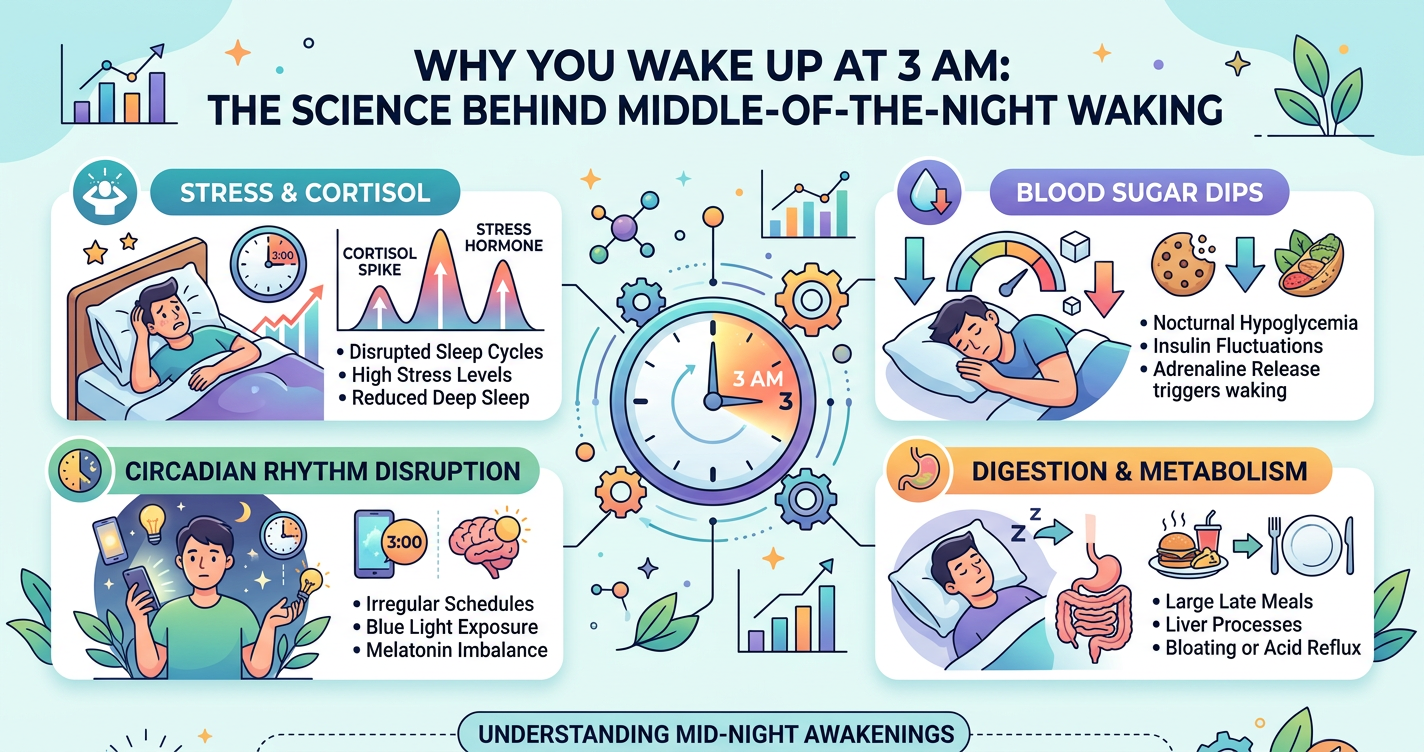
Furthermore, our internal biological clock, or circadian rhythm, plays a pivotal role. The circadian rhythm is regulated by the suprachiasmatic nucleus (SCN) in the brain, which responds to light and dark signals. Around 3 AM, our core body temperature begins to rise from its lowest point, and our levels of melatonin—the hormone responsible for signaling sleep—start to gradually decline. Simultaneously, the body begins a slow upward tick in cortisol, the "stress hormone" that helps us wake up and feel alert. If these hormonal transitions occur too sharply or are influenced by external stress, the brain may interpret the cortisol rise as a signal to fully awaken rather than simply transition between sleep cycles.
The Role of Blood Sugar and Metabolic Fluctuations
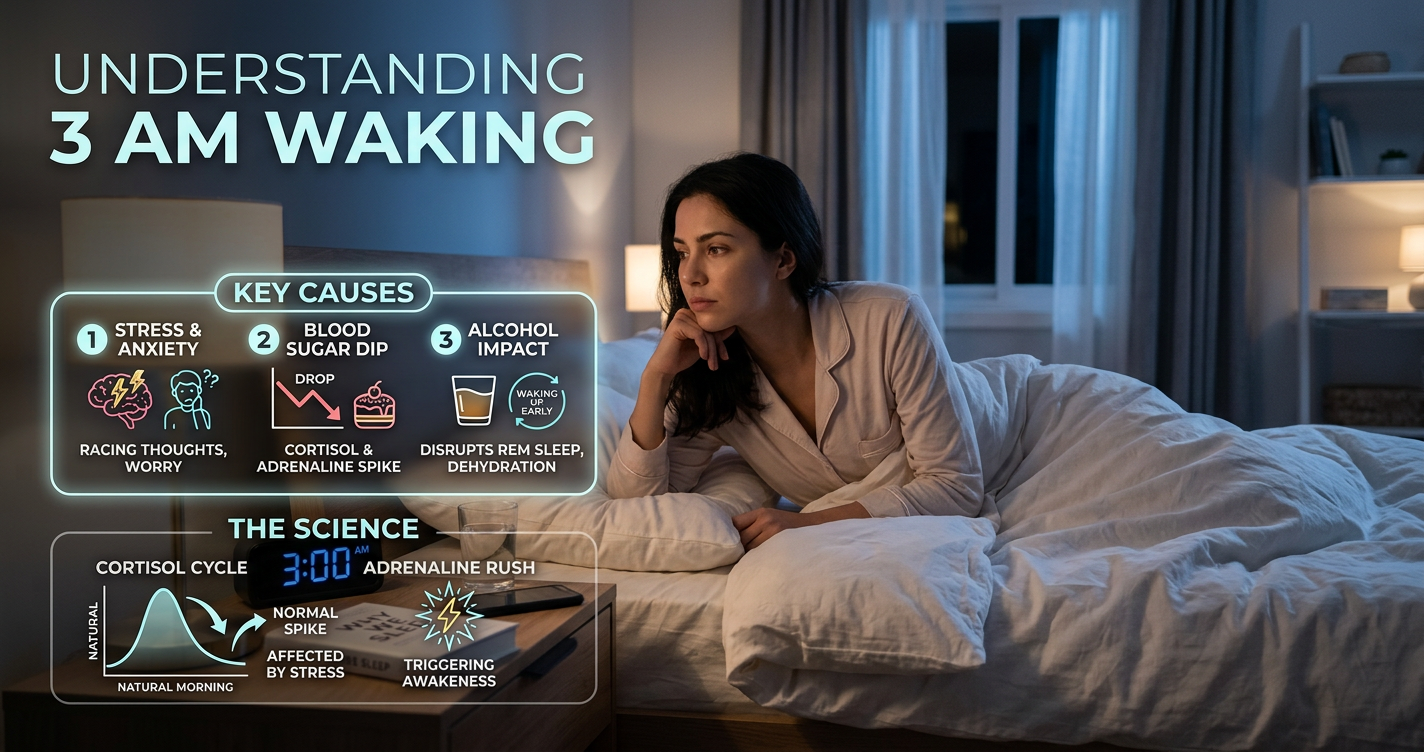
Another biological factor often overlooked is blood sugar regulation. For many, a 3 AM wake-up call is a metabolic signal. When we go for long periods without eating (as we do while sleeping), the liver must release stored glucose to keep blood sugar levels stable. If blood sugar drops too low during the night—a condition known as nocturnal hypoglycemia—the body reacts by releasing cortisol and adrenaline. These hormones are designed to trigger the liver to release more glucose, but they also have the side effect of stimulating the nervous system, leading to a sudden, often anxious, awakening.
The Psychological Weight of the "3 AM Mind"
While the initial wake-up may be physiological, the reason we stay awake is often psychological. There is a distinct difference between a brief stirring and the frustrated, racing thoughts that characterize middle-of-the-night insomnia. Psychologists often refer to the "3 AM mind" as a state where our emotional defenses are at their lowest. In the dark, without the distractions of the day or the social support of others, our problems can feel magnified and insurmountable.
From a cognitive perspective, the brain at 3 AM is not functioning at its peak. The prefrontal cortex, the part of the brain responsible for logical reasoning and executive function, is relatively inactive during sleep. If we wake up suddenly, we are left with an active amygdala—the brain's emotional center—without the "adult in the room" to tell us that our worries are exaggerated. This explains why we might catastrophize about a work project or a minor social interaction at 3 AM, only to realize the next morning that the issue was actually quite manageable.
Hyperarousal: Chronic stress keeps the sympathetic nervous system in a state of "fight or flight," making it difficult for the body to remain in a restful state.
Expectation Anxiety: The mere fear of waking up at 3 AM can become a self-fulfilling prophecy. We begin to monitor our sleep, which increases anxiety and makes wakefulness more likely.
Depression and Anxiety Disorders: Early morning awakening is a classic clinical symptom of clinical depression and generalized anxiety disorder, often linked to disruptions in the serotonin and norepinephrine systems.
To combat the psychological trap of 3 AM wakefulness, it is crucial to avoid "checking the time." Looking at a clock triggers a cascade of mental calculations—how many hours are left until the alarm goes off, how tired we will feel at work, and how we failed at sleeping. This cognitive load ensures that the brain stays in an alert, sympathetic state, making it nearly impossible to drift back into the parasympathetic "rest and digest" state required for sleep.
The Impact of Modern Lifestyle Habits
Our modern environment is often at odds with our biological needs. Alcohol, for instance, is a major contributor to 3 AM wakefulness. While a glass of wine might help you fall asleep faster due to its sedative effects, as the body metabolizes the alcohol, it experiences a "rebound effect." This leads to fragmented sleep, increased heart rate, and frequent awakenings during the second half of the night. Similarly, blue light exposure from smartphones before bed inhibits melatonin production, pushing our circadian rhythm later and making the 3 AM transition point even more volatile.
Actionable Strategies to Reclaim Your Night
If you find yourself frequently staring at the ceiling in the early hours, the solution lies in both daytime habits and nighttime reactions. The goal is to lower your overall "sleep debt" and reduce the hyperarousal that keeps your brain on high alert. By implementing a few evidence-based strategies, you can signal to your nervous system that it is safe to remain asleep.
Optimize Your Sleep Environment: Ensure your room is cool (between 60-67 degrees Fahrenheit), pitch black, and quiet. Even minor light pollution can interfere with the deep sleep cycles of the early morning.
Practice "Stimulus Control": If you are awake for more than 20 minutes, get out of bed. Go to another room, keep the lights low, and do a dull task like reading a physical book or folding laundry. Do not use your phone. Return to bed only when you feel sleepy again. This prevents your brain from associating the bed with the frustration of being awake.
Manage Stress During the Day: Techniques like "worry time"—dedicating 15 minutes in the afternoon to write down concerns and potential solutions—can prevent those same thoughts from bubbling up at 3 AM.
Mindful Breathing and Muscle Relaxation: If you wake up, avoid the urge to move or turn on lights. Instead, practice 4-7-8 breathing or progressive muscle relaxation to stimulate the vagus nerve and encourage the parasympathetic nervous system to take over.
When to Seek Professional Help
While occasional waking is normal, chronic middle-of-the-night insomnia may indicate an underlying medical condition. Sleep apnea, for example, causes brief pauses in breathing that can trigger a "gasping" wake-up at any time. Restless Leg Syndrome (RLS) or chronic pain can also disrupt the lighter sleep stages of the early morning. If you find that your 3 AM wake-ups are occurring more than three times a week and are significantly impacting your daytime functioning, it may be time to consult a sleep specialist or undergo a sleep study.
In conclusion, waking up at 3 AM is a complex intersection of our ancestral biology and our modern lifestyle. By understanding that these awakenings are often just a natural part of the sleep cycle amplified by stress or habits, we can strip away the anxiety that keeps us awake. With the right environmental adjustments and a calm mental approach, you can bridge the gap between 3 AM and morning, ensuring you get the restorative rest your body and mind deserve.