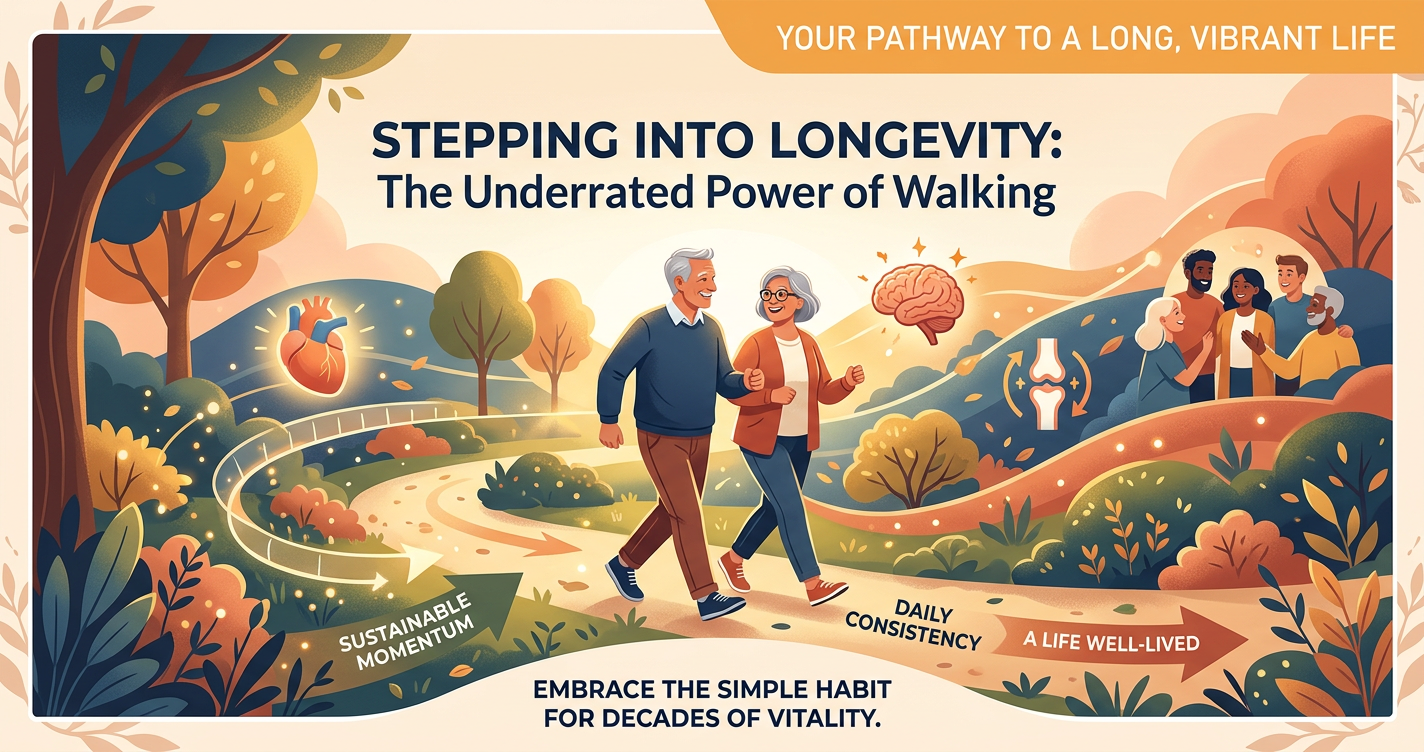
The Science of Low-Intensity Movement and Cellular Longevity
In the modern fitness landscape, we are often bombarded with the message that if a workout doesn’t involve high-intensity interval training, heavy lifting, or extreme perspiration, it somehow doesn’t count. However, as we look closer at the science of human longevity, a different picture emerges. Walking, the most fundamental human movement, is increasingly being recognized by geriatricians and sports scientists as the "gold standard" for sustainable health. Unlike high-impact sports that can lead to chronic inflammation or joint degradation over decades, walking provides a consistent, low-stress stimulus that promotes cellular repair and metabolic efficiency.
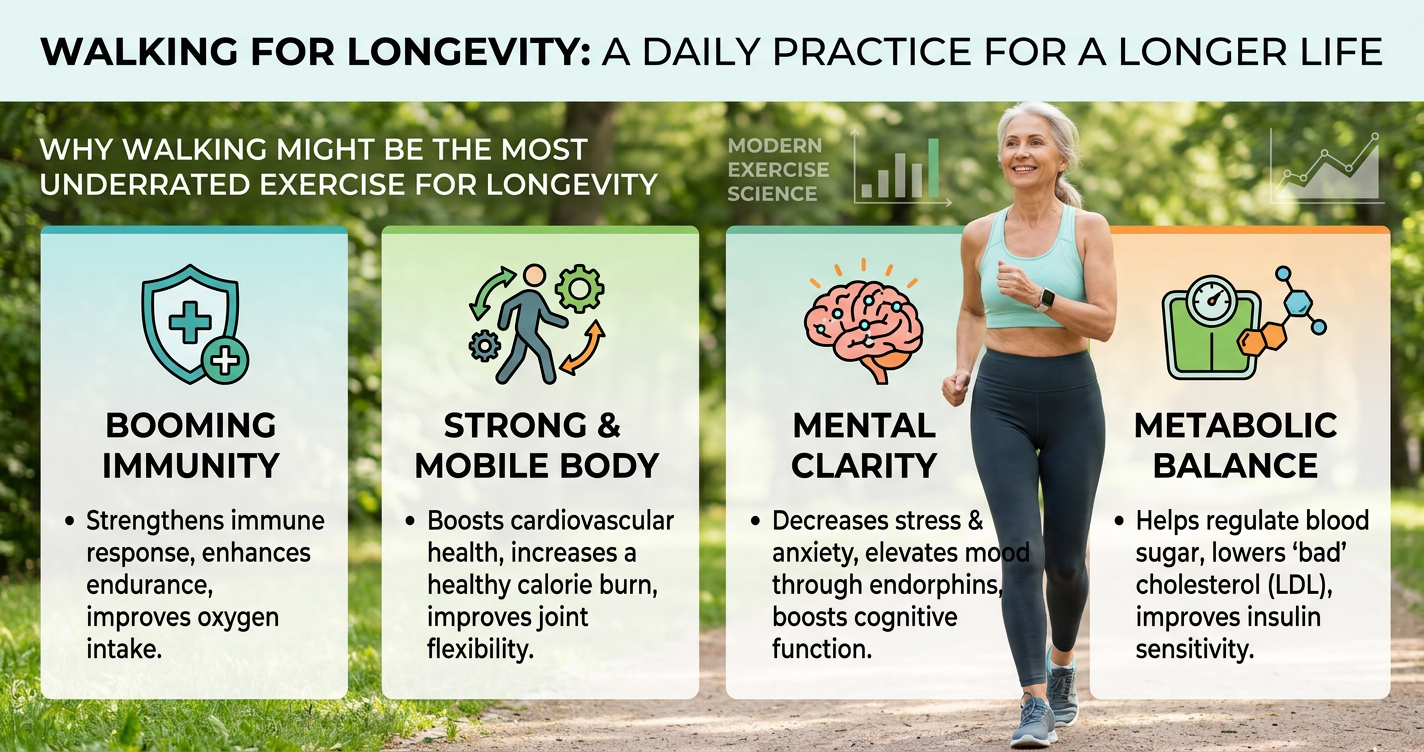
One of the primary reasons walking is so effective for longevity is its impact on mitochondrial health. Our mitochondria are the powerhouses of our cells, and their decline is a primary driver of biological aging. Research suggests that consistent, moderate aerobic activity like walking encourages mitochondrial biogenesis—the creation of new mitochondria. This process is crucial for maintaining energy levels and cognitive function as we age. Furthermore, walking is a primary tool for managing insulin sensitivity. By engaging the large muscle groups in the legs, walking helps clear glucose from the bloodstream, reducing the risk of metabolic syndrome and type 2 diabetes, two conditions that significantly shorten life expectancy.
Beyond the metabolic benefits, walking acts as a powerful regulator of the autonomic nervous system. Unlike high-intensity exercise, which triggers a significant sympathetic (fight-or-flight) response and spikes cortisol, walking—especially when done in nature—promotes parasympathetic dominance. This "rest and digest" state lowers chronic inflammation levels. Chronic low-grade inflammation, often referred to as "inflammaging," is a hallmark of almost every age-related disease, from Alzheimer's to cardiovascular disease. By walking daily, we are essentially giving our bodies a regular dose of anti-inflammatory medicine that requires no prescription and has zero negative side effects.
The Heart Health Connection
Cardiovascular disease remains the leading cause of death globally. While many believe they need to run marathons to protect their heart, the data tells a more nuanced story. Large-scale epidemiological studies have shown that brisk walking can be just as effective as running at reducing the risk of hypertension, high cholesterol, and coronary heart disease when the total energy expenditure is equalized. Walking improves arterial stiffness and promotes better circulation without the acute cardiac strain that can sometimes accompany extreme endurance sports in older populations.
Reduced Blood Pressure: Consistent walking helps maintain the elasticity of arteries, ensuring smoother blood flow.
Lipid Profile Improvement: Regular walks help raise HDL (good cholesterol) while lowering LDL (bad cholesterol) and triglycerides.
Heart Rate Variability (HRV): Walking has been shown to improve HRV, a key marker of a resilient and healthy heart.

Structural Integrity and the Prevention of Frailty
When we discuss longevity, we aren't just talking about the number of years lived, but the quality of those years—often referred to as 'healthspan.' One of the greatest threats to healthspan in our later years is frailty. Sarcopenia (muscle loss) and osteoporosis (bone density loss) are the primary culprits behind the falls and fractures that often lead to a rapid decline in independence. Walking is a weight-bearing exercise, which is essential for signaling the body to maintain bone density. Every step creates a minor impact that stimulates osteoblasts, the cells responsible for bone formation.
Furthermore, walking is a complex coordination task. It requires balance, proprioception, and the synchronization of various muscle groups. As we age, the neural pathways responsible for balance can atrophy if not used. By walking on varied terrain—such as hills, trails, or even uneven city sidewalks—we challenge our vestibular system and strengthen the stabilizer muscles in our ankles, knees, and hips. This "functional strength" is far more practical for preventing falls than the isolated strength gained from many gym machines. It ensures that the body remains a cohesive, mobile unit capable of navigating the world safely.
The low-impact nature of walking also means it is a "lifetime" exercise. Many runners find themselves forced to quit as they reach their 50s or 60s due to worn-out knee cartilage or chronic back pain. Walking, however, is gentle on the joints and can actually help lubricate the joints by circulating synovial fluid. This allows individuals to maintain a high level of physical activity well into their 80s and 90s, a critical factor in the longevity seen in "Blue Zones" around the world, where centenarians often walk five to ten miles a day as part of their routine life.
Building Core Stability and Posture
Modern lifestyle habits, particularly prolonged sitting, lead to "gluteal amnesia" and a shortening of the hip flexors, which destroys posture and leads to chronic back pain. A proper walking gait requires the activation of the glutes, the core, and the spinal erectors. By focusing on an upright posture and a rhythmic stride, walkers can counteract the negative effects of desk work. An aligned spine and strong core are the foundations of long-term mobility, preventing the "stoop" often associated with old age.
Joint Longevity: Minimal shear force on the knees compared to running or plyometrics.
Active Recovery: Walking increases blood flow to muscles, helping them recover from other forms of strain without adding fatigue.
Pelvic Floor Health: The natural rotation of the pelvis during walking helps maintain the functional health of the pelvic floor and deep core muscles.
The Psychological and Neurological Shield
Perhaps the most underrated benefit of walking for longevity is its impact on the brain. As we age, the hippocampus—the area of the brain responsible for verbal memory and learning—naturally shrinks. However, studies have shown that walking can actually increase the size of the hippocampus, effectively "reversing" the brain's age. This is largely due to the production of Brain-Derived Neurotrophic Factor (BDNF), a protein that supports the survival of existing neurons and encourages the growth of new ones. Walking is quite literally a "fertilizer" for the brain, protecting against cognitive decline and dementia.
In addition to structural brain changes, walking is a potent antidepressant. The rhythmic nature of walking, combined with the visual stimulation of moving through an environment, induces a state of "flow" or moving meditation. This reduces rumination—the repetitive negative thinking associated with depression and anxiety. Given the strong correlation between mental health and physical longevity, the "psychological clearing" provided by a daily walk is just as important as the physical exertion. People who walk regularly report lower stress levels, better sleep quality, and a more optimistic outlook on life, all of whom are factors linked to reduced mortality rates.
Finally, walking often serves as a social bridge. Whether walking with a partner, a friend, or a walking group, it facilitates connection. Loneliness is increasingly recognized as a health risk factor as significant as smoking 15 cigarettes a day. By incorporating social walking into a daily routine, individuals satisfy two of the most important requirements for longevity simultaneously: physical movement and social bonding. This holistic approach to health is why walking remains the cornerstone of longevity practices globally. It is accessible, free, and profoundly effective at preserving both the body and the mind.
Cognitive Benefits and Creative Clarity
History is filled with great thinkers, from Aristotle to Steve Jobs, who used walking as their primary tool for problem-solving. Walking increases blood flow to the brain and encourages "divergent thinking," the ability to explore many possible solutions to a problem. When we walk, our brains are not occupied by the intense physical demands of a high-stress workout, allowing the subconscious mind to process information more freely. For anyone looking to maintain mental sharpness and creative vitality into their later years, the daily walk is an indispensable habit.
Stress Reduction: Lowers cortisol levels and promotes the release of endorphins.
Sleep Quality: Morning walks in natural light help regulate the circadian rhythm, leading to deeper sleep at night.
Neuroprotection: Regular aerobic walking is linked to a lower risk of stroke and neurodegenerative diseases.