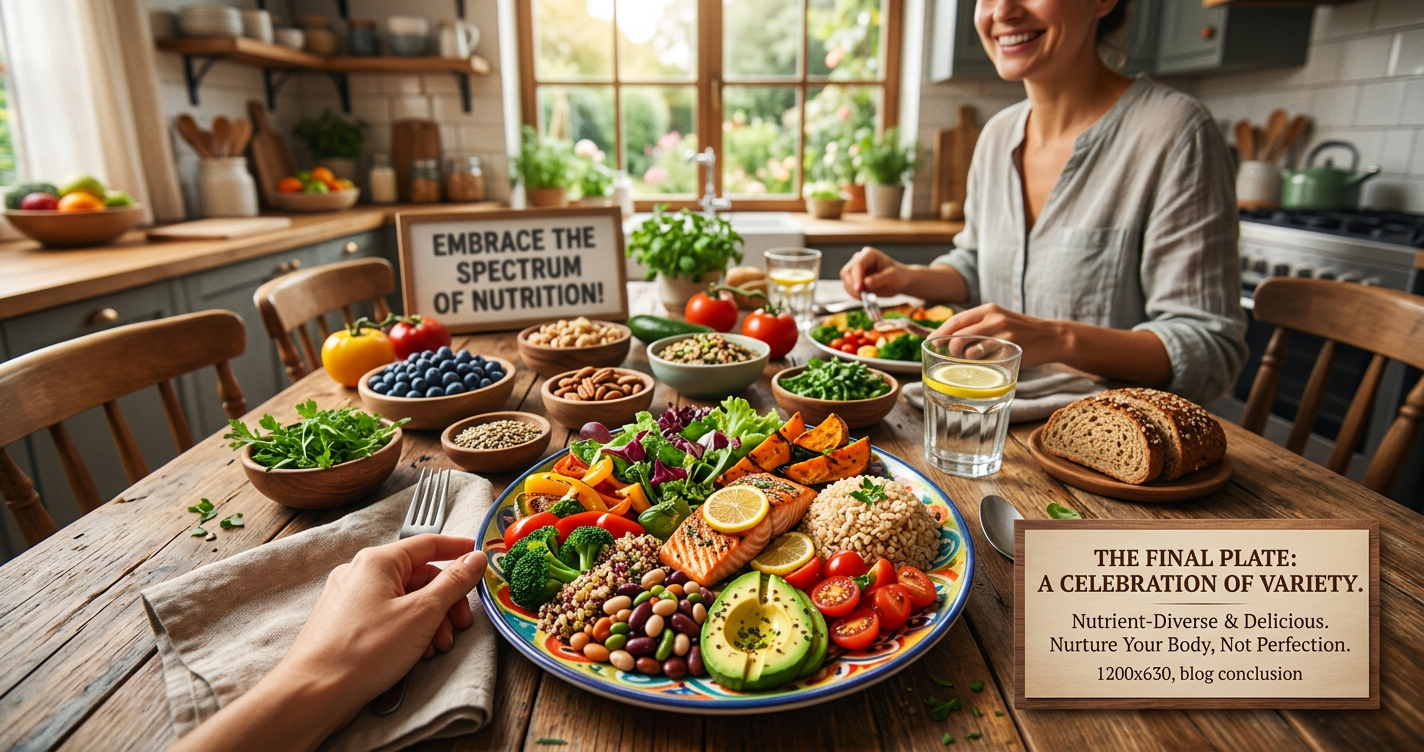
Imagine a canvas. On this canvas, an artist spends years perfecting a single stroke of blue. It is the most exquisite shade of azure ever conceived, applied with a precision that defies human capability. But when you step back, the canvas is just that: one perfect, static line of blue against a void. Now, imagine a different canvas—one splattered with chaotic greens, fiery oranges, deep purples, and earthy browns. It isn't perfect; there are smudges and overlapping hues, but it is alive. It tells a story. It has depth. This is the difference between the pursuit of a "perfect" diet and the embrace of a nutrient-diverse plate.
For years, the wellness industry has sold us the myth of the "Superfood." We were told that if we just ate enough kale, or drank enough celery juice, or found the exact right macronutrient ratio, we would achieve a state of metabolic nirvana. We became obsessed with the singular: the one right way to eat, the one perfect breakfast, the one supplement to rule them all. But in our quest for perfection, we forgot that our bodies are not machines requiring a single type of high-grade oil. They are complex ecosystems, more akin to a rainforest than a laboratory, thriving only when provided with a symphony of inputs.
The Trap of the "Clean" Monotony: Why Perfection Limits Your Health
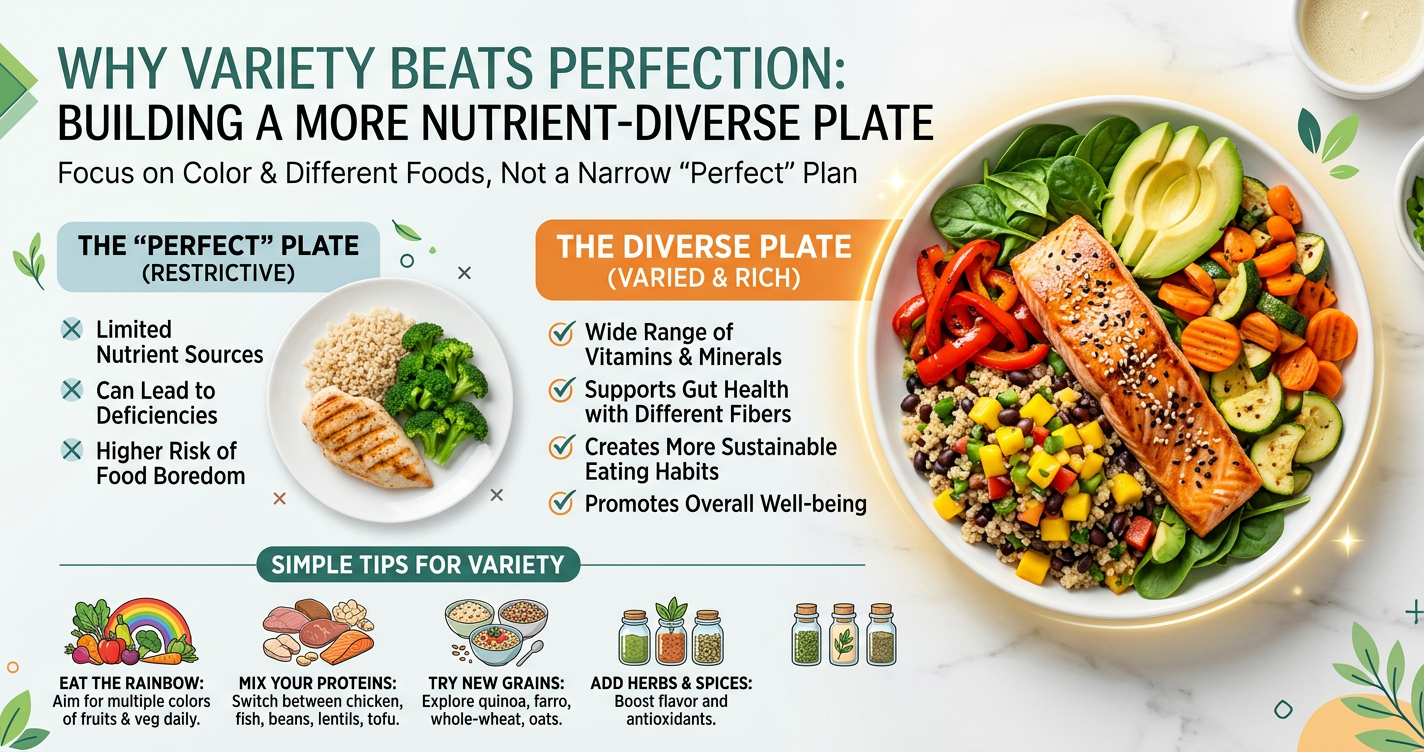
The story of modern nutrition often begins with a well-intentioned person deciding to "get healthy." Let’s call her Sarah. Sarah starts her journey by cutting out everything she deems "bad." She narrows her diet down to a list of ten safe, "perfect" foods: grilled chicken, brown rice, broccoli, eggs, spinach, blueberries, almonds, avocado, sweet potatoes, and Greek yogurt. On paper, this looks like the gold standard of health. She is hitting her macros, avoiding processed sugars, and eating whole foods.
However, three months into this regimen, Sarah feels tired. Her skin is dull, and her digestion has become sluggish. What went wrong? She was eating "perfectly," wasn’t she? The problem is that Sarah fell into the trap of nutritional monotony. By focusing so intensely on a narrow set of "clean" foods, she inadvertently created a nutrient gap. Even the healthiest food in the world cannot provide every single phytonutrient, mineral, and enzyme the body needs.
The Limitation of the "Superfood" Narrative
When we label something a superfood, we imply that it is a complete solution. But nature doesn’t work in silos. Vitamins and minerals often require "co-factors" to be absorbed. For example, the fat-soluble vitamins A, D, E, and K need healthy fats to be utilized by the body. The iron in your spinach (non-heme iron) is much better absorbed when paired with Vitamin C. When we eat the same "perfect" meal every day, we miss out on these synergistic relationships that occur when we rotate our food sources.
Microbiome Diversity: The Inner Garden
Perhaps the most significant casualty of a "perfect" but narrow diet is the gut microbiome. Our digestive tract is home to trillions of bacteria that influence everything from our mood to our immune system. These bacteria are picky eaters; different strains thrive on different types of fiber and polyphenols. When Sarah eats broccoli every single day, she is only feeding the specific bacteria that love broccoli. The other beneficial strains, starved of their preferred fuel from lentils, raspberries, or leeks, begin to die off. A lack of diversity in the diet leads to a lack of diversity in the gut, which is a hallmark of almost every chronic health condition.
Reduced Resilience: A narrow diet makes the body less resilient to environmental stressors.
Psychological Burnout: The mental effort required to maintain a "perfect" diet often leads to orthorexia or eventual binge eating.
Nutrient Competition: Over-consuming certain "healthy" foods can sometimes block the absorption of other nutrients.
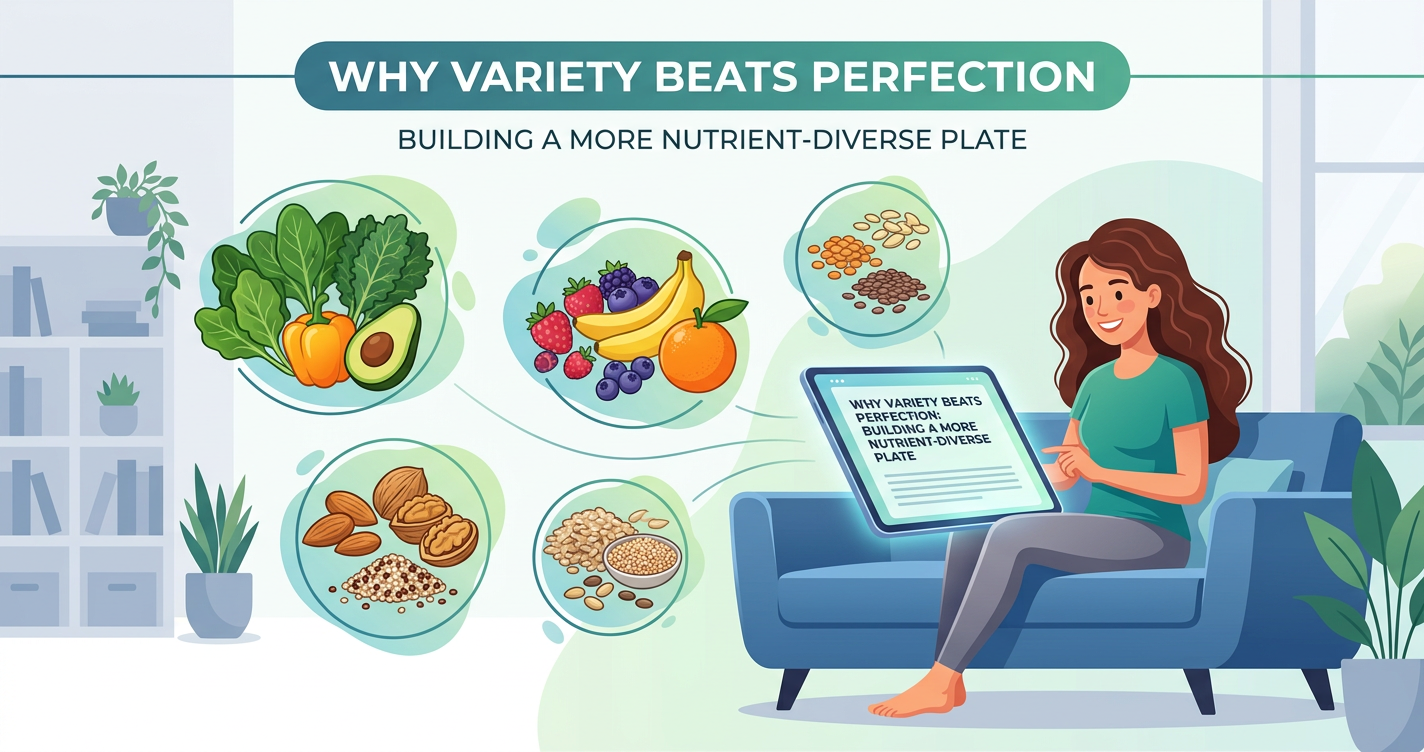
The Power of the Spectrum: How Variety Acts as Biological Insurance
Shift the narrative from "is this food perfect?" to "is my plate colorful?" When we prioritize variety, we are essentially taking out a biological insurance policy. We stop worrying about whether we got exactly 15mg of Zinc today because we know that between the pumpkin seeds we had at breakfast, the chickpeas at lunch, and the oysters or beef at dinner, the body is receiving a steady, varied stream of resources to pull from.
Consider the concept of "biological synergy." There are thousands of phytochemicals in plants—lycopene in tomatoes, anthocyanins in blackberries, sulforaphane in Brussels sprouts—that we are only beginning to understand. Many of these compounds work better in combination than they do in isolation. A study might show that a specific compound in green tea prevents cell damage, but that effect might be doubled when consumed alongside the quercetin found in an onion or an apple. This is why a diverse diet is superior to a handful of isolated supplements.
Eating the Rainbow: More Than a Cliche
We’ve all heard the advice to "eat the rainbow," but the science behind it is fascinating. The pigments that give fruits and vegetables their vibrant colors are actually defense mechanisms the plants developed to survive UV radiation or pests. When we ingest those pigments, we hijack those defense mechanisms for our own wellness.
Red: Rich in lycopene and anthocyanins, supporting heart health and reducing inflammation.
Yellow/Orange: Packed with beta-carotene and Vitamin C for immune function and eye health.
Green: Loaded with chlorophyll, isothiocyanates, and Vitamin K for bone health and detoxification.
Blue/Purple: High in powerful antioxidants that protect the brain from oxidative stress.
White/Tan: Containing allicin (in garlic) and lignans, which have potent anti-viral and anti-bacterial properties.
The Seasonality Factor
Variety isn't just about what is on your plate at one moment; it’s about how your plate changes through the year. Before the era of global shipping, humans ate seasonally by necessity. This natural rotation ensured that we weren't over-exposed to the anti-nutrients of any one plant and that we received the specific nutrients needed for the season (like hydrating cucumbers in summer or hearty, starchy tubers in winter). By stepping away from "perfect" year-round staples and embracing seasonal variety, we align our internal clocks with the environment.
Shifting the Mindset: Practical Ways to Build a Diverse Plate
So, how do we move away from the rigid structures of "perfect" eating and toward a lifestyle of abundance and variety? It requires a mindset shift from subtraction to addition. Instead of asking "What should I cut out to make this meal healthier?" ask "What can I add to make this meal more diverse?" This subtle change removes the guilt associated with dieting and replaces it with curiosity.
Building a nutrient-diverse plate doesn't mean you need to cook a five-course gourmet meal every night. It’s about small, compounding changes that introduce new inputs to your system. It’s about recognizing that a slightly "imperfect" meal with fifteen ingredients is often better for your long-term health than a "perfect" meal with three.
The "Rule of 30" Challenge
A popular goal among nutritionists and researchers is to aim for 30 different plant foods per week. This sounds daunting, but when you count herbs, spices, seeds, nuts, grains, fruits, and vegetables, it becomes a fun game. A sprinkle of black pepper, a dash of cinnamon, a handful of walnuts, and a mix of spring greens already gets you to four or five. This approach encourages you to pick up that strange-looking vegetable at the farmer's market simply because it’s "something different."
Embracing Culinary Adventure
Variety also stems from how we prepare our food. Raw, steamed, roasted, fermented—each method changes the nutrient profile of the food. For instance, cooking tomatoes makes the lycopene more bioavailable, while raw broccoli retains more of its heat-sensitive Vitamin C. Fermenting cabbage into sauerkraut introduces probiotics that weren't there before. By varying our cooking methods, we unlock different layers of nutrition from the same basic ingredients.
Forgiving the Imperfections
Finally, building a diverse plate means accepting that not every meal will be a nutritional masterpiece. Sometimes, variety looks like having a pizza topped with peppers, onions, and mushrooms instead of just cheese. Sometimes, it looks like choosing a different brand of sourdough or trying a new type of bean. The goal is progress, not a flawless record. When we stop obsessing over the "perfect" diet, we reduce the stress hormones that can interfere with digestion and nutrient absorption in the first place. Wellness is found in the joy of the discovery, in the crunch of a new seed, and in the vibrant sprawl of a colorful salad.
In the end, your body is a storyteller. Every nutrient you provide is a word, and every variety of food is a new sentence. Don't write a book that repeats the same three words over and over again. Give your body the vocabulary it needs to write a long, healthy, and vibrant story. Variety isn't just the spice of life; it is the foundation of health.