The alarm clock chirps at 6:30 AM, casting a soft glow across the bedroom. For many, this is the signal to stretch, yawn, and jump out of bed to greet the day. But for Sarah, a 45-year-old graphic designer, the morning ritual looks very different. As she tries to throw back the duvet, her fingers feel like rusted iron hinges. Her knees crackle with the sound of dry leaves, and her lower back feels as though it’s been set in concrete overnight. It takes twenty minutes of gingerly shuffling to the kitchen before her body finally begins to "thaw." If Sarah’s story sounds familiar, you aren’t alone. Morning joint stiffness is a silent epidemic that turns the simplest morning tasks into a physical gauntlet.
The Science of the "Morning Freeze": Why We Wake Up Stiff
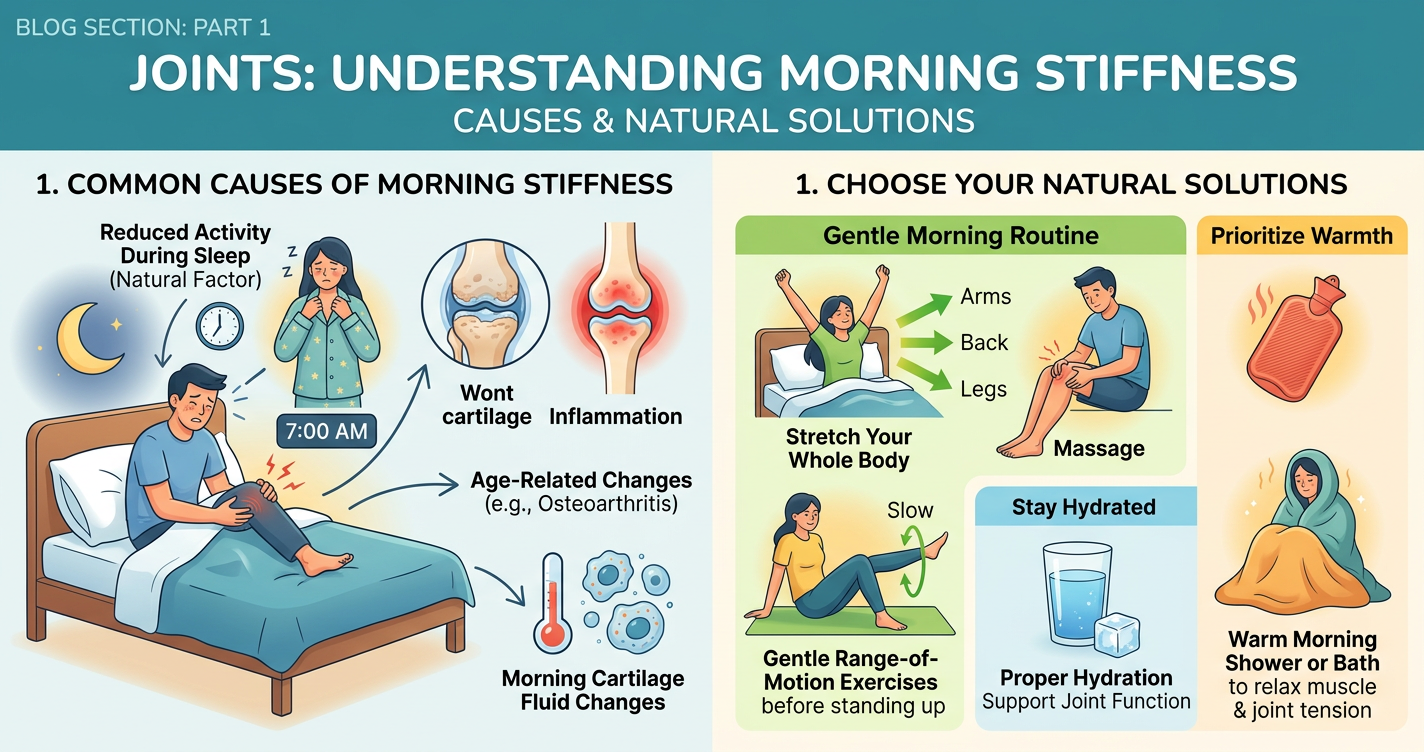
To understand why your body feels like an old, un-oiled machine in the morning, we have to look at what happens while you sleep. The phenomenon is often referred to by medical professionals as "gel phenomenon." Imagine a bottle of olive oil; when it’s warm, it flows freely. When you put it in the refrigerator, it becomes thick and cloudy. Your joint fluid—synovial fluid—behaves in a similar way.
The Role of Synovial Fluid
Synovial fluid is the high-grade lubricant of the human body. Its job is to reduce friction between the articular cartilage of synovial joints during movement. When you are active throughout the day, your joints are constantly circulating this fluid, keeping the area nourished and slick. However, when you remain still for eight hours during sleep, this fluid can thicken. Without movement to "stir the pot," the lack of circulation leads to that hallmark feeling of being stuck.
Circadian Rhythms and Inflammation
Recent research suggests that our biological clocks play a massive role in morning stiffness. Our bodies suppress anti-inflammatory markers while we sleep. For those dealing with underlying conditions like rheumatoid arthritis or even mild age-related wear and tear, pro-inflammatory cytokines peak in the early morning hours. This creates a "perfect storm" where inflammation is at its highest just as your natural lubricating system is at its most sluggish. This is why many people find that their stiffness dissipates after 30 to 60 minutes of movement; your body is literally warming up the oil and suppressing the morning inflammatory surge.
Environmental Factors and Sleep Posture
It isn't just internal biology at play. The environment in which you sleep can exacerbate the issue. A room that is too cold can cause muscles to tense and joints to tighten. Furthermore, sleeping in a "fetal position" or with limbs contorted can pinch nerves and restrict blood flow to certain joints. When Sarah started tracking her sleep, she realized she was curling her wrists under her chin every night, essentially Cutting off the fluid exchange in her carpal tunnels for hours at a time.
Holistic Strategies to Lubricate Your Life
When the morning stiffness becomes a daily visitor, many people reach straight for the ibuprofen. While over-the-counter anti-inflammatories have their place, relying on them daily can lead to gastrointestinal issues and other side effects. Shifting toward a holistic, proactive approach can often provide more sustainable relief by addressing the root causes of the "gel-effect."
Dietary Heroes: Fighting Fire with Food
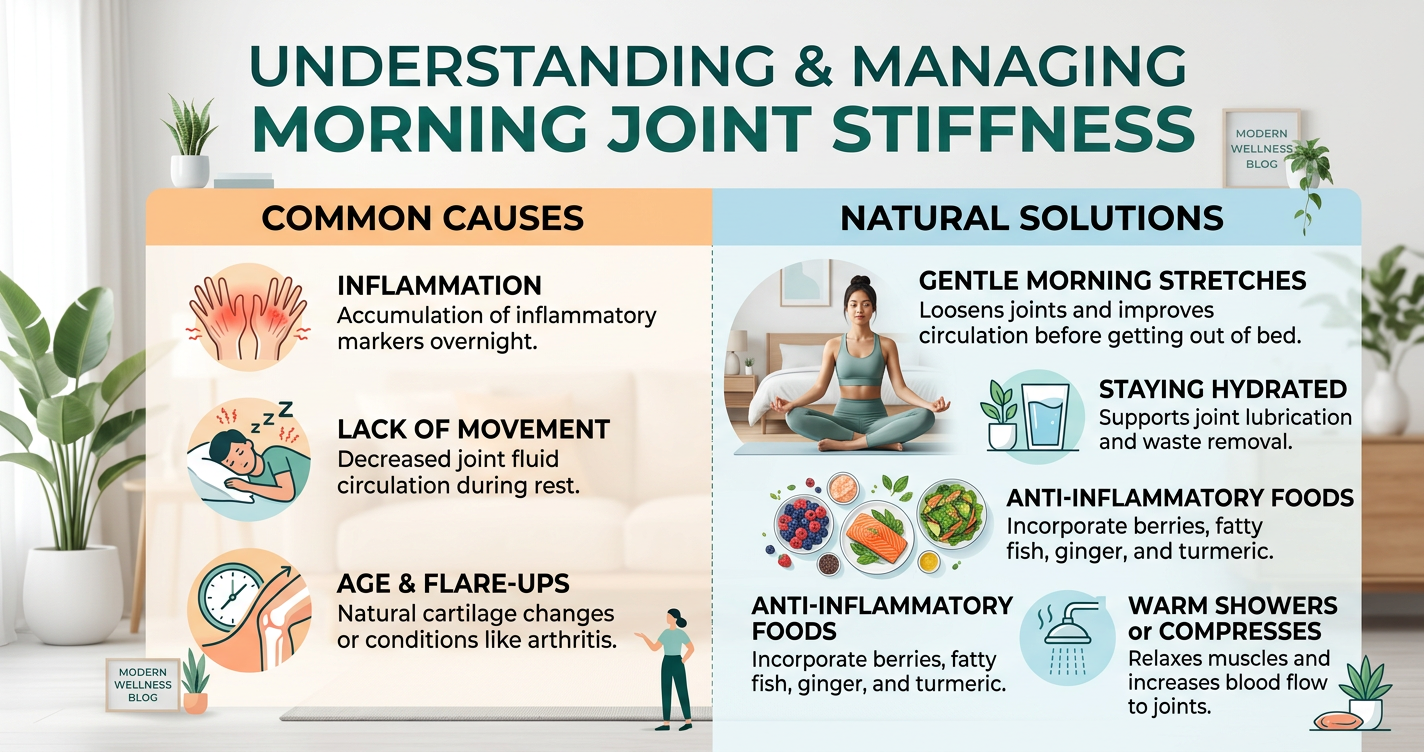
The foundation of joint health is built at the dinner table. An anti-inflammatory diet isn't just a buzzword; it’s a biological necessity for those with stiff joints. Incorporating high levels of Omega-3 fatty acids—found in wild-caught salmon, walnuts, and flaxseeds—helps to modulate the body's inflammatory response. Many people find success with a Mediterranean-style diet rich in leafy greens, berries, and olive oil.
Turmeric and Ginger: These two roots are nature’s most potent anti-inflammatories. Curcumin, the active ingredient in turmeric, has been shown in studies to be as effective as some NSAIDs for joint pain, provided it is taken with black pepper for absorption.
Hydration: Cartilage is roughly 80% water. Even mild dehydration can reduce the volume of synovial fluid. Drinking a full glass of water before bed and another immediately upon waking can significantly impact joint plasticity.
Magnesium: Known as the "relaxation mineral," magnesium helps muscles surrounding the joints to release. A lack of magnesium can lead to nighttime cramping and increased morning tension.
The Art of the Pre-Sleep Routine
Winning the battle against morning stiffness actually begins the night before. Sarah found that by spending just ten minutes on a heating pad before bed, she could increase the blood flow to her most problematic joints. Moist heat penetrates deeper than dry heat, making a warm bath with Epsom salts an ideal ritual. The magnesium in the salts is absorbed through the skin, aiding in muscle relaxation and lowering the cortisol levels that can contribute to inflammation.
Supplements for Longevity
While food is first, certain supplements can provide the building blocks your joints might be missing. Glucosamine and Chondroitin are the old guard of joint health, helping to repair damaged cartilage over time. More recently, Collagen Type II has gained traction for its ability to support the structural integrity of the joint matrix. Always consult with a healthcare provider before starting a new regimen, as certain supplements can interact with medications.
Reclaiming Your Morning: Practical Movement and Habits
If you wake up stiff, the worst thing you can do is stay still. While it feels counterintuitive to move a joint that hurts, movement is the literal "cure" for the gel phenomenon. Reclaiming your morning requires a shift in how you transition from sleep to wakefulness.
The "Bed-Yoga" Sequence
You don't even have to leave your mattress to start loosening up. Before your feet hit the floor, try these "micro-movements":
Ankle Pumps: Flex your feet up and down 20 times to get the blood moving from your lower extremities back toward your heart.
Knee-to-Chest: Gently pull one knee at a time toward your chest to stretch the lower back and hip flexors.
Wrist Rotations: Roll your wrists in slow circles to help circulate synovial fluid into the small joints of the hands.
Pelvic Tilts: Gently arch and flatten your back against the mattress to wake up the spine.
These movements act as a "primer" for your joints, ensuring that by the time you stand up, the "oil" is already starting to flow.
Optimizing Your Sleep Ergonomics
The bed itself is often a silent culprit. A mattress that is too soft doesn't provide enough support for the spine, leading to morning back stiffness. Conversely, a mattress that is too firm can create pressure points on the hips and shoulders. Investing in a medium-firm supportive mattress and using pillows strategically—such as a pillow between the knees for side sleepers—can keep the joints in a "neutral" position, reducing the strain that leads to AM aches.
The Morning Ritual: Heat and Consistency
Once you are out of bed, use heat to your advantage. A warm shower first thing in the morning can do wonders for "thawing" out the rest of your body. The steam and warmth increase circulation to the periphery. Combine this with a consistent morning walk—even if it’s just five minutes around the house—to reinforce to your body that the "active" phase of your circadian rhythm has begun. Consistency is key; your joints respond better to daily, gentle movement than to a once-a-week intense workout.
For Sarah, the journey didn't happen overnight. It took a combination of evening Epsom salt baths, a morning "bed-stretch" routine, and adding more Omega-3s to her diet. But three months later, the 20-minute "thaw" has shrunk to a mere two minutes. Morning stiffness doesn't have to be an inevitable part of aging or a permanent fixture in your life. By understanding the biology of your joints and adopting natural, supportive habits, you can stop "rusting" and start living.