Imagine your body as a high-performance vintage car. When you first drive it off the lot, the engine hums perfectly, the gears shift without a whisper, and the fuel system processes every drop of gasoline with surgical precision. But as the decades pass, the way that engine handles fuel begins to change. If you’ve been topping it off with low-grade fuel or running it constantly at redline RPMs, the internal components start to wear down. This is the story of human aging, and the "fuel" at the heart of it all is glucose.
For years, we viewed blood sugar management as a concern reserved exclusively for those with clinical diagnoses like diabetes. However, modern longevity science is revealing a different narrative. The way our bodies manage blood sugar—a process known as metabolic flexibility—is perhaps the single most important predictor of how well we age. From the clarity of our minds to the elasticity of our skin and the resilience of our immune systems, the invisible dance of glucose and insulin dictates our biological age.
The Invisible Architect: How Glucose Shapes the Aging Process
To understand the connection between blood sugar and aging, we must first look at what happens on a cellular level when our balance is disrupted. Every time we eat, our bodies break down carbohydrates into glucose, which enters the bloodstream. In response, the pancreas releases insulin, a key that unlocks our cells to let the glucose in for energy. In a young, healthy system, this process is seamless. But over time, through a combination of genetics and modern lifestyle factors, our cells can become "hard of hearing." They stop responding to insulin’s knock. This is known as insulin resistance.
When insulin resistance sets in, the body must pump out more and more insulin to achieve the same result. High circulating levels of both glucose and insulin act like a slow-acting corrosive on our biological machinery. One of the primary mechanisms of "inflammaging"—a term researchers use to describe the chronic, low-grade inflammation that drives aging—is this very fluctuation. High blood sugar triggers the production of advanced glycation end-products, appropriately abbreviated as AGEs.
The Menace of AGEs
AGEs occur when excess sugar molecules attach themselves to proteins or fats in the body without the moderation of an enzyme. Think of it like a sticky glaze that hardens over your cellular structures. When this happens to collagen, the protein responsible for skin elasticity and joint health, the fibers become brittle. This leads to wrinkles, sagging skin, and stiff joints. But the damage isn't just cosmetic; AGEs accumulate in the arteries, the brain, and the kidneys, accelerating the functional decline we typically associate with getting older.
Oxidative Stress: Blood sugar spikes generate reactive oxygen species (free radicals) that damage DNA.
Mitochondrial Decay: The "powerhouses" of our cells become less efficient when flooded with constant glucose, leading to lower energy levels as we age.
Cognitive Decline: The brain is highly sensitive to glucose fluctuations; many researchers now refer to Alzheimer’s as "Type 3 Diabetes" due to its link with insulin resistance.
By focusing on blood sugar balance today, we aren't just preventing a future diagnosis; we are actively slowing the internal clock. We are ensuring that the "vintage car" of our body continues to run smoothly, avoiding the rust and engine knocks that come from metabolic neglect.
The Insulin Resistance Trap: Breaking the Cycle of Accelerated Aging
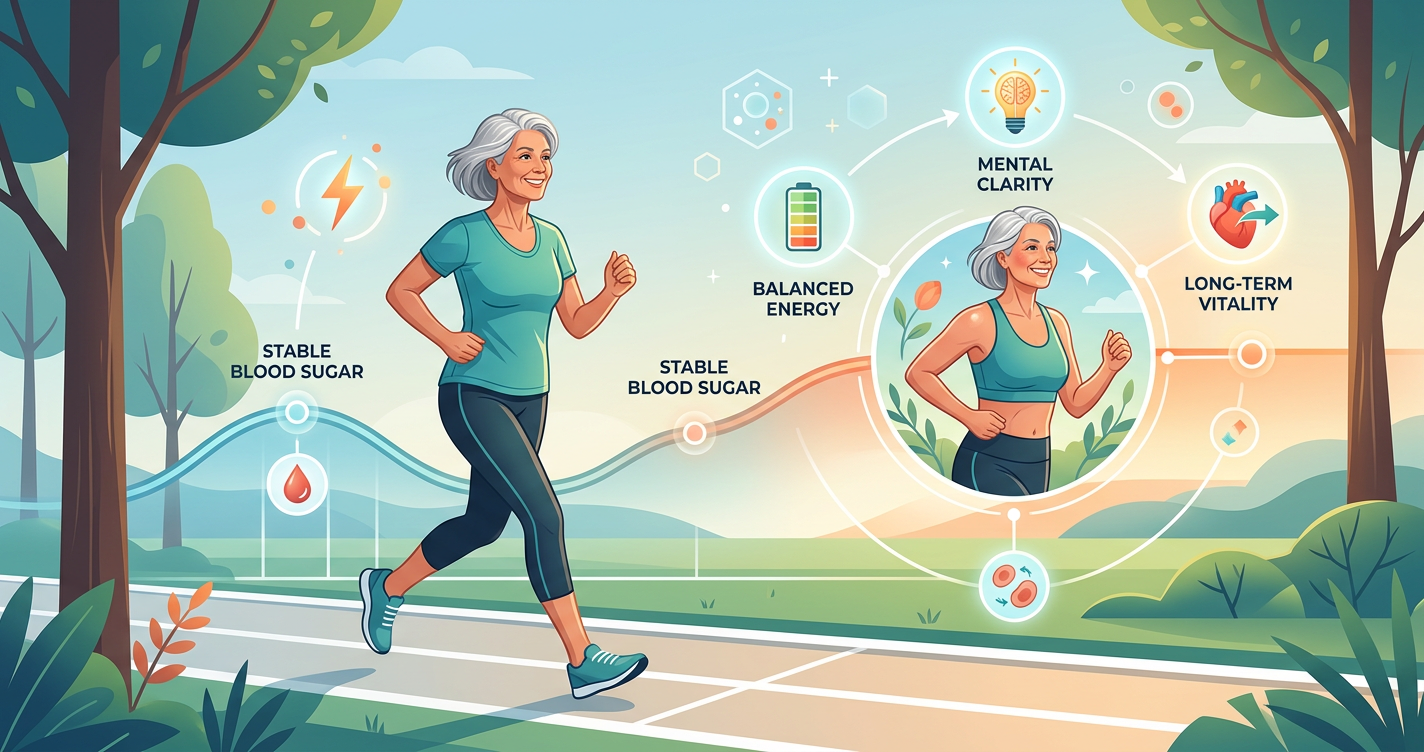
The tragedy of modern aging is that many of us are trapped in a cycle of glucose spikes and crashes without even realizing it. It starts with a "healthy" breakfast of orange juice and cereal, which sends blood sugar soaring. The body overcompensates with a massive hit of insulin, leading to a "crash" two hours later. This crash triggers cravings for more sugar and caffeine, and the cycle repeats. Over decades, this rollercoaster wears down our metabolic resilience.
Insulin resistance is the silent thief of longevity. It doesn't happen overnight; it is a gradual erosion of our ability to process energy. When our cells ignore insulin, the excess sugar has nowhere to go. The liver converts it into fat, often storing it around the midsection as visceral fat. This "belly fat" isn't just inert tissue; it is an active endocrine organ that pumps out inflammatory cytokines, further worsening insulin resistance and accelerating the aging of our cardiovascular system.
The Hormonal Ripple Effect
Blood sugar balance doesn't exist in a vacuum. It is the master lever that controls other hormones. For instance, high insulin levels can disrupt cortisol (the stress hormone) and sex hormones like estrogen and testosterone. In women, this might manifest as more severe menopausal symptoms; in men, it leads to decreased muscle mass and vitality. When we talk about a healthy lifestyle, we are essentially talking about keeping this hormonal symphony in tune.
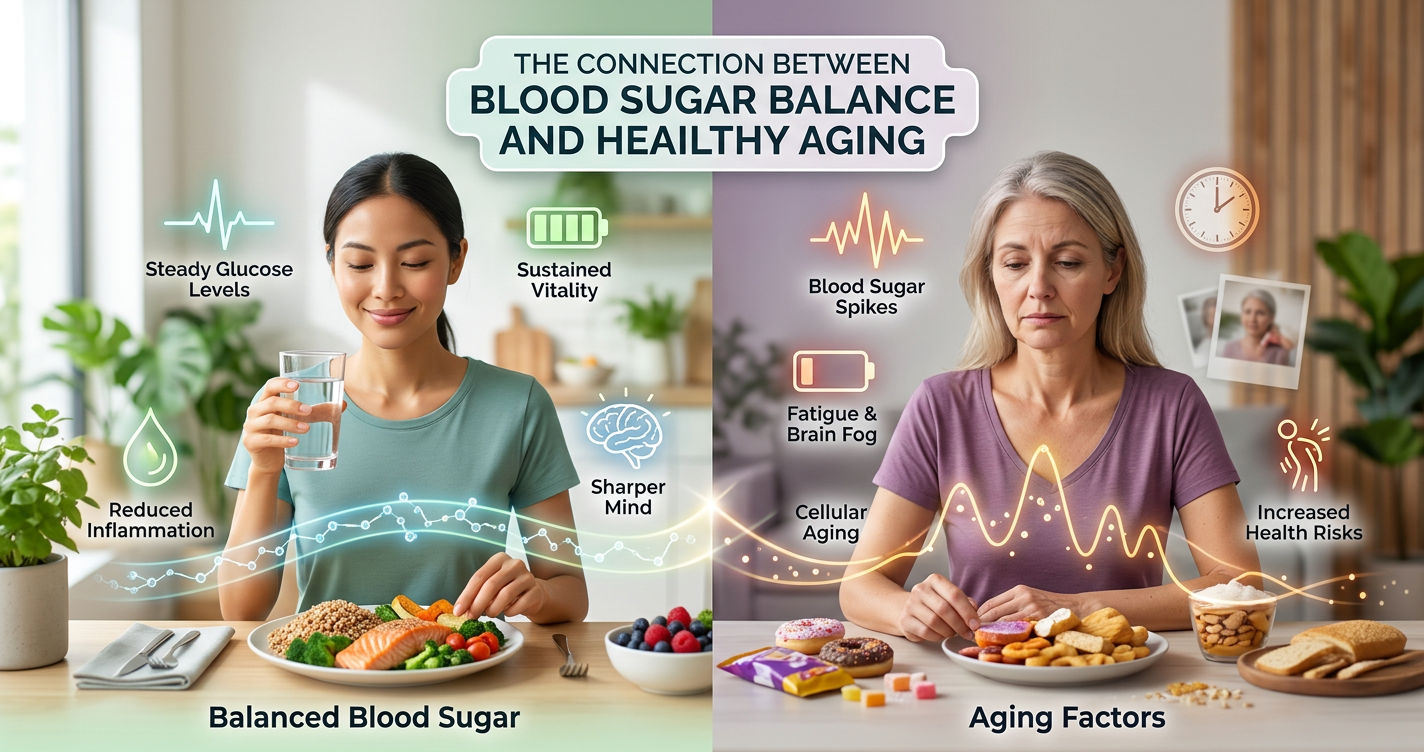
To break the trap, we must rethink our relationship with food and movement. It is not about deprivation; it is about strategy. For example, the order in which we eat our food matters immensely. Starting a meal with fiber (vegetables) and protein before touching starches can significantly blunt the glucose response. This simple "biohack" reduces the insulin load on the body, protecting our cells from the searing heat of a sugar spike.
Muscle as a Glucose Sink: Skeletal muscle is the primary site for glucose disposal. The more muscle mass we maintain as we age, the more "buffer" we have against blood sugar spikes.
The Sleep Connection: Just one night of poor sleep can induce a temporary state of insulin resistance, making you more prone to sugar crashes the following day.
Stress Management: Cortisol tells the liver to dump stored glucose into the blood. Chronic stress is a direct contributor to elevated blood sugar, regardless of what you eat.
Practical Longevity: Mastering Your Metabolism for a Vibrant Future
The good news is that metabolic health is incredibly plastic. Unlike some genetic factors, we have a significant amount of control over our blood sugar balance through a healthy lifestyle. Achieving stability doesn't require a radical overhaul of your life; it requires consistency in small, science-backed habits that prioritize metabolic health as the foundation of aging well.
One of the most powerful tools in our arsenal is "post-prandial movement." The simple act of taking a 10-to-15-minute walk after a meal allows our muscles to soak up the glucose entering the bloodstream, bypassing the need for heavy insulin secretion. It is a literal "reset button" for our metabolism. When we incorporate this into our daily routine, we are essentially providing our internal engine with the maintenance it needs to prevent long-term wear and tear.
The Pillars of Metabolic Longevity
To truly embrace a life of healthy aging, we must look at our habits through the lens of glucose stability. This means choosing whole, unprocessed foods that digest slowly, providing a steady stream of energy rather than a chaotic flood. It means prioritizing strength training to build the "metabolic engine" of our muscles. And perhaps most importantly, it means being mindful of the hidden sugars that permeate the modern diet.
Prioritize Protein and Fiber: These nutrients slow down the absorption of sugar, ensuring a gentle rise and fall in blood glucose.
Embrace Intermittent Fasting: Giving the body periods of time without food allows insulin levels to drop, encouraging the body to burn stored fat and perform cellular cleanup (autophagy).
Monitor, Don't Guess: Tools like Continuous Glucose Monitors (CGMs) are no longer just for diabetics; they are being used by longevity enthusiasts to see in real-time how specific foods and stressors affect their unique biology.
Ultimately, the connection between blood sugar and aging is a story of empowerment. We are not helpless victims of our birthdays. While the calendar will always turn, the rate at which our biological systems degrade is largely within our hands. By balancing our blood sugar, we are doing more than just managing a number on a lab test; we are preserving our mobility, our memory, and our zest for life. Healthy aging is not the absence of years, but the presence of vitality—and that vitality begins with a stable, balanced metabolism.
As you move forward, remember that every meal is an opportunity to send a signal to your cells. You can send a signal of stress and decay, or a signal of stability and repair. Choose the latter, and your future self will thank you for the smooth-running, high-performance life you've preserved.