The Rainbow on Your Plate: A Journey Through Nature’s Pharmacy
Once upon a time, in a world dominated by the convenient but monochromatic hues of beige, brown, and processed white, lived a man named Elias. Elias was a typical product of the modern era. His mornings began with a pale piece of toast, his lunches were often a sandy-colored sandwich, and his dinners usually centered around a piece of meat and a scoop of mashed potatoes. He felt fine, or so he thought. But "fine" was a low bar he had grown accustomed to—a persistent fatigue that caffeine couldn't cure, a dullness in his skin, and a digestive system that felt as sluggish as a Monday morning commute.
One Saturday, Elias found himself wandering through a local farmer’s market, a place he usually bypassed in favor of the fluorescent-lit aisles of the supermarket. As he moved through the stalls, he felt as though he had stepped into a Technicolor film. There were deep, royal purples of eggplants, the electric oranges of carrots, the fire-engine reds of bell peppers, and the lush, deep greens of kale that looked like it had been plucked from a mystical forest. It was a stark contrast to his beige pantry at home. A farmer, sensing his hesitation, handed him a slice of a blood orange. The juice was a shocking crimson, tasting of sunshine and earth. "Eat the rainbow, Elias," the farmer said with a wink. "Your body speaks in colors."
This encounter sparked a curiosity in Elias. He began to wonder why these plants possessed such vivid pigments. As he delved into the science of phytonutrients, he discovered that these colors weren't just for show—they were biological signals of specific health benefits. Each hue represented a different set of antioxidants and chemical compounds designed to protect the plant from the sun and pests, and when consumed, they offered that same protection to humans. This was the beginning of his transformation. He realized that by neglecting the spectrum of color, he was depriving his body of the essential toolkit it needed to repair, defend, and thrive.
The Red Revolution: Protecting Your Heart and DNA
Elias started his journey with red. He learned that the fiery pigment in tomatoes, watermelons, and pink grapefruits comes from lycopene, a powerful antioxidant known for its heart-protecting properties. But red wasn't just about the heart; it was about the very blueprint of his life. Anthocyanins, found in strawberries, raspberries, and red apples, were shown to reduce inflammation and protect cells from oxidative stress—the kind of internal rust that leads to chronic disease. As Elias swapped his morning toast for a bowl of ruby-red berries, he noticed something strange: the mid-morning brain fog that usually clouded his thoughts began to lift. His cells were finally getting the high-octane fuel they had been craving.
The Orange and Yellow Glow: Vision and Immunity
Next came the sun-drenched shades of orange and yellow. He discovered that these foods are rich in beta-carotene, which the body converts into Vitamin A. This wasn't just old wives' tales about carrots helping you see in the dark; it was about maintaining the integrity of his immune system and the health of his skin. He started roasting sweet potatoes and snacking on sliced mangoes. Within weeks, the dullness he had accepted as his "natural" complexion began to fade, replaced by a subtle, healthy glow. His eyes felt less strained after long hours at the computer. He was literally seeing the world differently, all because he invited the sun onto his plate.
The Science of the Spectrum: Why Variety is Your Best Defense
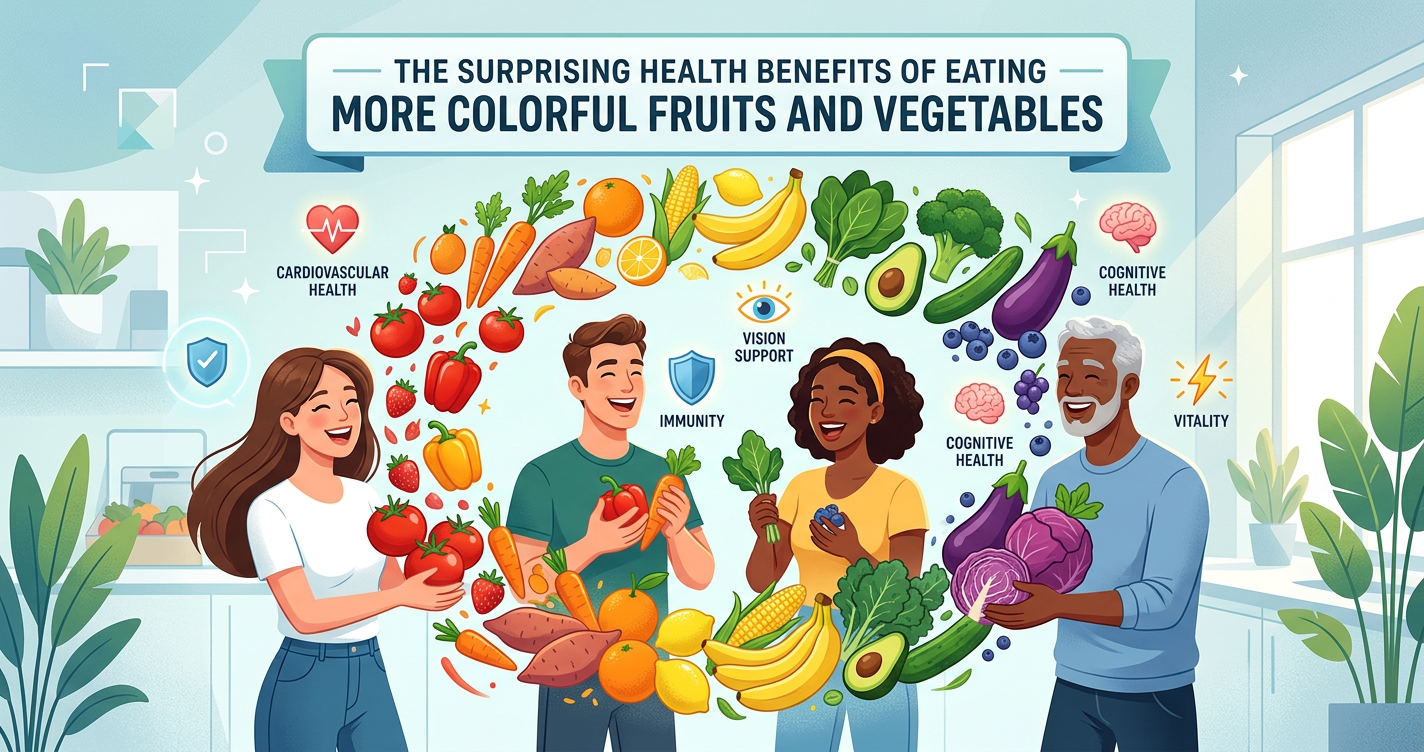
As Elias grew more adventurous, his kitchen transformed into an artist’s studio. He learned that the secret to health wasn't just eating "vegetables," but eating a diversity of them. The human body is an incredibly complex machine, and it requires a diverse array of nutrients to function optimally. When we stick to just one or two types of produce, we create nutritional gaps. By eating across the spectrum, we ensure that every biological system—from our gut microbiome to our neurological pathways—receives the specific support it needs.
The Green Powerhouse: Detoxification and Energy
Green is perhaps the most famous color in the vegetable kingdom, but Elias discovered there was more to it than just "eating your greens." Chlorophyll, the pigment that allows plants to turn sunlight into energy, has a structure remarkably similar to human hemoglobin. Leafy greens like spinach, Swiss chard, and bok choy are loaded with Vitamin K, folate, and magnesium. But the real magic lay in the cruciferous family—broccoli, Brussels sprouts, and kale. These contain sulforaphane, a compound that supports the liver’s natural detoxification processes. Elias noticed that as he increased his green intake, his energy levels became more stable. He no longer crashed at 3:00 PM; he felt a sustained, clean energy that powered him through his workouts and his workdays alike.
The Blue and Purple Mystery: Brain Health and Longevity
Perhaps the most fascinating discovery for Elias was the power of the blue and purple foods. Blueberries, blackberries, purple cabbage, and plums contain unique antioxidants called anthocyanins. These compounds are particularly adept at crossing the blood-brain barrier, offering protection to neurons and enhancing cognitive function. Researchers have found that these dark pigments can improve memory and slow the aging process of the brain. Elias started making "purple smoothies" in the afternoon. Instead of reaching for a sugary snack, he blended frozen blueberries with almond milk and a handful of spinach. He felt sharper, more focused, and remarkably more resilient to stress. It was as if the deep pigments were insulating his nerves against the chaos of the modern world.
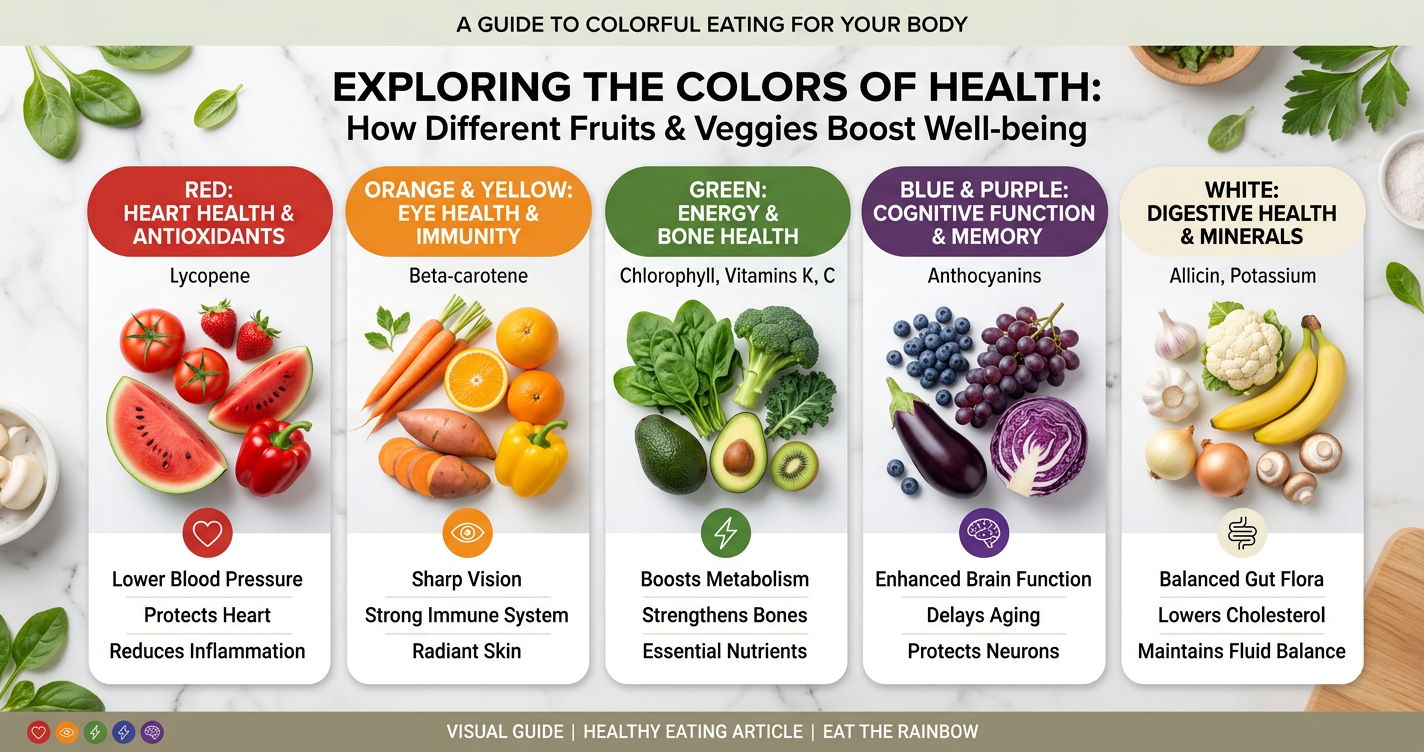
Red: Rich in lycopene and anthocyanins; supports heart health and skin protection.
Orange/Yellow: High in beta-carotene and Vitamin C; boosts immunity and eye health.
Green: Packed with Vitamin K, magnesium, and sulforaphane; essential for bone health and detox.
Blue/Purple: Loaded with potent antioxidants; supports brain function and reduces inflammation.
White/Tan: Contains allicin and potassium; helps maintain healthy cholesterol and blood pressure levels.
The Hidden Heroes: White and Tan Foods
Elias learned not to overlook the "pale" colors that weren't processed. Garlic, onions, cauliflower, and mushrooms might lack the vibrant flash of a bell pepper, but they are nutritional giants in their own right. Garlic and onions contain allicin, which has powerful anti-microbial and anti-viral properties. Mushrooms offer unique polysaccharides that support the immune system in ways no other food can. Even the humble cauliflower is a source of choline, essential for brain development and metabolism. Elias realized that even in the absence of bright color, nature had tucked away life-saving medicine. He began sautéing onions and garlic as a base for almost every meal, filling his home with aromas that signaled health and vitality.
A Life in Full Color: The Lasting Impact of Dietary Diversity
Six months after his first encounter at the farmer’s market, Elias was a different man. The transformation wasn't just physical—though he had lost weight, his skin had cleared, and his hair looked thicker—it was psychological. He felt a sense of vibrancy and connection to his food that he had never experienced. Eating was no longer a chore or a mechanical necessity; it was an act of self-care and a celebration of life’s diversity. He had moved from a beige existence into a world of high-definition health.
The beauty of the "rainbow diet" is its simplicity. It doesn't require complex calorie counting or the elimination of entire food groups. Instead, it invites an ethos of "addition." Instead of thinking about what you can't have, you think about what colors you haven't eaten yet today. Did I have something purple? Have I had enough green? This shift in mindset reduces the stress often associated with dieting and turns nutrition into a creative challenge. It encourages us to explore the grocery store or the market with the eyes of an artist, looking for that one shade of magenta or emerald that will complete our daily masterpiece.
Practical Steps to Brighten Your Plate
If you're looking to follow in Elias's footsteps, the transition doesn't have to happen overnight. Start by looking at your current favorite meals and asking how you can add one more color to them. Adding a handful of spinach to your morning eggs, some sliced radishes to your tacos, or a side of purple slaw to your dinner can make a world of difference. The goal is to aim for at least three different colors at every meal. Over time, your palate will change. You'll find yourself craving the crisp snap of a fresh bell pepper or the tart burst of a pomegranate seed more than you ever craved the bland saltiness of a bag of chips.
The Longevity Connection
Scientific studies consistently show that populations with the highest intake of diverse fruits and vegetables have the lowest rates of chronic diseases like type 2 diabetes, heart disease, and certain cancers. By eating a wide variety of plants, you are essentially providing your body with a broad-spectrum insurance policy. The synergistic effects of these nutrients—how Vitamin C helps you absorb iron, or how healthy fats help you absorb the Vitamin A in carrots—mean that the whole is far greater than the sum of its parts. You aren't just eating food; you are communicating with your genes, telling them to express health instead of disease.
The Joy of the Seasonal Shift
One of the most rewarding aspects of Elias's new lifestyle was syncing his plate with the seasons. In the spring, he feasted on the pale greens of asparagus and peas. In the summer, his kitchen was a riot of red tomatoes and yellow peaches. Autumn brought the deep oranges of pumpkins and squashes, and winter introduced the hardy purples of beets and kale. This seasonal rotation ensured that he was never bored and that he was getting a rotating cast of nutrients throughout the year. Nature, he realized, has its own rhythm, and when we eat according to that rhythm, we find ourselves more in tune with the world around us.
Elias's story is a reminder that we have incredible power over our own well-being, located right at the end of our forks. The journey to health doesn't have to be a struggle through tasteless "diet foods." It can be a vivid, flavorful, and exciting exploration of everything the earth has to offer. So, the next time you find yourself in the produce aisle, don't just look for the basics. Look for the deepest reds, the brightest oranges, and the darkest purples. Your body is waiting for the signal. It's time to stop living in beige and start living in full color.