In the quiet corners of our biology, a silent fire is burning. For Sarah, a 42-year-old graphic designer, the symptoms were subtle at first. It began with a lingering fatigue that coffee couldn't touch, followed by a strange puffiness in her face every morning, and a stiffness in her joints that made her feel decades older than her birth certificate suggested. She shrugged it off as the natural consequence of a high-stress career and the inevitable passage of time. However, Sarah wasn’t just "getting older"—she was experiencing the biological acceleration of chronic inflammation, a phenomenon scientists now call "inflammaging."
The Hidden Fire: Understanding Chronic Inflammation vs. Acute Healing
To understand why Sarah felt like she was sprinting toward old age, we must first distinguish between the two faces of inflammation. Inflammation is not inherently a villain; in its acute form, it is our body’s most vital defense mechanism. When you stub your toe or catch a cold, your immune system rushes to the scene like a fleet of fire trucks. Blood vessels dilate, white blood cells swarm the area, and cytokines—chemical messengers—signal for repair. This "hot" inflammation is intense, localized, and, most importantly, temporary. Once the threat is neutralized, the fire is extinguished, and healing begins.
The problem arises when the fire trucks never leave the station. Chronic inflammation is the "cold" version of this process. It is a low-grade, systemic activation of the immune system that persists for months or years. Unlike the sharp pain of a broken bone, chronic inflammation is a whisper. It circulates through the bloodstream, quietly damaging healthy tissues, organs, and DNA. It is the result of an immune system that has lost its "off" switch, often due to modern triggers that our ancestors never had to face.
Biologically, this persistent state puts an enormous strain on our cellular machinery. Imagine a car being driven at redline RPMs while parked in a garage. The engine (our metabolism) gets incredibly hot, the parts (our cells) wear down prematurely, and eventually, the entire system begins to smoke. In Sarah’s case, her body was constantly reacting to a cocktail of stressors: a diet high in processed sugars, insufficient sleep, and the psychological pressure of deadlines. Her immune system believed it was under constant attack, and in its effort to protect her, it was actually dismantling her youth from the inside out.
The Role of Cytokines and Oxidative Stress
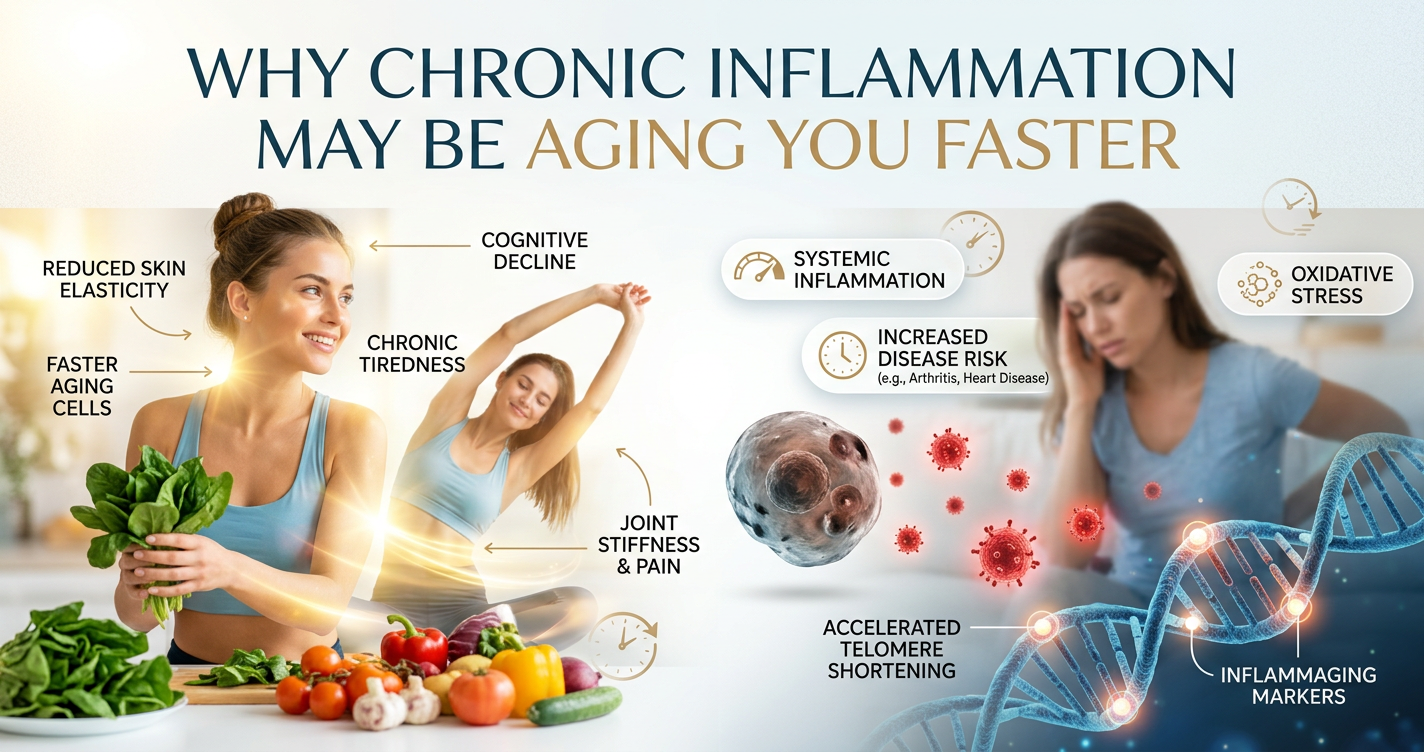
At the center of this process are cytokines like Interleukin-6 (IL-6) and Tumor Necrosis Factor-alpha (TNF-α). In a healthy body, these are released sparingly. In a body plagued by chronic inflammation, these molecules act as corrosive agents. They contribute to oxidative stress—an imbalance between free radicals and antioxidants. When free radicals outnumber antioxidants, they begin to "rust" our cells in a process called lipid peroxidation. This doesn't just make us feel tired; it physically degrades the integrity of our skin’s collagen, the elasticity of our arteries, and the clarity of our cognitive function.
Inflammaging: The Biological Link Between Inflammation and Accelerated Decay
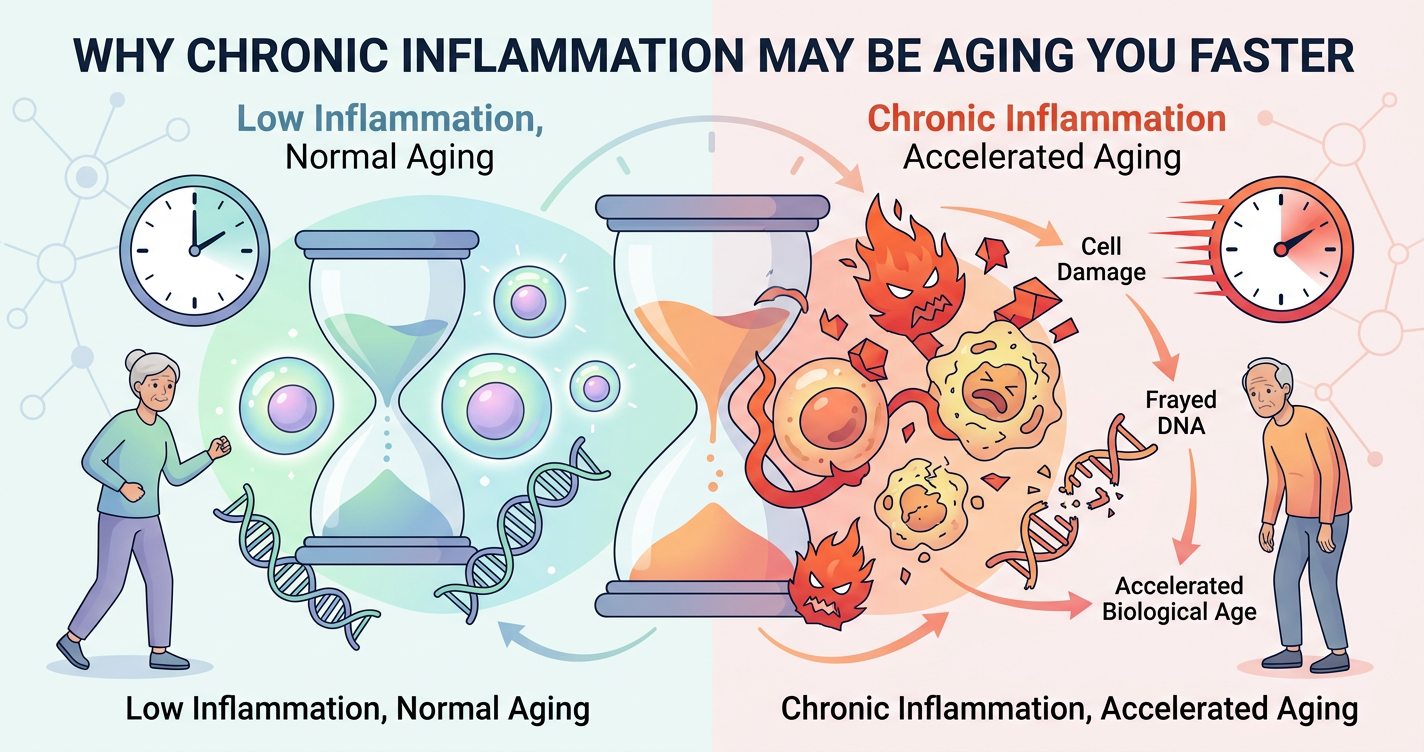
The term "inflammaging" was coined by Professor Claudio Franceschi in 2000 to describe the bridge between immune dysfunction and the aging process. It suggests that the rate at which we age is directly proportional to the total load of inflammation in our bodies. This isn't just about wrinkles—though inflammation certainly accelerates those—it’s about the fundamental biological markers of age. When we look at Sarah, her "biological age" was likely crossing into the 50s because her cells were undergoing changes typically seen in the elderly.
One of the primary ways chronic inflammation ages us is through the shortening of telomeres. Telomeres are the protective caps at the ends of our chromosomes, often compared to the plastic tips on shoelaces. Every time a cell divides, the telomeres get a little shorter. When they become too short, the cell can no longer divide and becomes "senescent"—a zombie cell. Chronic inflammation acts like a catalyst, speeding up the shortening of these telomeres. High levels of inflammatory markers are consistently linked to shorter telomeres, meaning your cells reach their "expiration date" much faster than nature intended.
Furthermore, these "zombie cells" (senescent cells) don't just sit there quietly. They actually secrete more inflammatory signals, creating a vicious cycle. One senescent cell can "infect" its neighbors with inflammation, leading to a cascade of tissue breakdown. This is why inflammation-related aging feels like a snowball rolling down a hill; it starts slowly but gains destructive momentum as the years pass. For Sarah, this manifested as "brain fog." The inflammation in her body was crossing the blood-brain barrier, triggering microglial cells (the brain's immune cells) to stay active, which impaired her neuroplasticity and memory.
The Impact on Vital Systems
The Cardiovascular System: Inflammation irritates the lining of the blood vessels, encouraging the buildup of plaque. This hardens the arteries, making the heart work harder and aging the entire circulatory system.
The Musculoskeletal System: Chronic inflammation breaks down cartilage and bone density. This is why Sarah felt "stiff"—her joints were effectively experiencing premature wear and tear due to high cytokine levels.
The Integumentary System (Skin): UV rays are a known inflammatory trigger, but internal inflammation is just as damaging. It breaks down elastin and collagen, leading to sagging and a loss of that youthful "glow."
The Metabolic System: Inflammation interferes with insulin signaling. This can lead to insulin resistance, which further increases inflammation, creating a feedback loop that leads to weight gain and metabolic aging.
Extinguishing the Fire: Strategies to Reverse the Aging Clock
The good news for Sarah—and for all of us—is that chronic inflammation is not a life sentence. Unlike our genetics, which are set in stone, our inflammatory "tone" is highly malleable. By changing the inputs we provide our bodies, we can dampen the immune response and allow our cellular repair mechanisms to take over. Sarah began her journey toward "de-aging" not by looking for a miracle cream, but by addressing the fire at its source.
The first and most powerful tool is nutrition. The modern Western diet is essentially an inflammatory blueprint, packed with refined oils, high-fructose corn syrup, and artificial additives. To reverse her "inflammaging," Sarah shifted toward a Mediterranean-style approach. She prioritized "anti-inflammatory heavyweights" like fatty fish (rich in Omega-3s), turmeric, leafy greens, and berries. Omega-3 fatty acids, in particular, serve as the precursors to specialized pro-resolving mediators (SPMs)—molecules that actively tell the immune system to "stand down" and start the healing process.
Beyond the plate, lifestyle modifications play a critical role. Stress is a major inflammatory trigger; the hormone cortisol, while anti-inflammatory in short bursts, becomes pro-inflammatory when it is chronically elevated. Sarah integrated daily breathwork and yoga to shift her nervous system from "fight or flight" to "rest and digest." Additionally, sleep is the period when the body does its most significant "housekeeping." During deep sleep, the glymphatic system flushes metabolic waste out of the brain. By prioritizing 8 hours of quality rest, Sarah allowed her body the time it needed to extinguish the inflammatory embers of the day.
Practical Steps to Reduce Your Inflammatory Load
Prioritize Gut Health: 70% of your immune system resides in your gut. A "leaky" gut allows toxins into the bloodstream, triggering systemic inflammation. Focus on fermented foods and prebiotic fibers.
Movement, Not Punishment: While over-training can increase inflammation, moderate, consistent exercise is one of the best ways to lower systemic markers like C-reactive protein (CRP).
Environmental Awareness: Reduce exposure to endocrine disruptors and toxins found in plastics and harsh cleaning chemicals, which the body perceives as foreign invaders.
Intermittent Fasting: Giving the digestive system a break can trigger autophagy—a process where the body cleans out damaged cells and components, slowing the aging process.
Six months after making these changes, Sarah felt like a different person. The puffiness vanished, her energy levels stabilized, and her skin regained a clarity she hadn't seen since her early 30s. By understanding the link between chronic inflammation and aging, she didn't just add years to her life; she added life to her years. Aging is inevitable, but the speed at which it happens is often within our control. By cooling the internal fire of inflammation, we can protect our cells, our minds, and our vitality for the long haul.