In a world that feels increasingly like a high-speed treadmill, we are constantly bombarded with advice on how to optimize our lives. We’re told to drink more water, hit 10,000 steps, master the art of meal prepping, and meditate until our minds are as clear as a mountain spring. But amidst all the talk of green juice and HIIT workouts, we’ve collectively overlooked one of the most potent tools for mental and physical well-being: the humble hobby.
Now, I’m not talking about "side hustles." We live in an era where if you enjoy baking, people tell you to start a bakery. If you like knitting, you’re pressured to open an Etsy shop. The moment we turn a leisure activity into a source of income, it ceases to be a hobby and becomes work. No, what I’m talking about are those pure, sometimes slightly weird, completely non-productive activities we do just because they make us feel good. Whether it’s collecting vintage stamps, building elaborate LEGO castles, or learning to identify every bird species in your neighborhood, hobbies are the secret sauce to a healthier life. But why exactly are they so good for us? Let’s dive into the health benefits that usually get left out of the conversation.
The Neurological Reset: Why Your Brain Craves "Low-Stakes" Focus
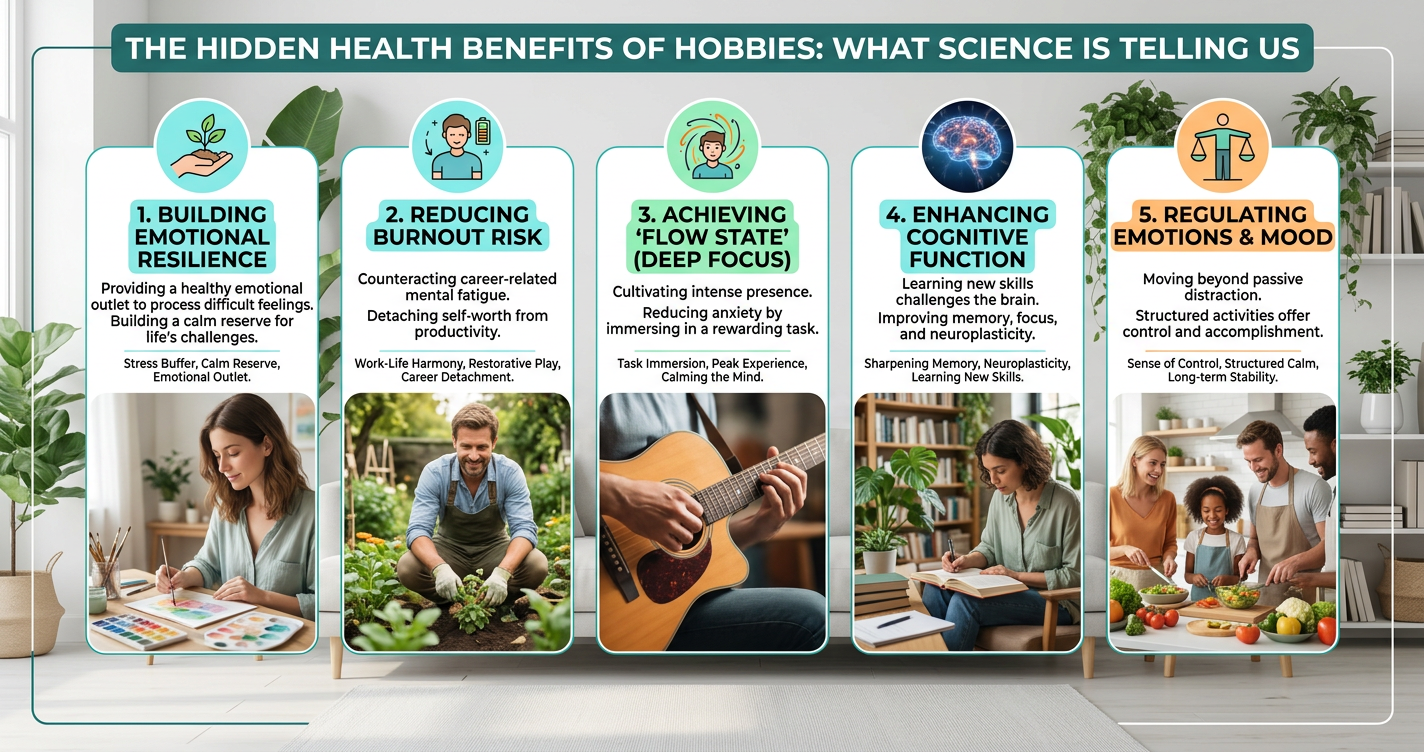
We often think of rest as doing nothing—laying on the couch and staring at the ceiling (or, more realistically, scrolling through TikTok). But for the human brain, true rest often comes through a specific type of engagement known as "flow." When you are deeply immersed in a hobby, your brain enters a state where the passage of time seems to disappear. This isn't just a psychological quirk; it’s a physiological reset.
Escaping the Cortisol Loop
Most of our daily lives are spent in a state of low-grade "fight or flight." We are constantly reacting to emails, pings, and deadlines. This keeps our cortisol levels—the primary stress hormone—elevated. Over time, high cortisol leads to inflammation, poor sleep, and a weakened immune system. Engaging in a hobby acts as a natural circuit breaker. When you focus on the tactile sensation of gardening or the intricate patterns of a jigsaw puzzle, your nervous system shifts from the sympathetic (stress) to the parasympathetic (rest and digest) state.
Neuroplasticity and the "Novice" Effect
One of the most overlooked benefits of starting a new hobby is the literal rewiring of your brain. As adults, we tend to stick to what we know. We are experts in our fields, which is great for efficiency but boring for our neurons. When you pick up a hobby that you’re actually bad at—say, learning the ukulele or trying your hand at pottery—you force your brain to create new neural pathways. This is called neuroplasticity. Research suggests that keeping the brain "plastic" through diverse activities can delay the onset of cognitive decline and dementia. So, being a "clueless beginner" is actually a high-level health hack.
Reduced Anxiety: Focusing on a repetitive task (like cross-stitch) mimics the effects of meditation.
Dopamine without the Crash: Unlike the quick hits of dopamine from social media, hobby-related dopamine is slow-release and sustainable.
Improved Memory: Learning new rules or techniques keeps your prefrontal cortex sharp.
It’s important to realize that the brain doesn’t distinguish between "productive" learning and "silly" learning. To your gray matter, figuring out how to calibrate a telescope is just as beneficial as learning a new software for work—minus the performance anxiety.
The Social Fabric and the Loneliness Antidote
We are currently living through what experts call a "loneliness epidemic." Despite being more connected than ever digitally, many people report feeling isolated. Hobbies provide a natural, low-pressure bridge to human connection that goes beyond the superficial interactions of social media.
Building "Third Places"
Sociologists often talk about the importance of "third places"—spaces that aren't home (the first place) and aren't work (the second place). Hobbies are the ultimate ticket into these third places. Whether it’s a local board game club, a community garden, or an online forum for enthusiasts of 19th-century history, these groups provide a sense of belonging. This social connection is a massive predictor of longevity. In fact, some studies suggest that social isolation is as damaging to your health as smoking 15 cigarettes a day.
Shared Passion vs. Small Talk
One of the hardest parts of making friends as an adult is the dreaded small talk. "What do you do for a living?" is the standard icebreaker, but it often leads to a dead end. When you have a hobby, the conversation is already centered on a shared passion. You’re not talking about your mortgage; you’re talking about the best way to propagate a Monstera plant or which hiking trail has the best views. This shared enthusiasm creates deep, meaningful bonds that act as a buffer against depression.
Intergenerational Connections: Hobbies often bring together people of all ages, providing perspectives you won't get in your age-segregated work bubble.
Accountability: Having a group to meet up with (like a weekly bridge game) ensures you leave the house and engage with the world.
Increased Empathy: Interacting with diverse groups of people within a hobby community broadens your social understanding.
The beauty of hobby-based socializing is that it’s "parallel play" for adults. You don’t have to be the life of the party; you just have to be present and interested in the task at hand. This is especially beneficial for introverts or those with social anxiety.
The Physical Ripple Effect: Health Beyond the Gym
When we think of "health hobbies," we usually think of sports. But even non-athletic hobbies have surprising physical benefits that nobody talks about. The mind-body connection is real, and the relaxation gained from a hobby manifests in your physical health in several key ways.
Blood Pressure and Heart Health
It sounds dramatic, but your stamp collection might be saving your heart. By lowering stress and providing a sense of calm, hobbies help regulate blood pressure. Chronic stress is a silent killer, contributing to heart disease and stroke. By dedicating just an hour a day to something you love, you are giving your cardiovascular system a much-needed break from the adrenaline-fueled pace of modern life.
Fine Motor Skills and Hand-Eye Coordination
Many hobbies—model building, painting, playing an instrument, or even complex cooking—require precision. As we age, our fine motor skills can begin to erode. Engaging in activities that require manual dexterity keeps the connections between your brain and your muscles sharp. It’s essentially "physical therapy" disguised as fun. This becomes increasingly important as we age, helping to maintain independence and prevent the clumsiness that leads to falls.
The "Sleep Halo" Effect
Ever notice how you sleep better after a day spent doing something you actually enjoy? Hobbies contribute to better sleep hygiene. Because hobbies reduce mental rumination (the habit of chewing over your problems late at night), they make it easier to fall asleep and stay asleep. Furthermore, hobbies that get you outside—like bird watching or photography—expose you to natural light, which helps regulate your circadian rhythm. You aren't just tired; you're "good tired."
Lowered Inflammation: Relaxing activities reduce the body's inflammatory response.
Postural Awareness: Even sedentary hobbies like woodworking or sewing encourage a focus on body mechanics and careful movement.
Immune Support: High levels of life satisfaction are statistically linked to more robust immune responses.
At the end of the day, the biggest health benefit of a hobby is simply that it makes life worth living. We aren't meant to be productivity machines that just eat, sleep, and work. We are creative, curious beings. When you honor that curiosity by taking photos of moss or learning to bake the perfect sourdough, you are telling your body that its well-being matters. So, stop feeling guilty about "wasting time" on your hobby. It might just be the healthiest thing you do all week.