The Physiological Blueprint: Why the First 60 Minutes Dictate Your Metabolic Rate
Success is rarely the result of a mid-afternoon surge of inspiration; rather, it is the byproduct of a deliberate series of actions taken before the rest of the world has even brewed their first cup of coffee. The human body operates on a circadian rhythm, a complex internal clock that regulates everything from hormone production to cognitive function. When you wake up, your body is in a state of transition, shifting from the restorative parasympathetic nervous system to the active sympathetic nervous system. How you manage this transition determines whether you will spend your day chasing energy or radiating it.
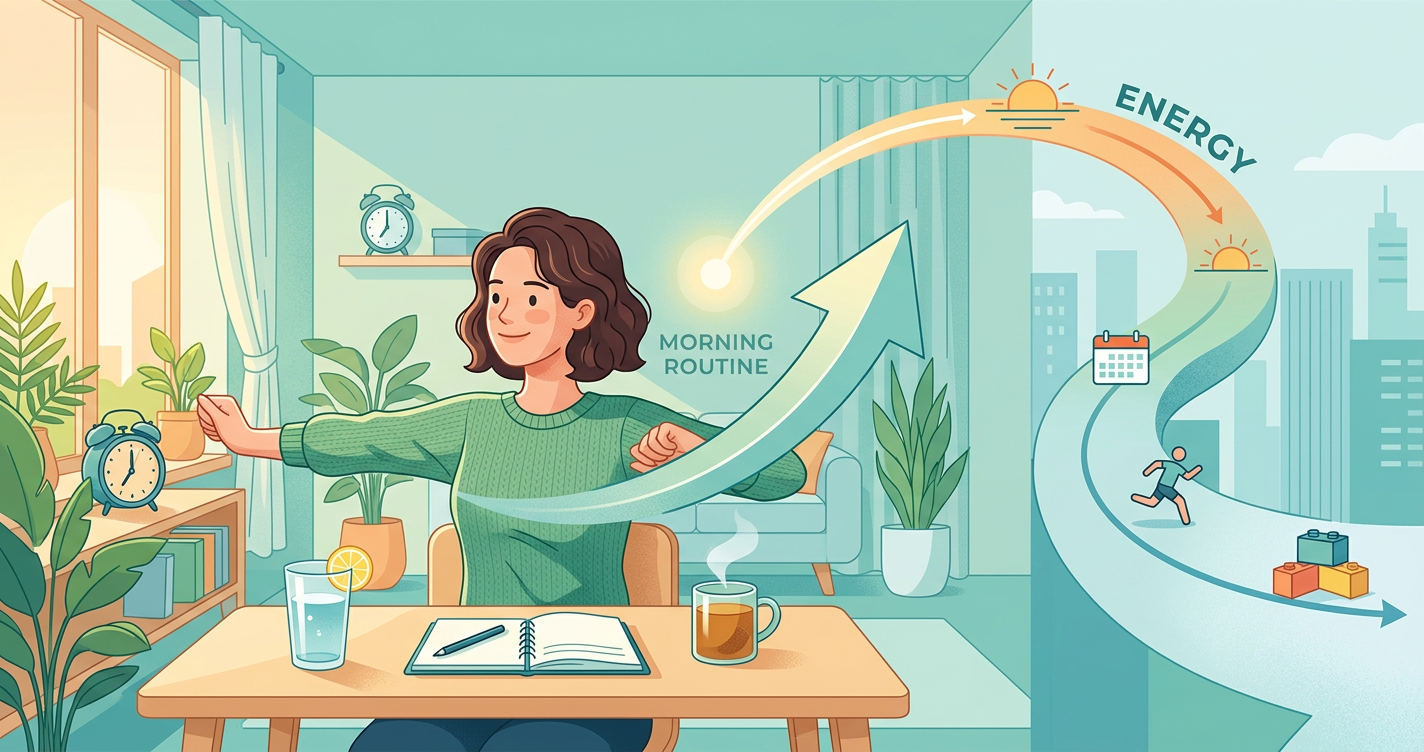
The most common mistake people make is falling victim to 'sleep inertia.' This is that heavy, groggy feeling that persists when you hit the snooze button repeatedly. By interrupting your sleep cycles in ten-minute increments, you confuse your brain and trigger a hormonal cascade that leaves you feeling sluggish for hours. To master your energy, you must respect the waking process. This begins with immediate light exposure. Natural sunlight triggers the cessation of melatonin production and stimulates the release of cortisol—the "alertness hormone." Without this cue, your brain remains in a twilight zone, making every task feel twice as difficult as it should be.
Furthermore, your morning routine acts as a metabolic primer. After seven to nine hours of sleep, your body is dehydrated and your glycogen stores are depleted. If your first action is to reach for a sugary pastry or a high-caffeine energy drink on an empty stomach, you are setting yourself up for a blood sugar roller coaster. The resulting insulin spike will inevitably lead to a mid-morning crash. Instead, prioritizing hydration with electrolytes and a protein-rich breakfast stabilizes your blood glucose, providing a steady stream of fuel that sustains your brain and muscles throughout the morning hours.
The Hydration Habit: More Than Just Water
Most people wake up in a state of mild dehydration. During the night, you lose significant fluids through respiration and perspiration. Drinking 16 to 24 ounces of water immediately upon waking is the fastest way to jumpstart your internal organs. To take this a step further, adding a pinch of sea salt or a squeeze of lemon provides essential minerals that help the water actually enter your cells, rather than just passing through your system. This simple act increases blood flow to the brain, improving focus and reducing that "brain fog" that many people mistake for a lack of sleep.
The Role of Cortisol and Sunlight
Cortisol often gets a bad reputation as a stress hormone, but in the morning, it is your best friend. A healthy cortisol spike in the morning is essential for energy. By stepping outside for just ten minutes of direct sunlight, you calibrate your internal clock. This ensures that your energy peaks when you need it to and naturally tapers off in the evening, facilitating better sleep. It is a virtuous cycle: a good morning leads to a good day, which leads to a good night, which leads to an even better morning.
Avoid the "Snooze" Trap: Get up at the first alarm to avoid sleep inertia.
Hydrate Before You Caffeine: Drink water before your coffee to protect your adrenals.
Seek Natural Light: Aim for 10-20 minutes of sun exposure to reset your circadian rhythm.
Movement Matters: Even five minutes of stretching increases circulation and oxygenates the blood.
The Psychological Edge: Winning the Internal Battle Before Breakfast
Energy is not just a physical phenomenon; it is a psychological one. Have you ever noticed how you can feel exhausted, but then receive a piece of exciting news and suddenly feel completely revitalized? This is because your mental state governs your perceived energy levels. A chaotic morning creates a chaotic mind. If your first act of the day is checking emails or scrolling through social media, you are handing over the keys to your mental well-being to the outside world. You are starting your day in a reactive state, responding to the demands and opinions of others rather than setting your own intentions.
By establishing a proactive morning routine, you build "decision capital." Every small win in the morning—making the bed, completing a workout, or meditating—builds a sense of self-efficacy. This creates a psychological momentum that carries you through the more difficult challenges of the workday. When you prove to yourself that you can follow through on your own commitments before 8:00 AM, you approach your professional and personal responsibilities with a level of confidence that cannot be manufactured mid-day. You aren't just performing tasks; you are reinforcing an identity as a disciplined, high-energy individual.
The concept of "decision fatigue" is critical here. We only have a finite amount of willpower each day. By automating your morning—knowing exactly what you will wear, what you will eat, and what your top priority is—you preserve your cognitive energy for high-level problem solving later in the day. A structured routine removes the friction of choice, allowing your brain to enter a state of flow much earlier than those who spend their mornings in a state of indecision and rush.
The Power of Intentional Silence
In our hyper-connected world, silence is a luxury that provides immense energy. Incorporating just five to ten minutes of meditation or deep breathing exercises into your morning routine can lower your resting heart rate and reduce baseline anxiety. This "calm energy" is far more sustainable than the jittery energy provided by stimulants. It allows you to approach your day with a sense of perspective, ensuring that small stressors don't drain your battery before noon.
Journaling for Mental Clarity
Clear thinking requires a clear "hard drive." Journaling in the morning, often referred to as "morning pages," allows you to dump all the lingering anxieties and to-do lists from your brain onto paper. This externalization of thought frees up mental bandwidth. When your mind isn't cluttered with "remember to buy milk" or "I'm worried about that meeting," you can direct 100% of your focus to the task at hand, which is the most efficient way to utilize your daily energy stores.
No Screens for 30 Minutes: Protect your dopamine receptors from early-morning overstimulation.
Practice Gratitude: Shifting your focus to what is working well creates a positive emotional baseline.
Identify the "Big One": Choose the one task that will make the most impact and commit to it.
Controlled Breathing: Box breathing for three minutes can stabilize the nervous system.

Long-Term Sustainability: Turning Routine into a Lifestyle
The ultimate goal of a morning routine is not to be a rigid taskmaster, but to create a sustainable framework that supports your long-term goals. Many people fail because they try to implement a three-hour "monk-like" routine overnight. Energy management is a marathon, not a sprint. To influence your energy all day, your routine must be adaptable and enjoyable. If you dread your morning routine, it will eventually become a source of stress rather than a source of power. The key is to find the "minimum effective dose" of activities that make you feel your best.
Consistency is the primary driver of results. When you perform the same sequence of actions every morning, your body begins to anticipate them. This is known as "associative learning." Eventually, the act of putting on your workout shoes or brewing your tea will act as a psychological trigger that tells your brain, "It's time to wake up and perform." This reduces the reliance on willpower and makes high-energy days your default setting rather than a rare occurrence. Over weeks and months, these small morning investments compound into significant shifts in your overall health, career trajectory, and happiness.
It’s also important to recognize that your morning routine actually begins the night before. You cannot have a high-energy morning if you are running on four hours of sleep. A proper wind-down routine—reducing blue light, lowering the room temperature, and avoiding heavy meals late at night—ensures that the "recharging" process is successful. Think of your morning routine as the launchpad and your evening routine as the maintenance crew. Together, they create a comprehensive system for human optimization.
The Concept of Micro-Wins
On days when you are short on time, don't abandon the routine entirely. This is the "all-or-nothing" fallacy that kills progress. If you don't have an hour, take ten minutes. Do one minute of jumping jacks, two minutes of stretching, and seven minutes of focused planning. These micro-wins maintain the habit loop in your brain, ensuring that you don't lose the momentum you've worked so hard to build. It’s the act of showing up for yourself that provides the energy boost, regardless of the duration.
Listening to Your Body’s Biofeedback
Finally, a truly effective morning routine is one that listens to the body. Some days you might need more physical movement to get the blood flowing; other days you might need more quiet reflection. By becoming attuned to your own energy levels, you can tweak your routine to meet your specific needs. This level of self-awareness is the hallmark of high performers. They don't just follow a checklist; they use their morning to check in with their "internal operating system" and make the necessary adjustments for the day ahead.
Prepare the Night Before: Lay out clothes and prep meals to reduce morning friction.
Focus on Consistency Over Intensity: Doing 10 minutes every day is better than an hour once a week.
Evaluate and Adjust: Periodically review your routine to see what is actually serving your energy levels.
Celebrate the Discipline: Acknowledge the effort it takes to prioritize yourself; that pride is energy in its purest form.