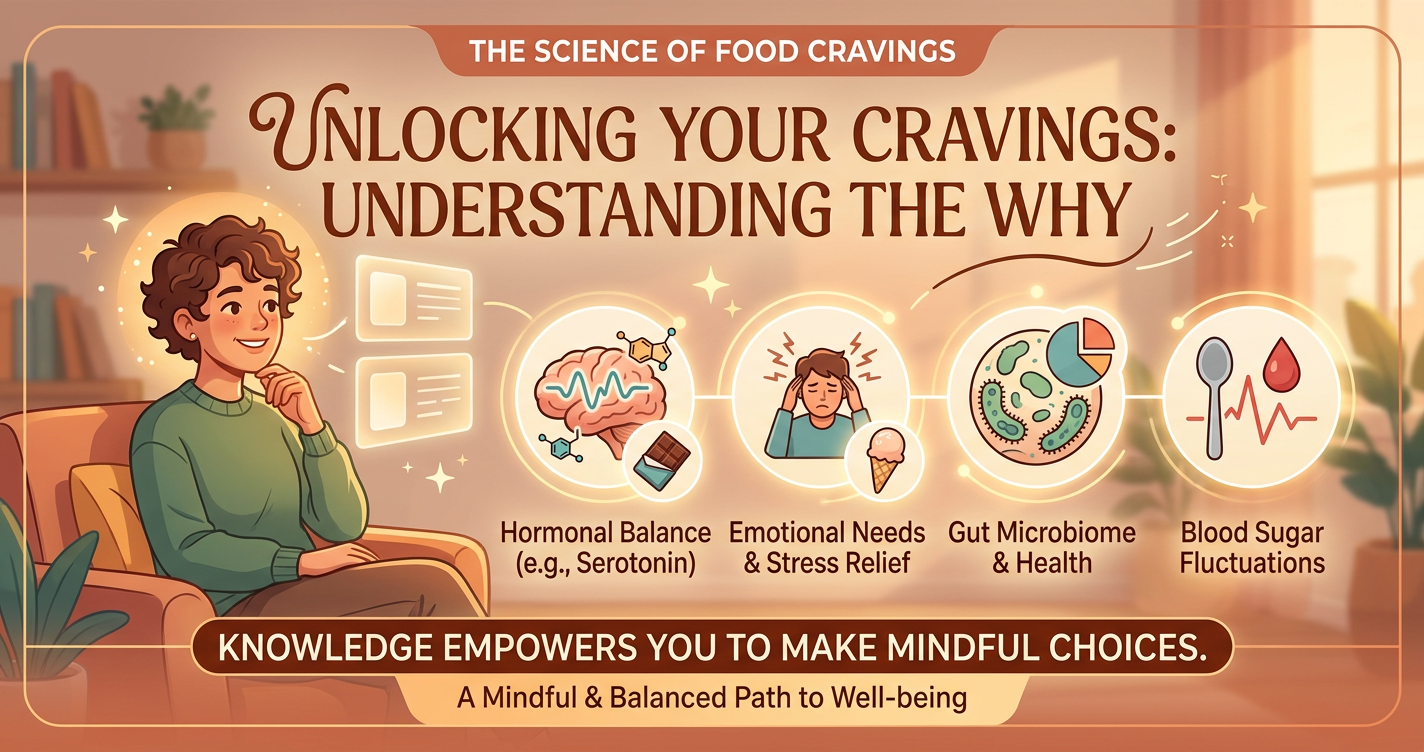
We’ve all been there. It’s 10:00 PM, you’re curled up on the couch watching your favorite show, and suddenly, a thought enters your mind like a neon sign flickering in the dark: chocolate. Not just any snack, but specifically a creamy, melt-in-your-mouth piece of dark chocolate. Or perhaps your "kryptonite" is a bag of salty, vinegary potato chips that offer that satisfying shattering crunch. These aren't just moments of hunger; they are intense, targeted desires that seem to hijack our brains. But why does this happen? Is your body trying to tell you something important, or is your brain just playing tricks on you? Let's dive into the fascinating, slightly messy science of why we crave what we crave.
The Brain’s Reward System: Why We Are Hardwired for 'Delicious'
To understand food cravings, we first have to look at the master controller: the human brain. Evolutionarily speaking, our ancestors didn't have the luxury of a 24-hour grocery store. Food was scarce, and energy-dense foods (those high in fats and sugars) were the key to survival. Because of this, our brains developed a highly sophisticated reward system designed to make us want these foods and feel good when we eat them.
The Role of Dopamine
When you eat something you enjoy—let’s say, a brownie—your brain releases a neurotransmitter called dopamine. Dopamine is often called the "feel-good" chemical, but it’s actually more about motivation and reinforcement. It’s the brain’s way of saying, "Hey, that was great for our survival! Let’s remember how we got that and do it again." Over time, your brain creates neural pathways that link certain cues (like stress, a specific time of day, or even a smell) to the reward of dopamine. This is why you might suddenly want a cookie the moment you walk into your kitchen, even if you just ate a full meal.
The Opioid Connection
It’s not just dopamine; our internal opioid system also gets involved. When we consume highly palatable foods (sugar, salt, and fat), our brains release endogenous opioids—naturally occurring chemicals that produce feelings of pleasure and mild euphoria. This is why comfort food feels, well, comfortable. It’s a literal chemical hug for your brain. The combination of dopamine (the drive to get the food) and opioids (the pleasure of eating the food) creates a powerful cycle that is hard to break with willpower alone.
Emotional Mapping
Our brains are also incredible at mapping emotions to flavors. If your grandmother always gave you a specific type of candy when you were sad, your brain likely hard-wired a connection between that sugar hit and a feeling of being cared for. In adulthood, when life gets stressful, your brain reaches for that "crave-able" tool in its emotional first-aid kit. This isn't a sign of weakness; it's your brain using its biological history to try and regulate your mood.
Decoding Specific Cravings: Chocolate, Salt, and The 'Crunch' Factor
While the reward system explains that we crave, it doesn't always explain what we crave. Why do some people live for salt while others would sell their soul for a chocolate bar? The answer is a mix of biology, nutrient needs, and sensory psychology.
The Chocolate Phenomenon
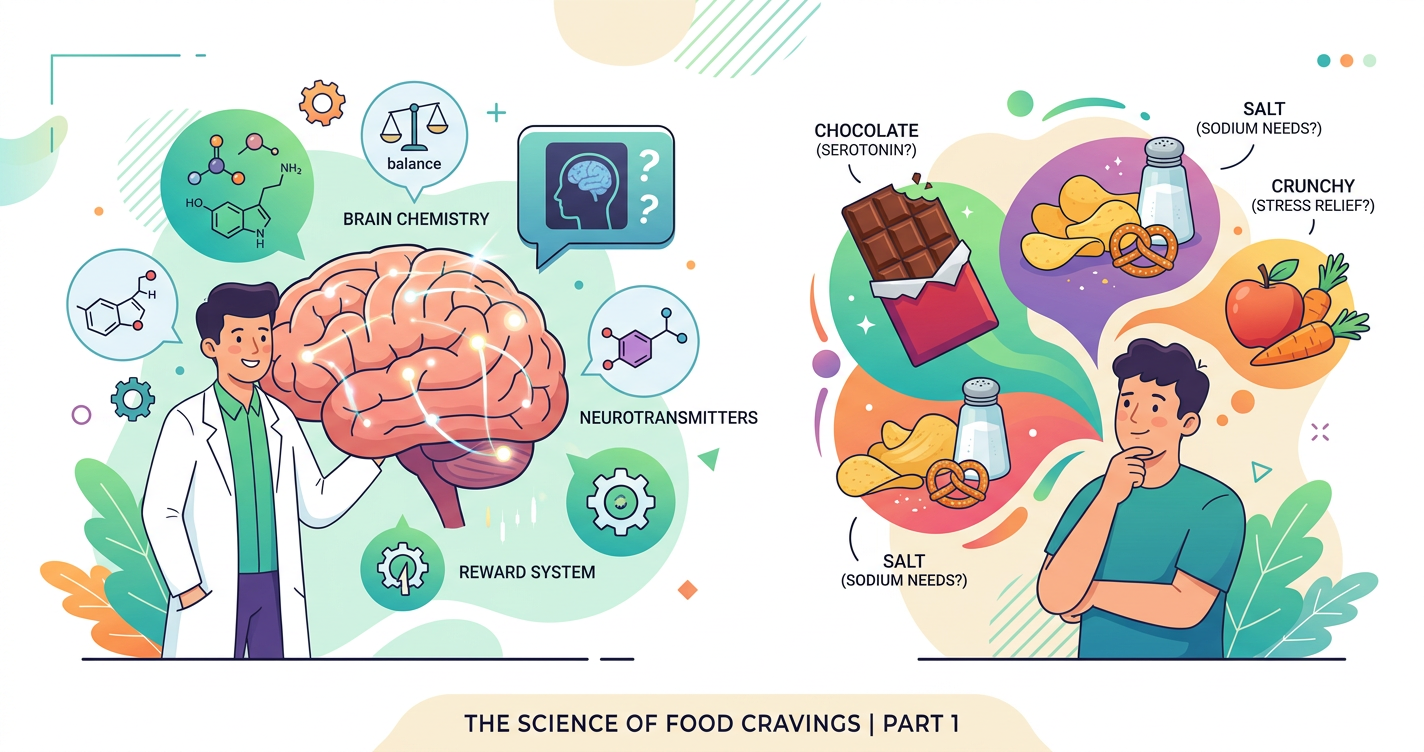
Chocolate is the most frequently craved food in the Western world, and for good reason. It’s a pharmacological powerhouse. Chocolate contains small amounts of tyramine and phenylethylamine (which can act as stimulants), as well as theobromine. Some researchers also point to its magnesium content. Many people (particularly women during certain points in their menstrual cycle) may crave chocolate because their magnesium levels have dipped. However, most scientists agree that the craving is more about the unique combination of sugar and fat, paired with a texture that melts at body temperature, creating a sensory experience that is almost impossible to replicate with other foods.
The Salt Search
If you find yourself reaching for the salt shaker or a bag of pretzels, your body might be signaling a need for electrolytes. Sodium is essential for nerve function and fluid balance. In the past, salt was a rare and precious mineral, so we evolved to seek it out. Today, we might crave salt when we are dehydrated (since salt helps the body hold onto water) or when we are stressed. Interestingly, some studies suggest that chronic stress can cause the adrenal glands to trigger a "salt-wasting" effect, making those salty chips look like the most attractive thing in the world.
The Psychology of the Crunch
Sometimes, we don't crave a flavor; we crave a sensation. The desire for "crunchy" foods is often linked to stress relief. The act of forceful biting and chewing can serve as a physical release for pent-up tension in the jaw—a place where many of us hold stress. Furthermore, crunchy foods are "loud" in our mouths. This auditory feedback provides a sensory distraction that can temporarily tune out an overactive or anxious mind. This is why you might reach for carrots or celery when you’re annoyed, but more likely chips or crackers when you’re looking for that high-calorie reward alongside the crunch.
Sweet cravings: Often linked to a need for a quick energy burst or a serotonin boost.
Salty cravings: Can indicate dehydration, electrolyte imbalance, or high stress.
Fatty/Creamy cravings: Frequently related to a need for satiety or emotional comfort.

How to Manage Cravings Without Losing Your Mind
Now that we know cravings are a mix of brain chemistry, evolution, and sensory needs, how do we handle them? The goal isn't necessarily to eliminate cravings—that’s nearly impossible—but to understand them and respond in a way that feels balanced.
The 20-Minute Rule
Cravings are often like waves; they peak in intensity and then subside. When a craving hits, try to wait 20 minutes before acting on it. During this time, engage in a different activity—go for a walk, call a friend, or drink a glass of water. Often, the "dopamine spike" will level off, and you’ll find the craving has significantly diminished or disappeared entirely. If it’s still there after 20 minutes, it might be a genuine signal from your body.
Crowding Out vs. Cutting Out
Instead of telling yourself you can't have the chocolate, try "crowding it out." Tell yourself you can have the chocolate, but only after you’ve eaten an apple or a handful of almonds. This ensures you’re getting some actual nutrients and fiber into your system first. By the time you get to the craving, you’ll be fuller, and you’ll likely eat a smaller, more mindful portion rather than inhaling the whole thing.
Check Your Basics: Sleep and Hydration
Two of the biggest triggers for intense cravings are lack of sleep and dehydration. When you are sleep-deprived, your levels of ghrelin (the hunger hormone) go up, and your levels of leptin (the fullness hormone) go down. Your brain also becomes more sensitive to rewards, making junk food look way more appealing than usual. Similarly, the brain can easily confuse thirst signals for hunger signals. Before you dive into the pantry, try drinking a large glass of water and seeing how you feel.
Mindful Indulgence
Finally, if you decide to satisfy the craving, do it with intention. Don't eat the chips while standing over the sink or scrolling through your phone. Put a serving on a plate, sit down, and really taste it. Pay attention to the texture, the saltiness, and the crunch. By being present, you allow your brain’s reward system to actually register the pleasure, which helps signal the "off" switch. You'll find that you need much less to feel satisfied when you’re actually paying attention to what you’re eating.
In the end, food cravings aren't a sign that you lack willpower. They are a complex biological conversation between your body and your brain. By understanding the "why" behind the "what," you can stop fighting your body and start working with it.