The Biological Shift: Why Post-50 Recovery is Differently Wired
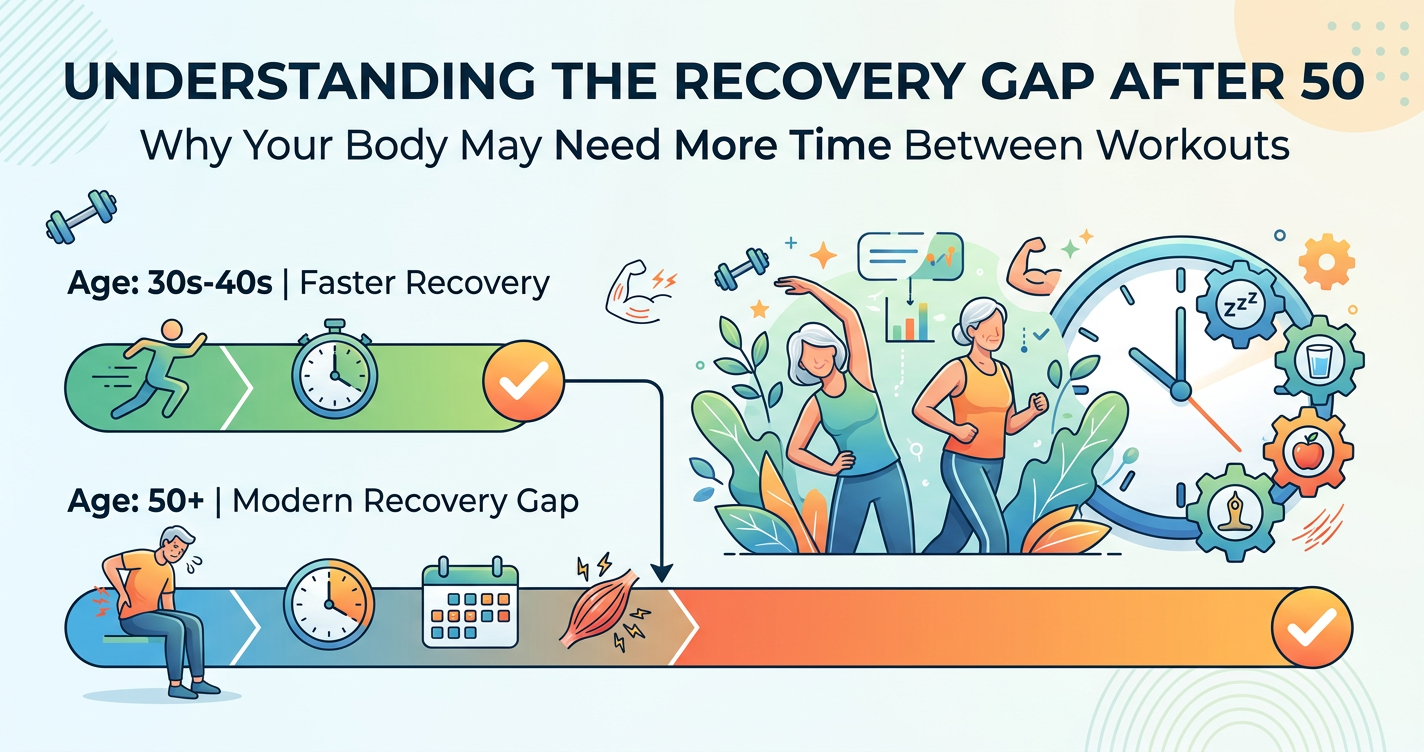
Stepping into your fifties often brings a sense of empowerment, wisdom, and a clearer understanding of your fitness goals. However, many dedicated athletes and fitness enthusiasts notice a subtle, yet persistent shift: the workouts that once left them feeling energized now leave them feeling drained for days. This isn't just "getting old"; it is a complex biological reality known as the recovery gap. Understanding the physiological changes occurring within your cells, hormones, and tissues is the first step toward mastering fitness in this second act of life.
The Impact of Sarcopenia and Mitochondrial Efficiency
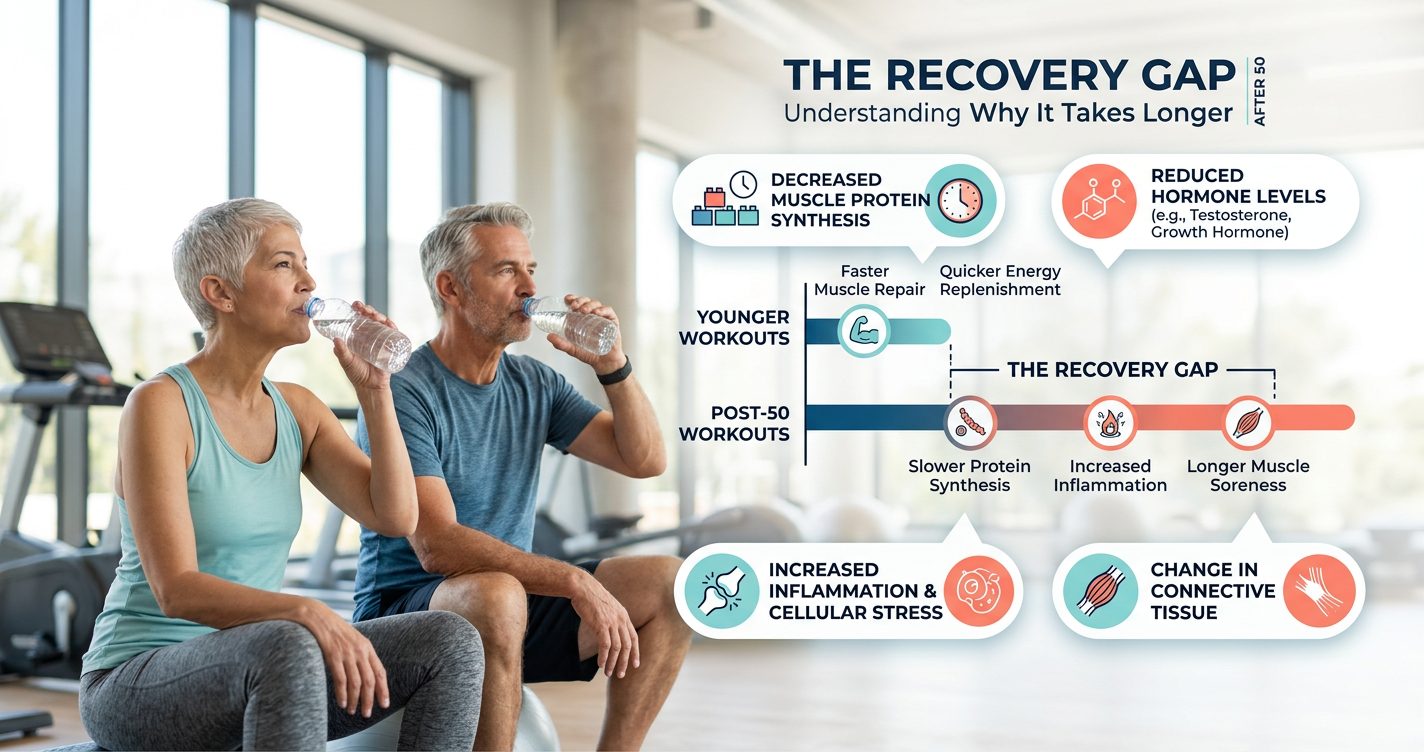
One of the primary drivers of the recovery gap is sarcopenia, the age-related loss of muscle mass and quality. Starting in your 30s, the body naturally begins to lose muscle fiber, but this process often accelerates after 50. When you have less muscle mass, the remaining fibers must work harder to move the same amount of weight, leading to greater microscopic damage during a workout. Furthermore, our mitochondria—the powerhouses of our cells—become less efficient at producing ATP (adenosine triphosphate). Since ATP is required not just for the workout itself but for the repair processes that follow, a decrease in mitochondrial density means the "construction crew" responsible for fixing your muscles is working with a smaller power grid.
Hormonal Fluctuations and Growth Factors
Hormones are the signaling molecules that tell our bodies to repair and grow. In men, the gradual decline in testosterone reduces the rate of protein synthesis. In women, the transition through menopause and the subsequent drop in estrogen have profound effects on muscle architecture and bone density. Estrogen, in particular, has been shown to have protective qualities against muscle damage and inflammation. When these levels drop, the body’s inflammatory response to exercise can become more prolonged, meaning that "soreness" lingers far longer than it did in your 30s.
Neurological Recovery and the Central Nervous System
Recovery isn't just about muscles; it's about the nervous system. The Central Nervous System (CNS) coordinates every muscle contraction. As we age, the communication between our brain and our motor units can become slightly less efficient. A heavy lifting session or a high-intensity interval training (HIIT) class places a massive demand on the CNS. In older adults, the CNS takes longer to return to a baseline state of homeostasis. If you jump back into a workout before your nervous system has reset, you aren't just risking a bad workout; you are increasing the risk of injury due to decreased coordination and reaction time.
Reduced protein synthesis rates make muscle repair slower.
Decreased capillary density limits blood flow and nutrient delivery to recovering tissues.
Stiffer connective tissues (tendons and ligaments) require more time to adapt to stress.
Strategic Adaptation: Reimagining the Training Week
Accepting the recovery gap doesn't mean slowing down; it means training smarter. The traditional "three days on, one day off" routine that works for a 25-year-old might be the very thing holding a 55-year-old back. To see progress after 50, the focus must shift from the quantity of sessions to the quality of the stimulus and the depth of the recovery.
The Shift to Polarized Training
Many trainees over 50 fall into the "black hole" of moderate intensity—working hard enough to get tired, but not hard enough to trigger significant adaptation, yet still causing enough fatigue to prevent recovery. Polarized training involves keeping your easy days very easy (walking, light swimming) and your hard days truly challenging. By widening the gap between intensity levels, you allow your body the metabolic space to recover from the high-stress sessions while maintaining cardiovascular health on the low-stress days.
Prioritizing Mechanical Tension over Metabolic Stress
In our younger years, we can handle "burnout" sets and high-volume bodybuilding routines that create massive amounts of metabolic waste (lactic acid and inflammation). After 50, focus should shift toward mechanical tension—lifting heavier weights for fewer repetitions. This approach stimulates the nervous system and maintains bone density without creating the massive systemic inflammation that comes with 20-repetition sets. By keeping volume lower but intensity (weight) higher, you provide the signal for strength without burying yourself in a hole of fatigue.
The Role of "Active" vs. "Passive" Recovery
Sitting on the couch for two days after a leg workout might seem like the right move, but passive recovery can actually lead to stiffness. Active recovery—low-impact movement that promotes blood flow—is the secret weapon for the over-50 athlete. Blood carries the oxygen and amino acids necessary for repair. Activities like Tai Chi, restorative yoga, or a simple 30-minute walk help flush out metabolic byproducts and keep the joints lubricated without adding to the recovery debt.
Monitoring Tools for the Modern Athlete
We live in an age where technology can help us bridge the recovery gap. Tools that measure Heart Rate Variability (HRV) are particularly useful for those over 50. HRV is a measure of the variation in time between each heartbeat and serves as a window into the state of your Autonomic Nervous System. A low HRV indicates that your body is still under stress from the previous day's workout, suggesting that you should opt for a rest day or light movement regardless of what your calendar says. Learning to listen to these biometric data points can prevent overtraining and burnout.
Implement a 48-to-72-hour window between working the same muscle groups.
Focus on "Quality over Quantity" – two high-quality sessions are better than five mediocre ones.
Integrate mobility work into every warmup to protect aging joints.
The Nutritional and Lifestyle Pillars of Accelerated Repair
If the recovery gap is a biological hurdle, then nutrition and lifestyle are the tools we use to clear it. After 50, the margin for error in your diet and sleep hygiene narrows significantly. You can no longer out-train a poor diet or a lack of sleep. To close the recovery gap, you must treat your lifestyle with the same discipline as your gym sessions.
The Protein Paradox in Older Adults
There is a phenomenon known as "anabolic resistance," where the bodies of older adults become less responsive to the muscle-building signals of protein. To overcome this, individuals over 50 actually need *more* protein per meal than their younger counterparts to trigger the same level of muscle protein synthesis. Aiming for 30–40 grams of high-quality protein per meal, especially post-workout, is crucial. Leucine, an amino acid found in whey, eggs, and beef, acts as the "light switch" for muscle repair. Ensuring you have enough leucine in your post-workout window can significantly shorten the time you spend feeling sore.
Hydration and Micronutrient Density
Total body water content tends to decrease with age, and the thirst mechanism becomes less sensitive. Dehydration is a silent recovery killer; it leads to thicker blood, slower nutrient transport, and increased joint friction. Furthermore, focusing on anti-inflammatory micronutrients can help dampen the systemic inflammation that characterizes the recovery gap. Omega-3 fatty acids (found in fish oil), tart cherry juice, and curcumin have all shown promise in reducing DOMS (Delayed Onset Muscle Soreness) and improving joint health in older populations.
Sleep: The Ultimate Performance Enhancer
Sleep is when the magic happens. It is during deep sleep that the body releases the largest pulses of Growth Hormone (GH) and performs the bulk of its tissue repair. However, age often brings sleep fragmentation—waking up more frequently throughout the night. Establishing a strict sleep ritual—cool room temperature, no blue light an hour before bed, and consistent wake times—is not a luxury; it is a physiological necessity for recovery. Without 7–9 hours of quality sleep, your body remains in a catabolic (breakdown) state, making it impossible to recover from the previous day's stress.
The Psychological Aspect of the Gap
Finally, closing the recovery gap requires a psychological shift. It requires the ego to step aside. Comparing your current recovery capacity to your 25-year-old self is a recipe for frustration and injury. Embracing the need for rest is not a sign of weakness; it is a sign of an advanced trainee who understands their biology. By respecting the gap, you ensure longevity, allowing you to stay active, strong, and capable well into your 70s and 80s.
Supplement with Magnesium to aid muscle relaxation and sleep quality.
Increase caloric intake on heavy training days to provide the fuel for repair.
Practice mindfulness or meditation to lower cortisol, which can inhibit recovery.