The Biological Shift: Understanding Why Recovery Changes After 50
For many fitness enthusiasts, the transition into the fifties comes with a realization that the body no longer responds to physical stress the way it did in their twenties or thirties. This isn't merely a psychological shift; it is a fundamental biological reality. As we age, our bodies undergo significant physiological changes that directly impact our ability to bounce back from strenuous activity. Understanding these mechanisms is the first step in mastering longevity and maintaining an active lifestyle well into your senior years.
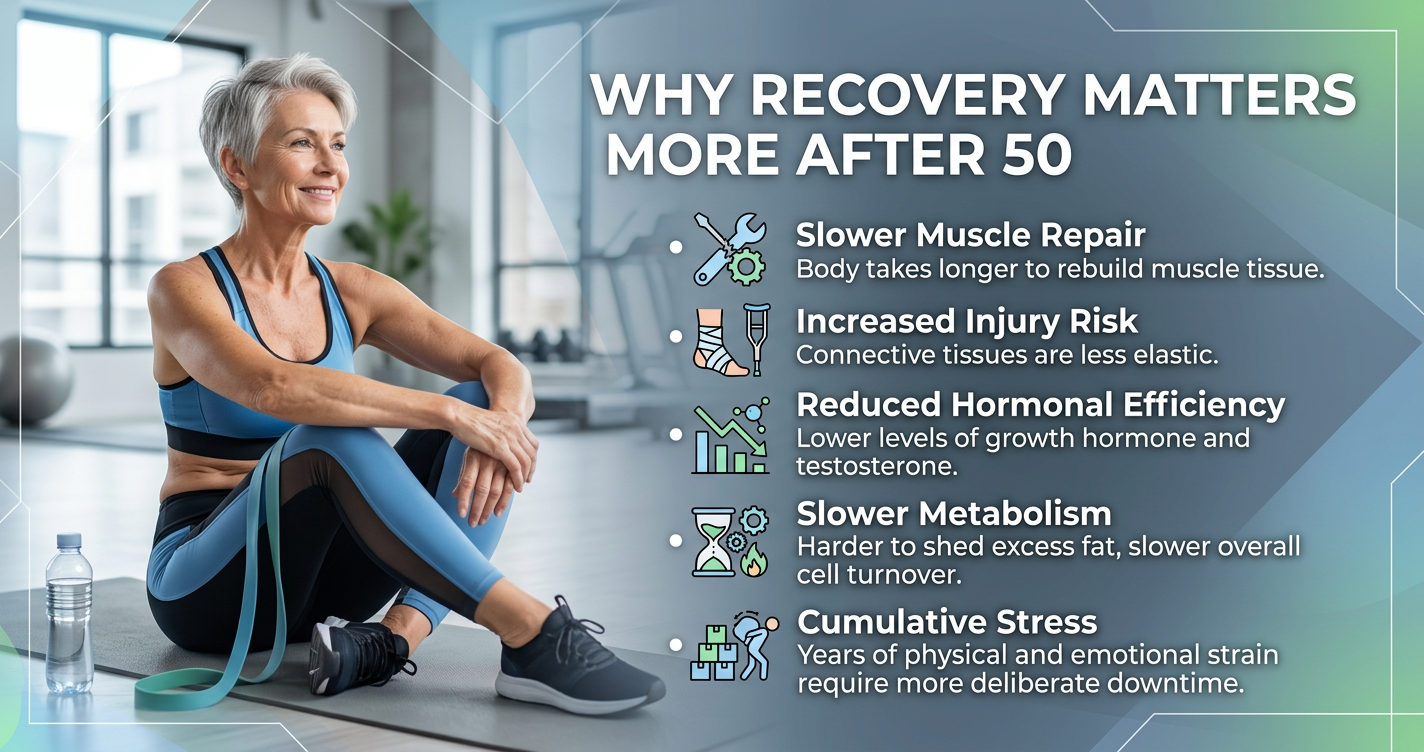
One of the primary drivers of this change is the natural decline in anabolic hormones. For men, testosterone levels typically drop by about 1% to 2% annually starting in their thirties. For women, the onset of menopause brings a sharp decline in estrogen. These hormones are critical for protein synthesis—the process by which the body repairs the microscopic tears in muscle fibers caused by exercise. Without the same hormonal "fuel," the repair process slows down significantly. This means that a workout that required 24 hours of recovery in your youth might now require 48 or even 72 hours to achieve the same level of tissue repair.
Furthermore, the quality of our connective tissues changes. Collagen production decreases, and tendons and ligaments become less elastic and more prone to inflammation. Chronic inflammation, often referred to as "inflammaging," is a hallmark of the aging process. This low-grade, systemic inflammation makes it harder for the body to flush out metabolic waste products like lactic acid and increases the sensitivity of pain receptors. When you combine slower muscle repair with stiffer joints and systemic inflammation, the risk of overuse injuries skyrockets. In your fifties, recovery isn't just about feeling better; it's about structural preservation.
The Importance of Mitochondrial Health
At the cellular level, the mitochondria—the powerhouses of our cells—become less efficient as we age. Mitochondria are responsible for producing ATP, the energy currency of the body. When we exercise, we deplete these energy stores. In younger individuals, mitochondrial biogenesis (the creation of new mitochondria) happens rapidly. After age 50, this process slows down. If you don't allow for adequate recovery, you are essentially asking your cells to perform on an empty tank, leading to burnout and a weakened immune system.
Strategic Recovery: Moving Beyond Passive Rest
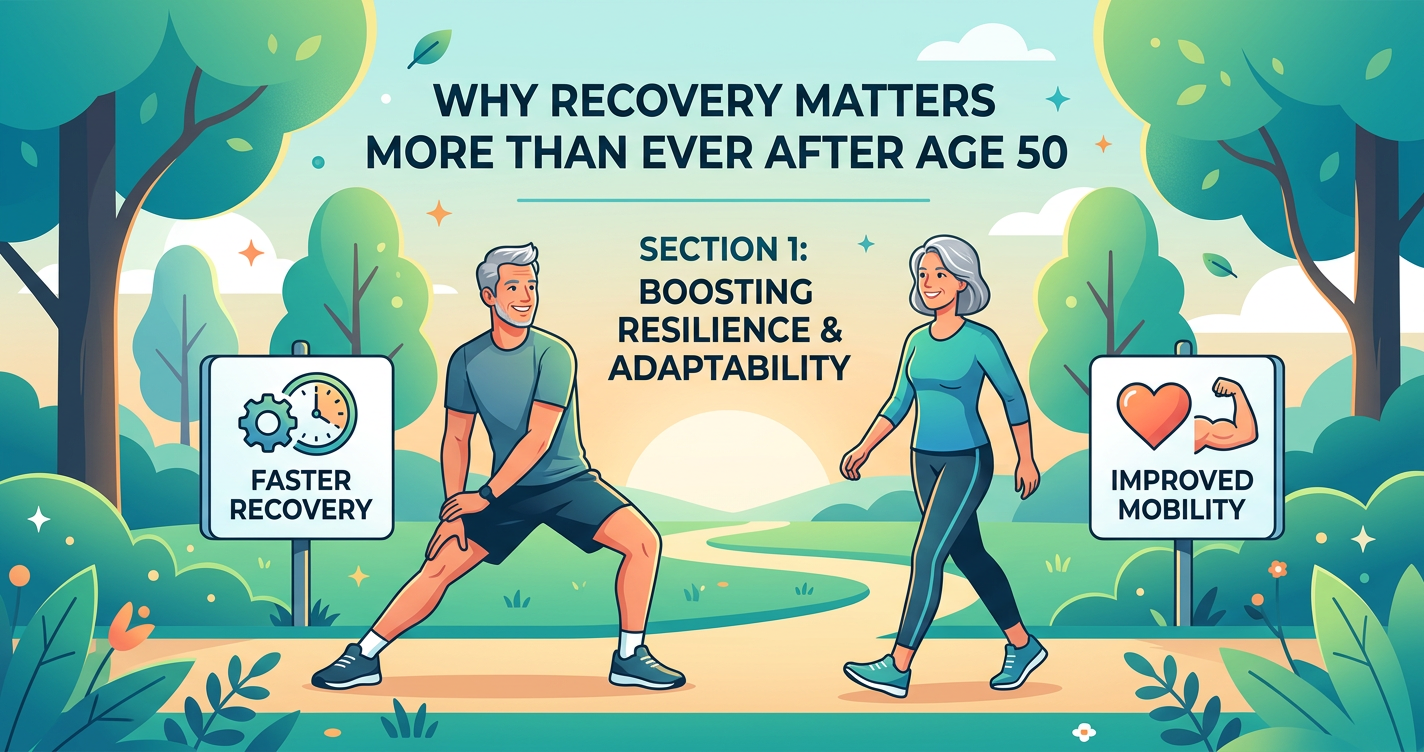
Many people mistake recovery for simply "doing nothing." While sleep and rest days are vital, the modern science of aging suggests that "active recovery" is the superior strategy for those over 50. Passive rest can sometimes lead to stiffness, whereas strategic movement encourages blood flow, which delivers essential nutrients to damaged tissues and helps remove cellular debris.
To optimize recovery after 50, you must adopt a multi-faceted approach that addresses nutrition, hydration, and mobility. Here are several key strategies to incorporate into your routine:
Prioritize Protein Intake: Because muscle protein synthesis is less efficient, older adults actually need *more* protein than younger individuals to maintain muscle mass. Aiming for 1.2 to 1.5 grams of protein per kilogram of body weight can significantly speed up the repair process.
Focus on Sleep Hygiene: Growth hormone is primarily released during deep sleep. As we age, our sleep patterns often become fragmented. Creating a cool, dark environment and limiting screen time before bed is essential for maximizing the body's natural repair cycle.
Hydration and Electrolytes: Aging reduces the sensation of thirst, making dehydration more likely. Water is necessary for every chemical reaction in the body, including those that repair muscle. Ensure you are replenishing electrolytes like magnesium and potassium, which aid in muscle relaxation and prevent cramping.
Low-Impact Mobility Work: Incorporating activities like yoga, Pilates, or swimming on "off" days keeps the joints lubricated and the nervous system balanced without adding the stress of high-impact loading.
The Role of Deload Weeks
In your fifties, the concept of a "deload week" becomes mandatory rather than optional. Every 4 to 6 weeks, you should intentionally reduce your training volume or intensity by 30-50%. This gives your central nervous system (CNS) a chance to recover. CNS fatigue is often overlooked; it manifests as a lack of motivation, poor coordination, and disrupted sleep. A deload week ensures that you aren't perpetually red-lining your body’s engine, allowing for supercompensation—the process where the body actually gets stronger during the period of rest following a period of stress.
The Psychological and Long-term Benefits of a Recovery-First Mindset
Perhaps the biggest hurdle for active adults over 50 is the mental shift required to prioritize recovery. We live in a "no pain, no gain" culture that often glorifies pushing through exhaustion. However, after age 50, the "gain" comes from the intelligence of your training, not the sheer volume of it. Transitioning to a recovery-first mindset is not a sign of slowing down; it is a strategy for staying in the game for the long haul.
When you prioritize recovery, you decrease the likelihood of the "injury-atrophy-depression" cycle. An injury in your fifties is more than a temporary setback; it can lead to weeks or months of inactivity, which leads to rapid muscle loss (sarcopenia) and a decline in cardiovascular health. This physical decline often takes a toll on mental health, leading to a loss of identity and motivation. By respecting your body’s need for rest, you ensure consistency, and consistency is the number one predictor of fitness success in older age.
Redefining "Intensity"
Working out after 50 requires a shift from quantity to quality. Instead of daily high-intensity interval training (HIIT), you might find that two days of intense lifting followed by two days of restorative movement yields better results. This approach allows you to maintain high levels of force production (strength) while keeping your cortisol levels in check. Chronic high cortisol, often caused by overtraining, leads to abdominal fat storage and muscle breakdown—exactly what we want to avoid as we age.
Ultimately, recovery is where the "magic" happens. Your workout is the architect, but recovery is the builder. Without the builder, the architect’s plans are just lines on a page. By embracing a sophisticated recovery protocol, you aren't just aging; you are "aging with power." You are proving that while the body changes, its capacity for strength, vitality, and resilience remains formidable, provided it is given the respect and the time it deserves to heal.
Listen to Biofeedback: Pay attention to resting heart rate and heart rate variability (HRV). A sudden drop in HRV is a clear signal that your body needs more recovery time.
Embrace Soft Tissue Work: Foam rolling, massage, and percussion therapy can help manage fascial tightness and improve circulation.
Mindset Shift: View your recovery days as just as important as your heaviest lifting days. They are two sides of the same coin.