The Forgotten Path to a Century: My Journey Back to Basics
In a world obsessed with high-intensity interval training, heavy lifting, and the latest wearable tech that tracks every heartbeat, we often overlook the simplest movement of all. I remember standing in a specialized athletic clinic three years ago, surrounded by the hum of treadmills and the clanking of weights. I was recovering from a nagging injury that refused to heal, and I asked my physical therapist, a man who had trained Olympic sprinters, what the "ultimate" exercise was for living a long, pain-free life. I expected him to say deadlifts or perhaps swimming.
Instead, he looked at me and said, "Go for a walk. And don't stop doing it until you're ninety-five."
At the time, it felt like a letdown. Walking felt too easy, too mundane to be considered "exercise." But as I began to dig into the science of longevity and observe the habits of those who thrive well into their tenth decade, I realized that walking isn't just a way to get from point A to point B. It is a biological imperative, a cellular signal for repair, and perhaps the most underrated tool in the human longevity toolkit. Unlike the grueling workouts that can sometimes lead to systemic inflammation or injury, walking offers a sustainable, low-impact method to keep the body in a state of perpetual "maintenance mode."
The beauty of walking lies in its accessibility. We are literally built for it. Evolutionary biologists point out that our ancestors were persistence hunters, designed to walk and track prey for miles. Our skeletal structure, our cooling systems (sweat), and our metabolic flexibility are all optimized for steady, upright movement. When we ignore this, we aren't just being sedentary; we are denying our biology. To walk is to honor the very blueprint of human survival. As we explore the nuances of this simple act, we find that it impacts every pillar of health—from cardiovascular efficiency to metabolic health and beyond.
The Science of the Step
When we talk about longevity, we are often talking about "healthspan"—the period of life spent in good health. Research published in journals like The Lancet and JAMA has consistently shown that step count is directly correlated with a reduction in all-cause mortality. But it isn't just about hitting a magic number like 10,000 steps. Studies have shown significant benefits starting as low as 7,000 steps, with the quality of those steps—intensity and consistency—playing a major role.
Cardiovascular Resilience: Walking strengthens the heart without the oxidative stress sometimes associated with extreme endurance sports.
Blood Pressure Regulation: Regular walking helps maintain arterial elasticity, lowering the risk of hypertension.
Weight Management: While it burns fewer calories per minute than running, walking is easier to sustain over long periods, leading to better long-term weight maintenance.
The Metabolic Master Key: Walking and Insulin Sensitivity
If there is one thing that accelerates aging more than anything else, it is metabolic dysfunction. High blood sugar levels and insulin resistance are the precursors to almost every modern chronic disease, including Type 2 diabetes, Alzheimer’s (often called Type 3 diabetes), and heart disease. This is where walking reveals its true power as a longevity intervention. It serves as a "metabolic vacuum," clearing glucose from the bloodstream and putting it to work in the muscles.
I started experimenting with a "post-meal stroll" after reading about its effects on glucose spikes. Even a short, ten-minute walk after lunch or dinner can significantly flatten the blood sugar curve. This isn't just about losing weight; it’s about preventing the glycation of our cells—the "rusting" process that leads to aging. When you walk, your muscles contract and require fuel. They pull glucose from the blood through a process called non-insulin-mediated glucose uptake. Essentially, you are giving your pancreas a break and protecting your internal organs from the corrosive effects of high sugar.
Beyond blood sugar, walking influences our lipid profiles. It helps raise HDL (the "good" cholesterol) and lower triglycerides. Over a lifetime, these small metabolic wins accumulate. Think of it like compound interest for your health. A person who walks three miles a day may not see a dramatic change in a week, but after twenty years, their metabolic age can be a decade younger than a sedentary peer. This "slow and steady" approach creates a physiological environment where disease struggles to take root.
Brain Health and the Walking Connection
Longevity isn't just about a body that works; it’s about a mind that stays sharp. Walking has been shown to increase levels of Brain-Derived Neurotrophic Factor (BDNF), a protein that acts like "Miracle-Gro" for the brain. It encourages the growth of new neurons and protects existing ones. Those who walk regularly show increased volume in the hippocampus, the part of the brain responsible for verbal memory and learning.
Mental Clarity: The rhythmic nature of walking promotes a "flow state," reducing cortisol and clearing mental fog.
Stress Reduction: Walking in nature, or "forest bathing," has been shown to significantly lower sympathetic nervous system activity (the fight-or-flight response).
Creative Insight: Famous thinkers from Nietzsche to Steve Jobs used walking as their primary tool for problem-solving.
The Invisible Benefits: Bone Density, Lymphatic Drainage, and Social Connection
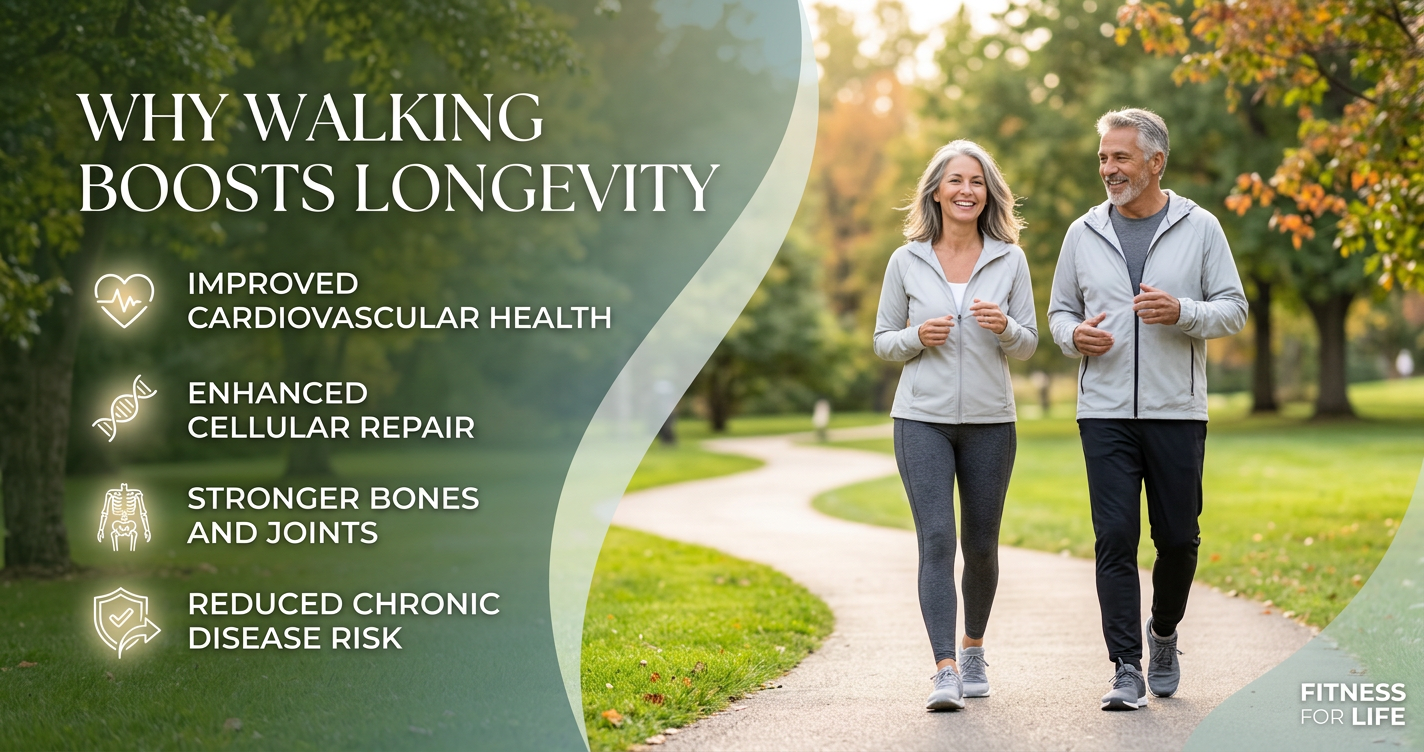
As we age, we face two silent enemies: the thinning of our bones (osteoporosis) and the slowing of our lymphatic system. Walking addresses both with elegant simplicity. Every time your heel strikes the ground, it sends a mechanical signal to your bones to stay strong and dense. It is a weight-bearing exercise that is gentle enough for the joints but effective enough to stimulate bone remodeling. For the aging population, this is the best insurance policy against the fractures that often mark the beginning of physical decline.
Furthermore, unlike the circulatory system, which has the heart to pump blood, the lymphatic system—the body’s waste disposal unit—relies on muscle movement to circulate fluid. Walking acts as a manual pump for the lymph, helping to flush out toxins and support the immune system. This constant "internal cleaning" is vital for longevity, as it helps the body manage inflammation and respond more effectively to pathogens.
Finally, we cannot ignore the social and psychological dimensions of walking. Longevity is deeply tied to community and a sense of belonging, as seen in the world's "Blue Zones." Walking is a social activity. It’s the morning stroll with a spouse, the weekend hike with friends, or the daily walk to the local market where you greet your neighbors. These micro-connections lower the risk of loneliness, which is a significant predictor of early mortality. In a digital age where we are increasingly isolated, walking brings us back into the physical world, connecting us to our environment and each other.
Practical Strategies for a Walking Life
To truly harness the power of walking for longevity, it needs to be integrated into the fabric of your life rather than viewed as a chore. Here are a few ways to elevate your walking practice:
Vary the Terrain: Walk on grass, sand, or hiking trails to engage stabilizer muscles and improve balance.
The "Talk Test": Walk at a pace where you can still hold a conversation, but your heart rate is slightly elevated. This is the "Zone 2" sweet spot for mitochondrial health.
Morning Light: Walking outside within an hour of waking helps set your circadian rhythm, improving sleep quality—another vital component of longevity.
Carry a Load: Occasionally wearing a weighted vest or carrying a backpack (rucking) can increase the bone-density and cardiovascular benefits.
In conclusion, walking may not be the flashiest exercise. It won't give you a viral Instagram video, and it doesn't require a monthly subscription to a boutique studio. But it is the most reliable, sustainable, and scientifically backed movement for a long and healthy life. It is the foundation upon which all other fitness is built. So, lace up your shoes, step out the door, and start walking toward your hundredth birthday. Your body—and your future self—will thank you.