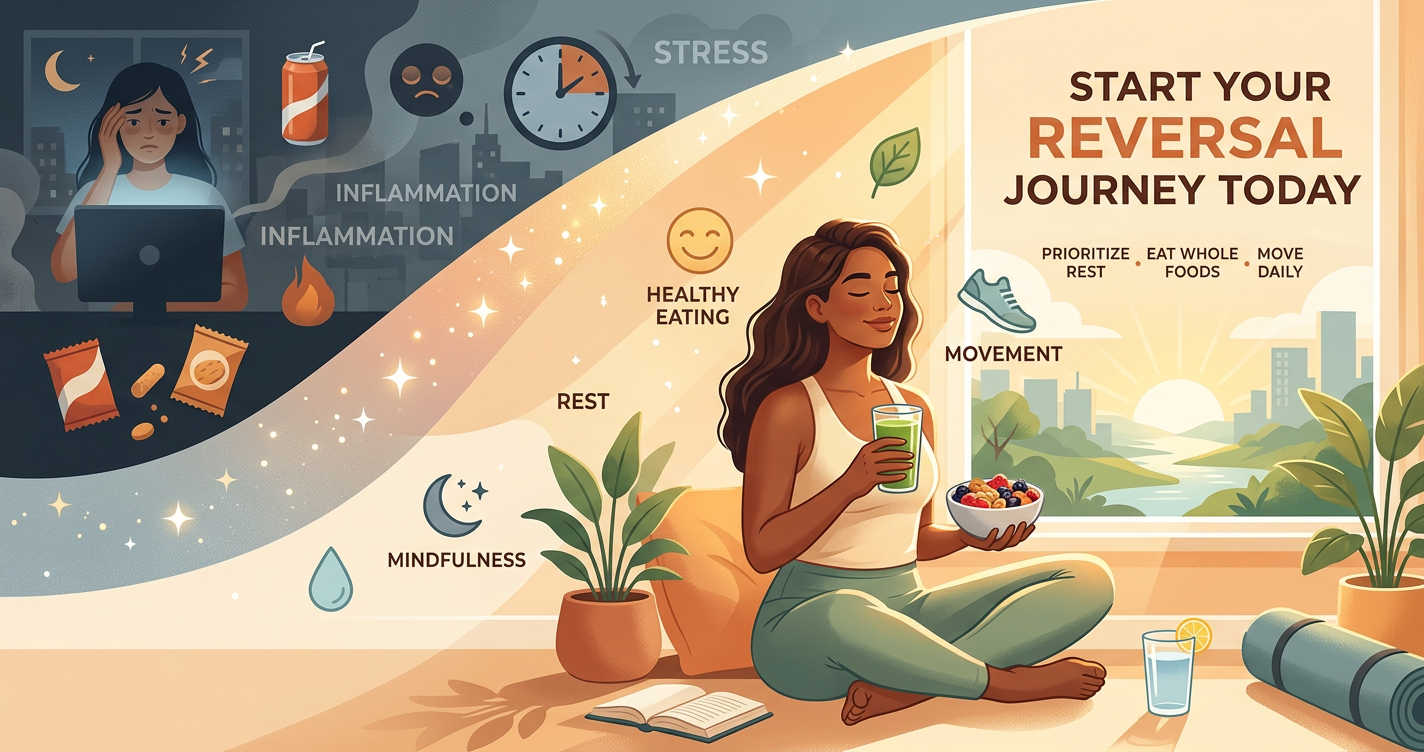
We’ve all heard the word "inflammation" thrown around in health podcasts and doctor’s offices, usually in the same breath as "chronic disease" or "longevity." But for most of us, inflammation isn't some abstract medical term—it’s that sluggish feeling you have on Monday morning, the stubborn joint pain after a light workout, or the mysterious skin flare-up that won’t go away. While short-term inflammation is actually a hero (it’s your body’s way of healing a cut or fighting a cold), chronic, low-grade inflammation is more like a slow-burning fire that quietly damages your tissues over time.
The tricky part? You might be fueling that fire every single day without even realizing it. It’s not just about the big things like smoking or heavy drinking; it’s the quiet, "normal" habits that weave themselves into our modern lives. The good news is that because these habits are within your control, the power to reverse the damage is entirely in your hands. Let’s dive into the daily behaviors that are secretly revving up your inflammatory response and how you can pivot toward a truly healthy lifestyle.
The Invisible Culprits: Diet and Sedentary Slumps
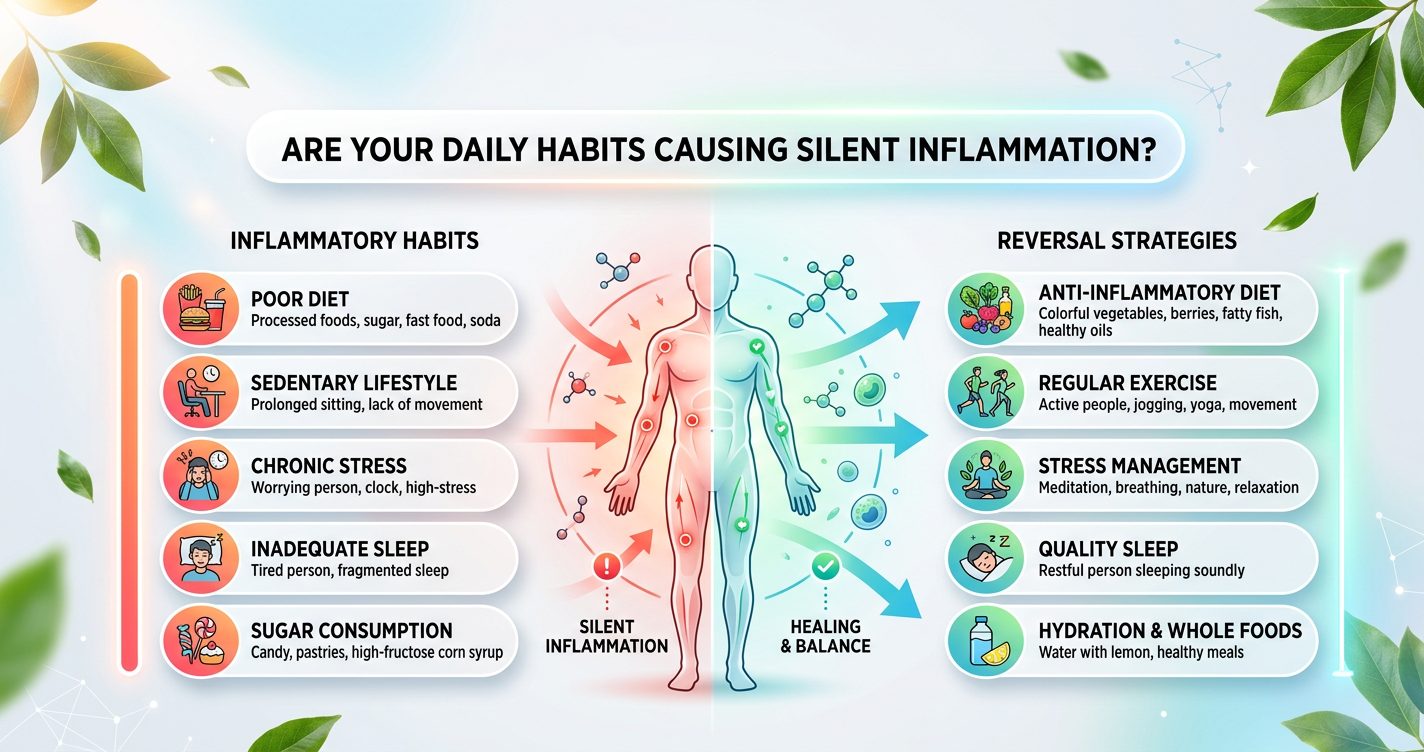
If you look at the standard modern diet, it’s practically a blueprint for systemic inflammation. We often think of "bad food" as just something that makes us gain weight, but the biochemical reality is much more complex. When we consume high amounts of refined sugars, high-fructose corn syrup, and ultra-processed seed oils (like soybean or corn oil), our bodies react by releasing pro-inflammatory messengers called cytokines.
One of the biggest quiet offenders is the "liquid sugar" habit. That afternoon soda or the seemingly healthy flavored latte is a massive spike to your insulin levels. Frequent insulin spikes signal the body to store fat, particularly visceral fat around your organs. This isn't just a cosmetic issue; visceral fat is biologically active, meaning it pumps out inflammatory chemicals 24/7. To reverse this, you don't need a radical fast. Start by swapping one processed snack for a handful of walnuts or an apple. These contain fiber and phytonutrients that actively dampen the inflammatory response.
The Danger of the "Sitting Disease"
It’s not just what you eat, but how little you move. Many of us fall into the trap of being "sedentary athletes"—we hit the gym for 45 minutes but spend the other 23 hours of the day sitting at a desk or on a couch. Research shows that prolonged sitting increases markers of inflammation, even if you exercise later. When your muscles aren't contracting, your metabolism slows down, and your body’s ability to regulate blood sugar and blood pressure diminishes.
To combat this, embrace the concept of "movement snacks." Set a timer to stand up every 30 minutes. Do ten air squats, take a lap around the kitchen, or simply stretch. These small bursts of activity help circulate lymph fluid and keep your inflammatory markers in check. A healthy lifestyle isn't built on a single workout; it's built on the aggregate of your movements throughout the day.
Limit processed "white" foods (bread, pasta, sugar).
Increase intake of Omega-3 fatty acids (fatty fish, chia seeds).
Walk for 10 minutes after every meal to blunt glucose spikes.
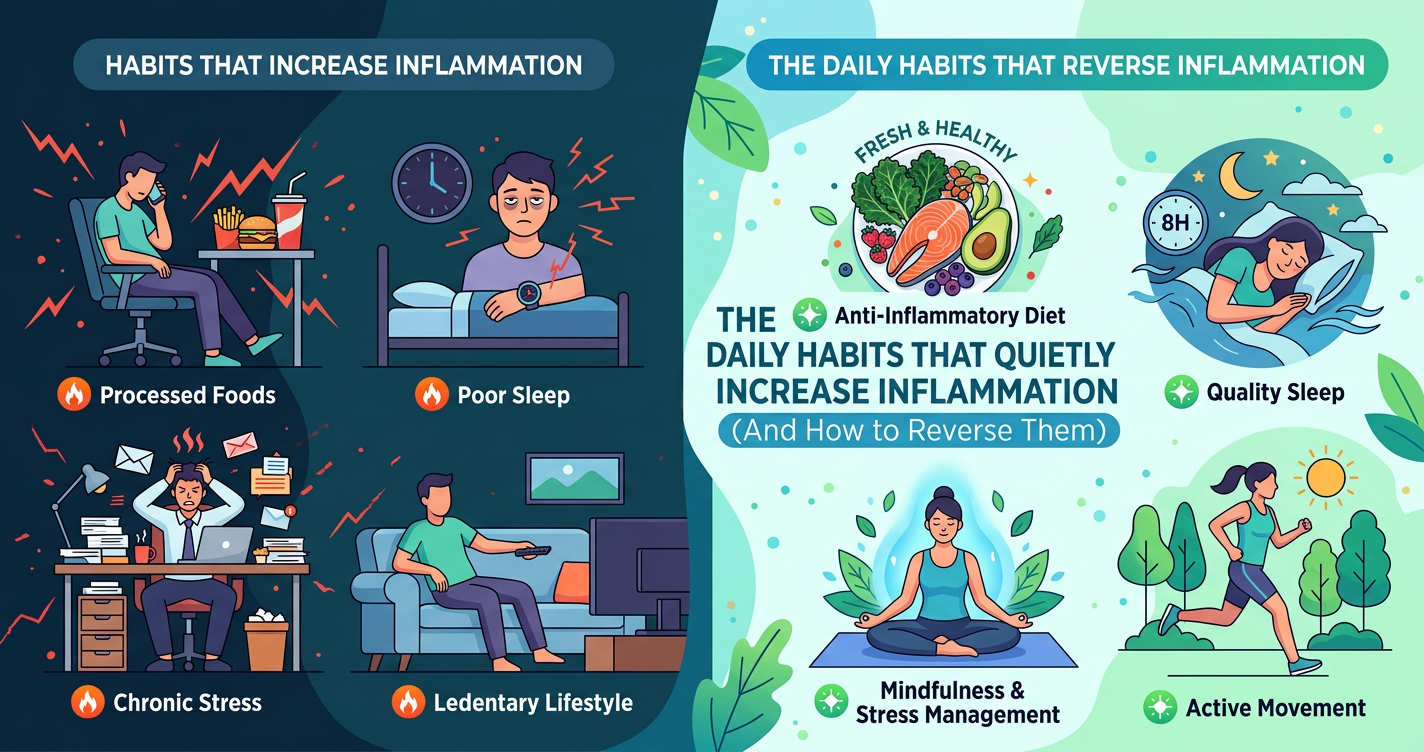
The Stress and Sleep Connection: The Silent Inflammators
We live in a culture that wears "busy-ness" as a badge of honor, but your immune system pays the price. Chronic stress is perhaps the most underrated driver of inflammation. When you’re constantly stressed, your body produces cortisol. In short bursts, cortisol is actually anti-inflammatory. However, when you are stressed all the time, your cells become "desensitized" to cortisol. It’s like the boy who cried wolf; your body stops responding to the signal to calm down, and inflammation runs rampant.
Psychological stress triggers the same biological pathways as a physical injury. Your body thinks it’s under attack, so it stays in a state of high alert. This is why you might feel physically sore or "puffy" after a particularly stressful week at work. Reversing this requires a conscious effort to down-regulate your nervous system. This could be as simple as five minutes of deep belly breathing or a daily gratitude practice. These aren't just "woo-woo" concepts; they are physiological tools to switch your body from the "fight or flight" (sympathetic) state to the "rest and digest" (parasympathetic) state.
The Cost of "Getting By" on Six Hours of Sleep
Sleep is when your body’s "janitorial crew" comes out to clean up the cellular debris left over from the day. If you consistently cut your sleep short, you are essentially preventing your body from repairing itself. Even one night of poor sleep can increase inflammatory markers like C-reactive protein (CRP) the following day.
Many people try to mask the effects of poor sleep with caffeine, but this only creates a vicious cycle of more stress and more inflammation. To reverse the damage, prioritize sleep hygiene: keep your room cool, avoid screens 60 minutes before bed, and try to go to sleep at the same time every night. When you sleep well, your body can effectively manage the inflammatory load, leaving you feeling refreshed rather than recharged by adrenaline.
Practice "Box Breathing" (4 seconds in, 4 hold, 4 out, 4 hold).
Establish a digital sunset to improve melatonin production.
Journaling to "dump" stressful thoughts before bed.
Smart Strategies: Using Supplements and Nature to Heal
While lifestyle and diet are the foundation, sometimes our bodies need an extra boost to get the fire under control. This is where strategic supplements come into play. However, it’s important to remember that you can't out-supplement a poor diet. Supplements should be the "cherry on top" of an already healthy lifestyle.
Curcumin, the active compound in turmeric, is one of the most well-researched natural anti-inflammatories. It works by blocking NF-kB, a molecule that travels into the nuclei of your cells and turns on genes related to inflammation. Similarly, high-quality fish oil (rich in EPA and DHA) helps balance the ratio of fats in your cell membranes, making them more resilient. Magnesium is another powerhouse; most adults are deficient in it, and low magnesium levels are closely linked to chronic inflammation. Adding a magnesium glycinate supplement at night can help with both muscle relaxation and systemic cooling.
The Power of Real Food and Nature
Beyond pills and capsules, the most potent "supplements" are often found in the produce aisle. Berries, dark leafy greens, and cruciferous vegetables like broccoli contain sulforaphane and polyphenols that act as natural switches to turn off inflammatory pathways. Think of your plate as a pharmacy; every color represents a different phytonutrient working to protect your cells.
Finally, don't underestimate the power of the great outdoors. Spending time in nature—sometimes called "forest bathing"—has been scientifically shown to lower cortisol and boost the activity of natural killer cells. Getting some sunlight in your eyes first thing in the morning also helps regulate your circadian rhythm, which in turn regulates your inflammatory cycles. By combining smart supplementation with a focus on whole foods and environmental awareness, you create an internal environment where inflammation simply can't thrive.
Consider a high-quality Vitamin D3 supplement, especially in winter.
Focus on "eating the rainbow" to get a variety of antioxidants.
Spend at least 20 minutes outside daily to lower stress hormones.
At the end of the day, quiet inflammation is the result of many small, repeated choices. By swapping out the habits that drain you for ones that nourish you, you can reverse the trend. It’s not about perfection; it’s about moving the needle toward balance. Start today by choosing one habit—maybe it's drinking more water, or taking a short walk after lunch—and watch how your body responds. You deserve to feel vibrant, and the journey to a lower-inflammation life is one of the best gifts you can give yourself.