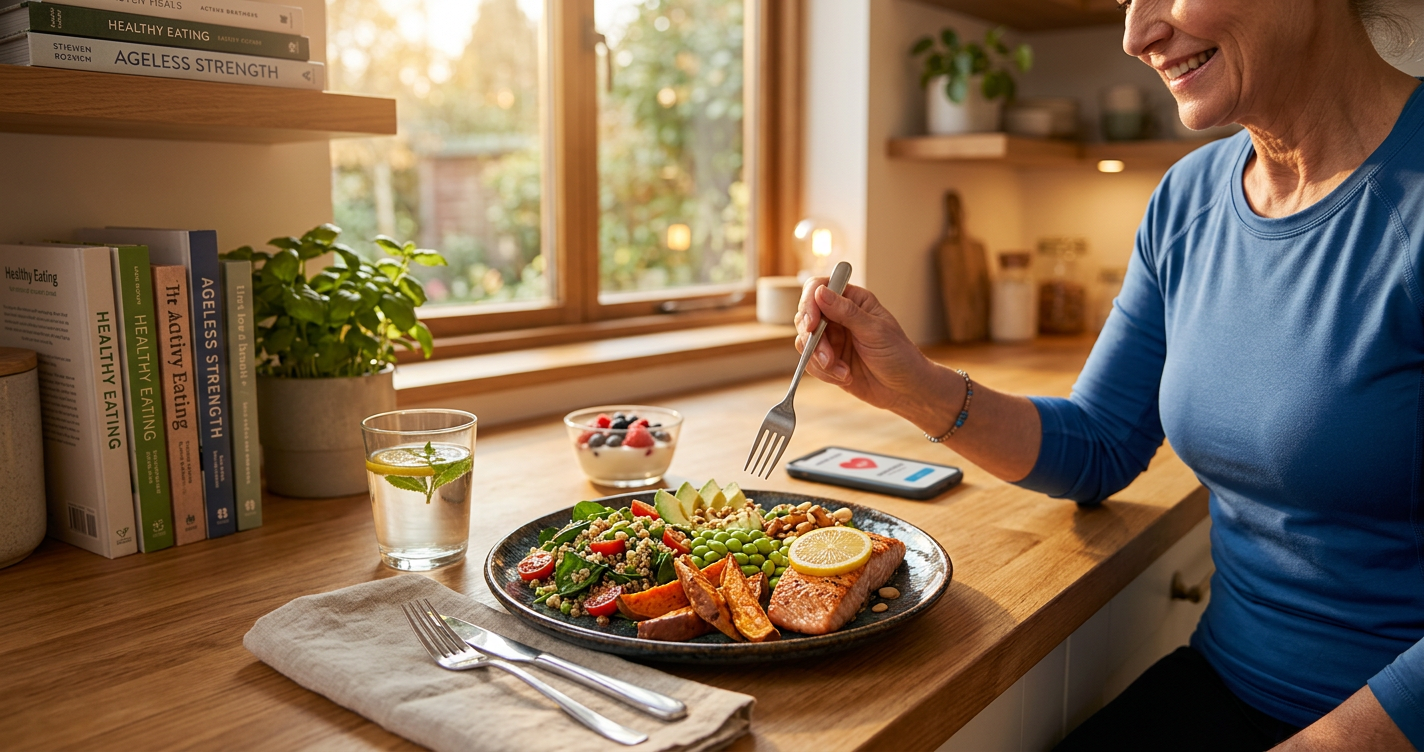
We’ve all been there: you finish a brisk morning walk or a challenging hike through the woods, and you feel absolutely invincible. That post-workout glow is real, especially as we embrace the principles of anti-aging and longevity. But then, an hour later, the "bonk" hits. You’re exhausted, your muscles feel like lead, and you’re suddenly raiding the pantry for anything salty or sweet. If you want to keep your activity levels high and your recovery time low, it’s time to talk about the "Recovery Plate."
Fueling your body isn’t just about having enough energy to finish a workout; it’s about providing the specific nutrients your cells need to repair, regenerate, and stay youthful. In the world of active aging, physical exercise acts as the stimulus, but nutrition is the architect that builds the stronger, more resilient version of you. Whether you are a dedicated gym-goer or someone who loves a long weekend trek, how you eat before and after your movement matters more than you might think.
Section 1: The Pre-Activity Primer – Setting the Stage for Success
Before we dive into the recovery side of things, we have to talk about the "Before." You wouldn't take a long road trip with an empty gas tank, and your body shouldn't embark on physical exercise without a little bit of high-quality fuel in the system. When we talk about anti-aging, we are looking to minimize oxidative stress and keep blood sugar stable. Eating the right things before you head out helps prevent muscle breakdown and keeps your brain sharp.
The Power of Slow-Burn Carbohydrates
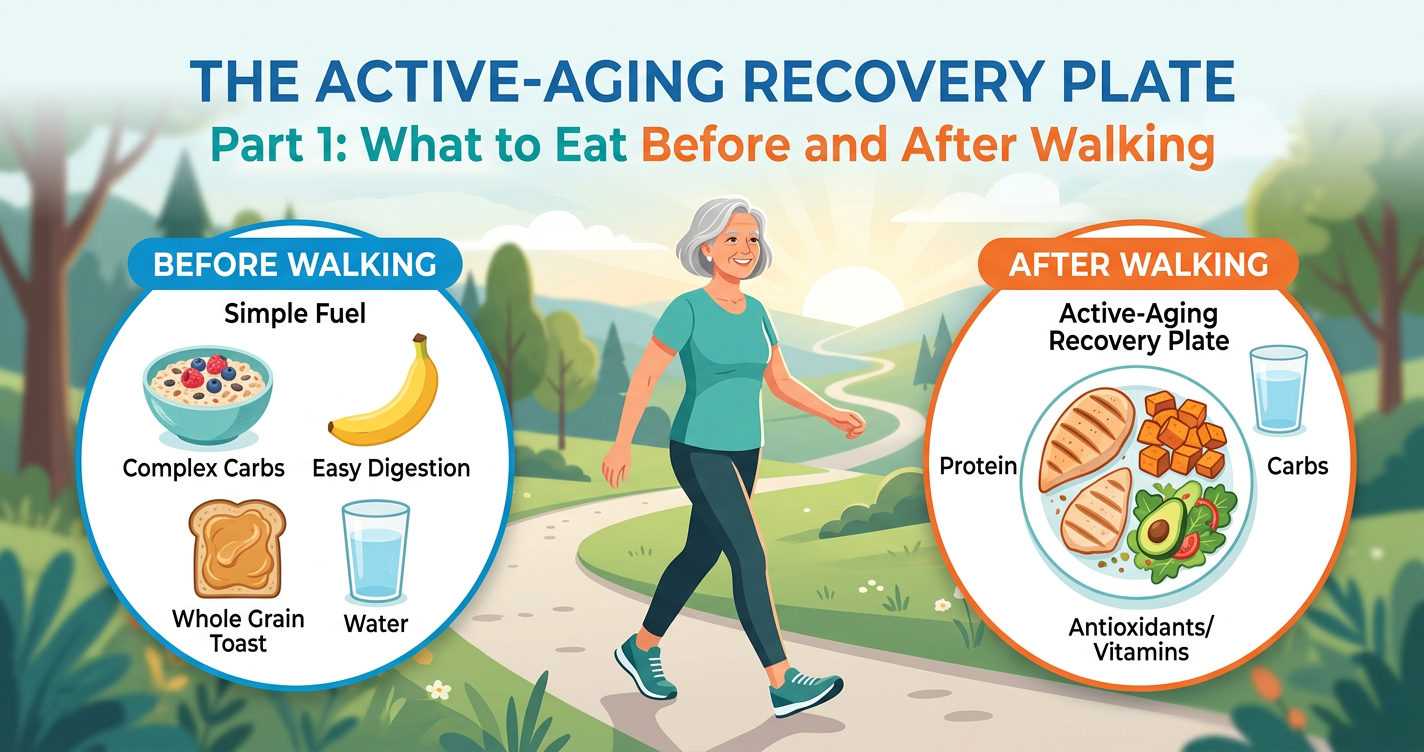
Carbohydrates have gotten a bad rap in recent years, but for anyone staying active, they are your best friend. The key is choosing "slow-burn" carbs. These provide a steady stream of glucose to your muscles rather than a spike and a crash. For a morning walk or a hike, think about oats, whole-grain toast, or a piece of fruit like an apple or a pear. These foods provide the fiber necessary to keep your digestion steady while giving you the endurance to go the extra mile.
Hydration Starts Before You Sweat
Most people wait until they are thirsty to drink water, but by then, you’re already slightly dehydrated. Dehydration is one of the quickest ways to make your skin look older and your joints feel stiffer. About 30 minutes before your activity, aim for 8-12 ounces of water. If you’re planning a strenuous hike or a strength training session, adding a pinch of sea salt or an electrolyte powder can help your muscles contract more efficiently and prevent cramping.
Pre-Workout Snacks by Activity Type
For a Morning Walk: A small Greek yogurt with a handful of berries. It’s light, offers a hit of protein, and the antioxidants in berries fight off the free radicals produced during movement.
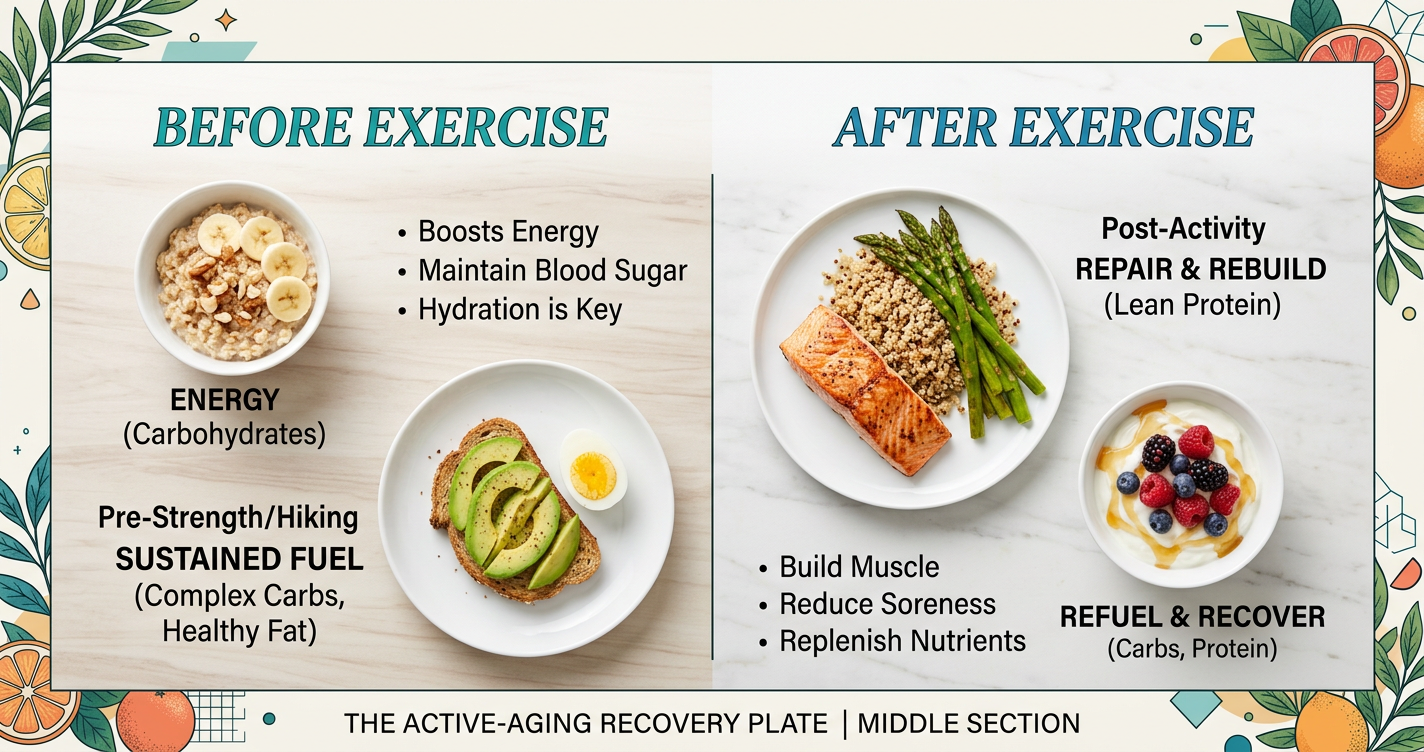
For Strength Training: A banana with a tablespoon of almond butter. The potassium in the banana prevents cramps, and the healthy fats provide sustained energy for lifting.
For a Long Hike: Half a turkey sandwich on sprouted grain bread. You need a mix of complex carbs and lean protein to sustain you for several hours on the trail.
Section 2: The Golden Hour – Refueling for Optimal Recovery
Once you’ve put in the work, your body enters a state of repair. This is where the magic of anti-aging truly happens. During physical exercise, you create tiny micro-tears in your muscle fibers. This sounds scary, but it’s actually a good thing! When your body repairs these tears, it makes the muscle stronger and more metabolically active. However, it can only do this if you provide the right building blocks: nutrients.
Protein: The Architect of Muscle Repair
As we age, our bodies become less efficient at processing protein—a phenomenon called anabolic resistance. This means we actually need *more* high-quality protein as we get older to maintain the same amount of muscle mass. After your workout, aim for 25 to 40 grams of protein. This could be a chicken breast, a piece of salmon, a scoop of high-quality whey or plant-based protein powder, or a bowl of lentils and quinoa. Protein is non-negotiable for recovery.
The Importance of Colorful Antioxidants
Exercise is a form of stress. While it’s "good" stress, it still produces inflammation. To counter this and promote anti-aging, your recovery plate needs to be vibrant. Dark leafy greens, roasted beets, carrots, and bell peppers are packed with phytonutrients that "mop up" the oxidative damage caused by heavy breathing and exertion. Think of these vegetables as your internal anti-aging cream.
Replenishing Glycogen
After a long hike or a heavy lifting session, your muscles’ stored energy (glycogen) is depleted. If you don't replace it, you’ll feel sluggish for the rest of the day. This is the perfect time for "faster" carbs that might otherwise spike your blood sugar. A sweet potato, a portion of brown rice, or even some tropical fruit like pineapple can help shuttle those nutrients into your muscles where they are needed most.
The Strength Training Plate: 6oz Grilled salmon (Omega-3s for joints), roasted sweet potatoes, and a massive pile of sautéed spinach with garlic.
The Hiker’s Recovery Bowl: Quinoa base topped with black beans, avocado (healthy fats for hormone health), salsa, and grilled chicken or tofu.
The Walker’s Refresh: A protein smoothie with spinach, frozen blueberries, chia seeds, and almond milk.
Section 3: Beyond the Macro-Nutrients – The Secret Sauce of Longevity
While protein, carbs, and fats get all the glory, the "Active-Aging Recovery Plate" isn't complete without considering the micro-nutrients and lifestyle habits that tie everything together. To truly reap the benefits of your activity, you have to look at the ingredients that support your joints, your gut, and your sleep quality.
Collagen and Joint Support
One of the biggest hurdles to staying active as we get older is joint discomfort. While movement helps lubricate the joints, the right nutrients provide the raw materials for cartilage. Bone broth, collagen peptides, and foods rich in Vitamin C (like citrus and bell peppers) are essential. Vitamin C is a co-factor for collagen synthesis, meaning your body can’t actually make the collagen it needs for your knees and hips without it.
Don't Fear the Fats
Healthy fats are crucial for hormone production, including the hormones that help build muscle and keep our moods stable. Omega-3 fatty acids, found in fatty fish, walnuts, and flaxseeds, are potent anti-inflammatories. Including these in your recovery meal can significantly reduce the delayed onset muscle soreness (DOMS) that often follows a new or intense activity. If you want to wake up the next day feeling ready to go again, don't skip the avocado or the olive oil drizzle.
The Role of Magnesium
Magnesium is involved in over 300 biochemical reactions in the body, including muscle relaxation and energy production. Many of us are deficient in it, especially since we lose magnesium through sweat. Including magnesium-rich foods like pumpkin seeds, almonds, and dark chocolate (yes, really!) on your recovery plate can help prevent muscle spasms and improve your sleep quality. And as any anti-aging expert will tell you, sleep is the ultimate recovery tool.
Putting It All Together: A Daily Habit
Consistency is the name of the game. You don't need a "perfect" plate every single time, but aiming for the "Protein + Color + Complex Carb" formula will change how you feel within just a few weeks. When you nourish your body correctly, physical exercise stops feeling like a chore and starts feeling like a fountain of youth. You’ll find you have more energy for your grandkids, your hobbies, and your next big adventure.
Remember, the goal of active aging isn't just to add years to your life, but to add life to your years. By treating your kitchen like your personal recovery center, you ensure that every walk, every lift, and every mountain climbed contributes to a stronger, more vibrant you. So, next time you lace up those sneakers, remember to plan for the plate that follows. Your future self will thank you.