In recent years, the conversation surrounding human health has shifted from what we eat to how we process it. At the center of this revolution is the gut microbiome—a complex ecosystem of trillions of microorganisms living in our digestive tract. While most of us have heard of probiotics, the science has evolved to include two other critical "biotics": prebiotics and postbiotics. Understanding the distinction between these three and how they interact is the key to mastering your digestion, balancing your mood, and achieving steadier energy levels throughout the day.
Your gut is more than just a tube for processing food; it is an endocrine organ, an immune powerhouse, and a secondary nervous system often called the "second brain." When the microbiome is in balance, you experience efficient digestion, clear skin, and high cognitive function. When it is out of balance, or in a state of dysbiosis, it can lead to bloating, systemic inflammation, and chronic fatigue. By focusing on the trifecta of pre-, pro-, and postbiotics, you are essentially gardening your internal landscape to ensure the "good guys" thrive.
The Foundation of Gut Health: Understanding Prebiotics and Probiotics
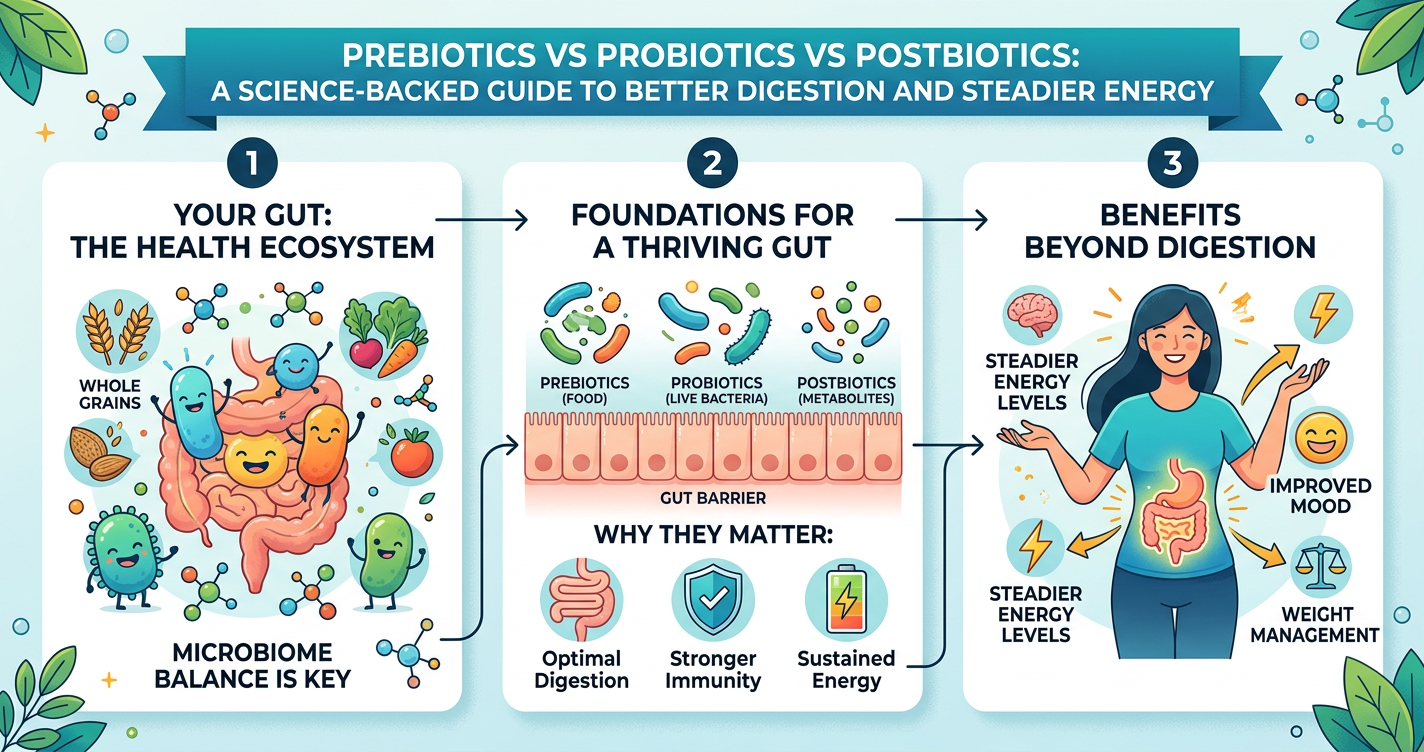
To understand the gut ecosystem, it helps to use a gardening metaphor. If your gut is the garden, probiotics are the seeds you plant, and prebiotics are the fertilizer that helps them grow. Without both, your internal landscape will struggle to flourish.
What are Probiotics?
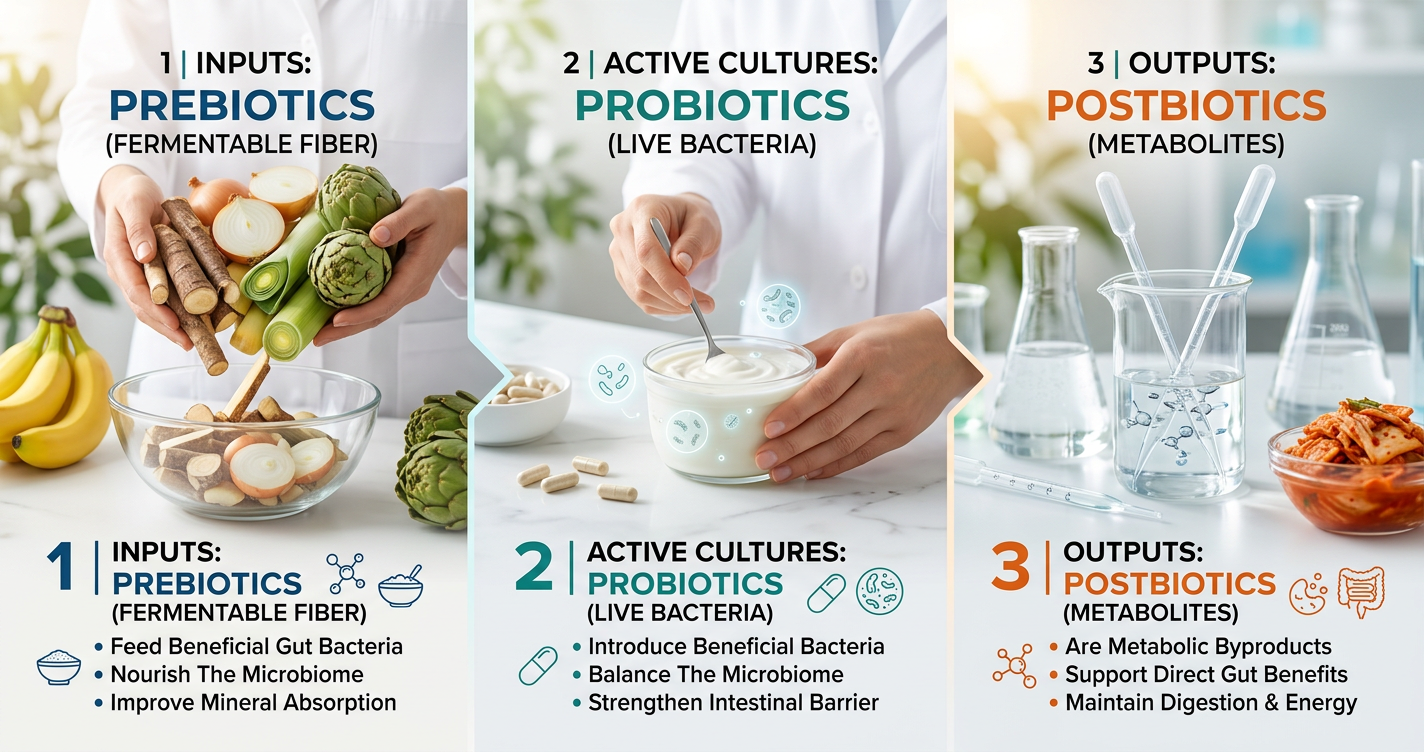
Probiotics are live microorganisms that, when administered in adequate amounts, confer a health benefit on the host. These are the "good" bacteria and yeasts that actively work to crowd out harmful pathogens in your gut. They help maintain the integrity of the intestinal lining and assist in breaking down complex carbohydrates that our own human cells cannot digest.
To incorporate more probiotics into your diet, you should look toward traditional fermented foods. These include:
Yogurt with live active cultures
Kefir (a fermented milk drink)
Sauerkraut (unpasteurized)
Kimchi
Miso and Tempeh
Kombucha
When choosing a probiotic supplement or food, variety is key. Different strains, such as Lactobacillus and Bifidobacterium, serve different functions. Some are better for treating diarrhea, while others are more effective at reducing symptoms of irritable bowel syndrome (IBS).
What are Prebiotics?
Prebiotics are not alive. Rather, they are specialized plant fibers that act as food for the good bacteria in your gut. Most prebiotics are a type of fiber that the human body cannot digest. Because we lack the enzymes to break them down, they pass through the upper part of the gastrointestinal tract and reach the colon intact, where they are fermented by the microbiome.
Common prebiotic sources include:
Chicory root (high in inulin)
Garlic and onions
Leeks and asparagus
Bananas (especially when slightly green)
Whole grains like oats and barley
Jerusalem artichokes
A diet low in prebiotic fiber essentially starves your beneficial bacteria. This can lead to a decrease in microbial diversity, which is a hallmark of many modern digestive issues. By consistently providing the right "fuel," you ensure that your probiotic populations remain stable and active.
The Silent Heroes: Postbiotics and the Power of SCFA
For a long time, we thought the benefits of gut health ended with probiotics. However, modern research has highlighted the critical role of postbiotics. These are the functional compounds produced during the fermentation process—essentially the "byproducts" of probiotics eating prebiotics.
What are Postbiotics?
While the name might suggest they are "dead" bacteria, postbiotics are actually a collection of bioactive molecules. These include enzymes, peptides, organic acids, and, most importantly, Short-Chain Fatty Acids (SCFA). While you don't typically "eat" postbiotics directly in the same way you eat fiber, your body produces them internally when your gut is healthy.
The Magic of Short-Chain Fatty Acids (SCFA)
SCFAs are the primary currency of gut health. The three most common are acetate, propionate, and butyrate. Butyrate, in particular, is the preferred energy source for the cells lining your colon (colonocytes). Here is why they matter for your digestion and energy:
Intestinal Integrity: SCFAs help strengthen the gut barrier, preventing "leaky gut" and keeping toxins from entering the bloodstream.
Anti-Inflammatory Effects: Postbiotics have been shown to lower systemic inflammation, which is a major contributor to "brain fog" and afternoon energy crashes.
Blood Sugar Regulation: Beneficial byproducts of fermentation help improve insulin sensitivity, leading to more stable energy levels after meals.
Immune Support: A large portion of your immune system resides in the gut, and postbiotics help signal immune cells to respond more effectively to threats.
In essence, postbiotics are the end goals of the entire digestive process. The reason we eat fiber and consume fermented foods is to eventually produce these life-sustaining compounds in our large intestine.
Optimizing Your Microbiome: Syphonics, Synbiotics, and Daily Habits
Now that we understand the roles of pre-, pro-, and postbiotics, how do we put this knowledge into practice? Achieving a healthy gut requires a holistic approach that combines dietary choices with lifestyle habits.
The Rise of Synbiotics
A synbiotic is a supplement or food product that contains both a prebiotic and a probiotic. This combination is designed to be synergistic; the prebiotic specifically supports the survival and growth of the probiotic strain it is paired with. For example, a yogurt that contains added chicory root is a culinary synbiotic. Choosing synbiotic combinations ensures that the beneficial bacteria have an immediate food source upon reaching your colon, increasing their chances of colonization.
Eating for Sustained Energy
The link between the microbiome and energy levels is profound. When your digestive tract is sluggish or inflamed, your body diverts massive amounts of metabolic energy to handle the stress. By focusing on these three biotics, you shift your body from "defense mode" to "performance mode."
To maximize your results, follow these evidence-based strategies:
Diversify Your Plate: Aim for 30 different plant foods per week. This ensures a wide variety of prebiotic fibers to feed different bacterial strains.
Limit Processed Sugars: High sugar intake feeds pathogenic bacteria and yeast (like Candida), which can lead to bloating and "crashes."
Hydrate for Fiber: If you increase your fiber intake, you must increase your water intake. Fiber absorbs water to move waste through the system; without it, you may experience constipation.
Manage Stress: The gut-brain axis works both ways. High cortisol levels can damage the gut lining, regardless of how many probiotics you take.
Conclusion: A Long-Term Commitment
Optimizing your gut health is not a weekend project; it is a lifelong commitment to providing your body with the raw materials it needs to thrive. By understanding the cycle from prebiotic (fuel) to probiotic (worker) to postbiotic (product), you can take control of your digestion. When your microbiome is fed well, it rewards you with better immunity, a clearer mind, and the steady, vibrant energy you need to tackle your day.