In the evolving landscape of modern nutrition, the conversation has shifted from simple calorie counting to a deep dive into the chemical compositions of our food. Among the most debated topics today are "anti-nutrients." If you have spent any time browsing wellness blogs or listening to biohacking podcasts, you have likely heard about lectins, phytates, and oxalates. Often portrayed as dietary villains, these compounds are accused of everything from causing systemic inflammation to blocking nutrient absorption. But are these natural plant defenses truly dangerous, or are we overcomplicating our relationship with healthy vegetables and grains?
To understand anti-nutrients, we must first understand plant biology. Unlike animals, plants cannot run away from predators. Instead, they have evolved a sophisticated arsenal of chemical defenses to discourage insects, fungi, and mammals from eating them. These chemicals are what we refer to as anti-nutrients. While they serve a protective purpose for the plant, their effects on the human body are nuanced, offering both potential drawbacks and surprising health benefits.
Understanding the Big Three: Lectins, Phytates, and Oxalates
What are Lectins?
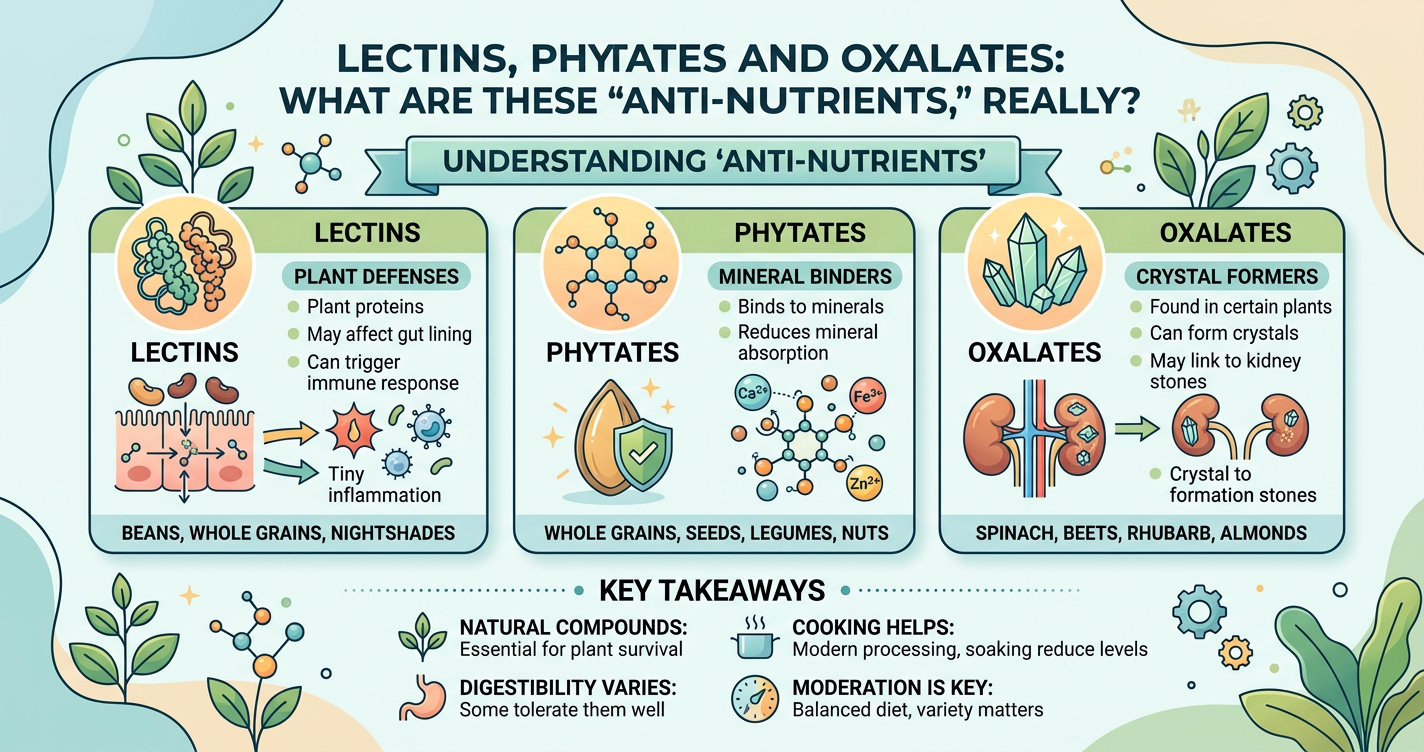
Lectins are a type of protein that can bind to sugar molecules. They are found in high concentrations in legumes (beans, peanuts, soybeans) and nightshades (tomatoes, potatoes, peppers). The primary concern with lectins is their "sticky" nature. Because they can bind to the lining of the digestive tract, some researchers suggest they may increase intestinal permeability, often referred to as "leaky gut." In their raw state, certain lectins, like phytohaemagglutinin found in red kidney beans, are actually toxic and can cause severe food poisoning. However, the fear surrounding lectins often ignores the fact that traditional cooking methods—soaking, boiling, and fermenting—neutralize the vast majority of these compounds.
The Role of Phytates
Phytates, or phytic acid, are primarily found in seeds, grains, and nuts. Their role in the plant is to store phosphorus for the germinating seed. For humans, phytates are known as "mineral blockers." They have a high affinity for binding to minerals like iron, zinc, and calcium in the digestive tract, preventing their absorption. This is why a diet extremely high in unrefined grains without adequate mineral intake can lead to deficiencies. However, phytates are also potent antioxidants and have been linked to a reduced risk of kidney stones and certain types of cancer.
The Impact of Oxalates
Oxalates are organic acids found in leafy greens (like spinach and beet greens), nuts, and cocoa. When oxalates bind to calcium in the kidneys, they can form calcium oxalate crystals, which are the most common type of kidney stones. For individuals predisposed to kidney issues or those with specific gut imbalances, a high-oxalate diet can be problematic. Yet, for the average person, the fiber and vitamins found in high-oxalate foods often outweigh the risks, provided the body is hydrated and mineral balance is maintained.
The Impact on Nutrient Absorption and Gut Health
The primary argument against anti-nutrients is their interference with nutrient absorption. By binding to essential minerals, these compounds can theoretically lead to "hidden hunger," where a person consumes enough calories but remains malnourished at a cellular level. For example, if you eat a meal high in phytates, you might only absorb a fraction of the zinc and iron present in that meal. This is a significant concern in developing nations where diets are heavily reliant on a single grain or legume staple.
However, the human body is remarkably adaptable. Research shows that people who consistently consume high-phytate diets actually develop gut bacteria that are more efficient at breaking down these compounds. Furthermore, the "anti-nutrient" label fails to account for the hormetic effect—the concept that a small amount of stress on the body can actually strengthen it. Many of these compounds act as mild stressors that trigger cellular repair mechanisms and improve the immune response.
For those who are particularly sensitive to these compounds, perhaps due to autoimmune conditions or sensitive digestive systems, managing the intake of lectins and other plant defenses becomes more critical. In these cases, individuals often look for supplemental support. Products like a lectin guard formula are designed to provide enzymes or binding agents that help neutralize the impact of these proteins before they can irritate the gut lining. While not necessary for everyone, such tools can be a bridge for those who want to enjoy the nutritional benefits of beans and grains without the digestive distress.
Practical Strategies: How to Neutralize Anti-Nutrients
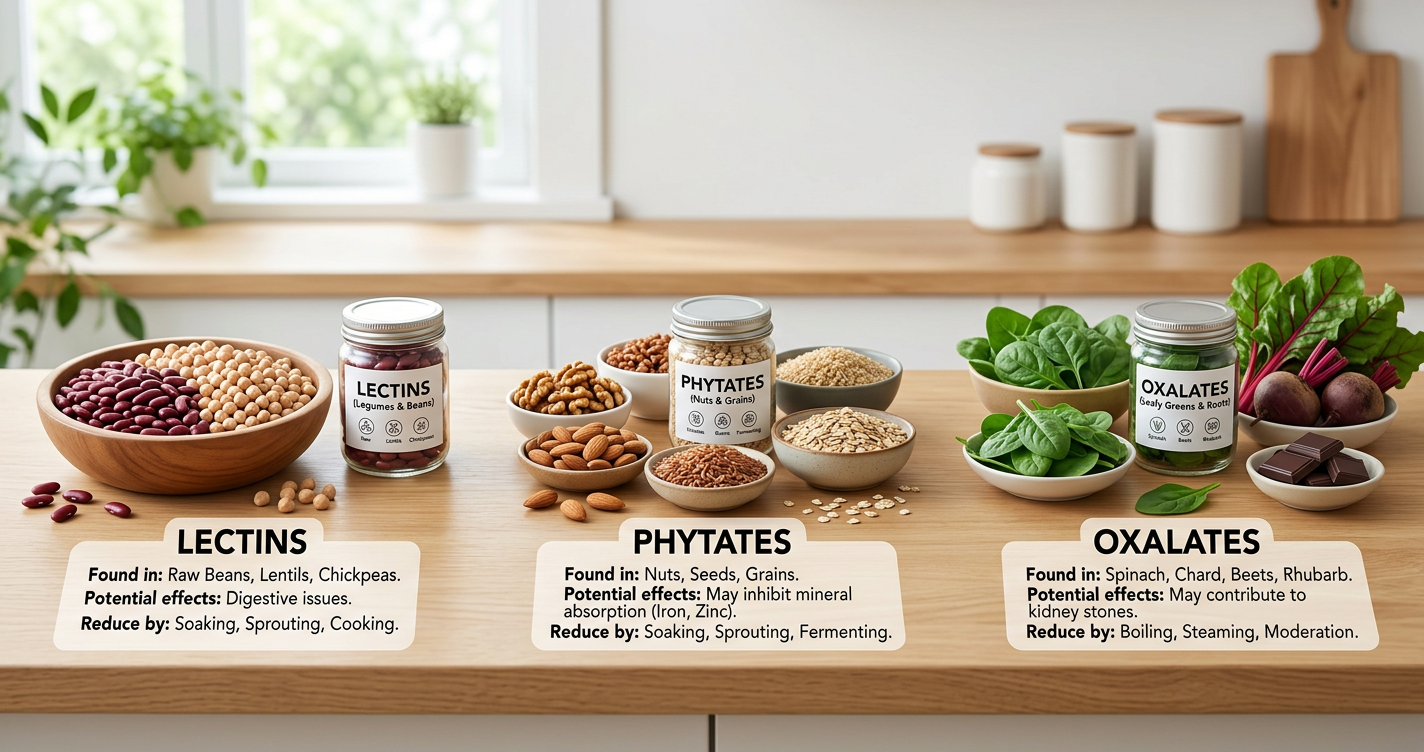
You don't need to eliminate entire food groups to protect yourself from the negative effects of anti-nutrients. Throughout history, cultures across the globe have used specific preparation techniques to make plant foods safer and more nutritious. By mimicking these traditional methods, you can significantly reduce the concentration of lectins, phytates, and oxalates in your diet.
Soaking and Sprouting: Soaking beans and grains for 12–24 hours before cooking activates enzymes that break down phytic acid. Sprouting takes this a step further, significantly reducing lectin content and increasing the bioavailability of vitamins.
Fermentation: This is perhaps the most effective way to neutralize anti-nutrients. The bacteria involved in fermenting sourdough bread or tempeh consume the sugars and proteins that humans find difficult to digest, effectively "pre-digesting" the food for us.
Cooking with Heat: Most lectins are heat-labile, meaning they degrade when cooked. Boiling beans in a pressure cooker is particularly effective at destroying lectins that survive standard boiling temperatures.
Pairing Foods Wisely: To counter the effects of oxalates, pair high-oxalate foods with calcium-rich foods (like adding cheese to spinach). The oxalates will bind to the calcium in the stomach rather than in the kidneys, allowing them to pass safely through the digestive system.
In conclusion, while lectins, phytates, and oxalates are technically anti-nutrients, they are not poison. They are bioactive compounds that require respect and proper preparation. For the majority of people, a diverse diet rich in plants—prepared with care—provides far more benefit than harm. By focusing on traditional preparation methods and, if necessary, utilizing a lectin guard for extra support, you can enjoy the bounty of the plant kingdom while ensuring optimal nutrient absorption and long-term health.