The Science of Micro-Movements: Why Small Actions Lead to Big Results in Retirement Health
Retirement is often marketed as a time of rest, but the biological truth is that our bodies thrive on motion. After decades of professional work, many retirees find that "taking it easy" inadvertently leads to increased stiffness and a noticeable decline in range of motion. This is where the concept of micro-movements becomes a game-changer. Unlike high-intensity interval training or hour-long gym sessions, micro-movements are brief, intentional physical actions designed to lubricate the joints and activate muscles without causing undue stress or exhaustion.
As we age, the synovial fluid—the natural lubricant inside our joints—can become more viscous if we remain sedentary. Furthermore, our fascia, the connective tissue surrounding our muscles, can become tight and "sticky." This leads to that familiar feeling of waking up with "rusty" knees or a tight lower back. By incorporating a routine of micro-movements, you are essentially "greasing the gears" of your body. Research in the field of retirement health shows that frequency of movement is often more important than the intensity of movement when it comes to maintaining a youthful physical state.
Natural Inflammation Management Through Motion
One of the primary enemies of comfort in retirement is inflammation. While systemic inflammation is often managed through diet and hydration, localized inflammation in the joints can be significantly mitigated through gentle movement. Micro-movements encourage lymphatic drainage and blood flow, which helps the body flush out metabolic waste products that contribute to swelling and pain. Instead of reaching for a bottle of ibuprofen at the first sign of discomfort, many retirees are finding that a five-minute stretching sequence provides more sustainable relief.
Improved Circulation: Even small toe-points or wrist circles increase blood flow to the extremities.
Fascial Release: Slow, deliberate micro-stretches prevent the connective tissue from tightening around muscle fibers.
Neuromuscular Connection: These movements remind your brain how to engage specific muscle groups, improving balance and coordination.
The beauty of this approach is its accessibility. You don’t need specialized equipment, a gym membership, or even a change of clothes. You only need a willingness to listen to your body and ten minutes of dedicated time. By shifting the focus from "exercise" to "movement," we remove the psychological barriers that often prevent us from staying active during our golden years. This is about reclaiming the fluidity of youth, one small pulse at a time.
The 10-Minute Daily Routine: Combatting Stiffness and the 2 PM Slump
Consistency is the secret ingredient to any successful health plan. To see real changes in your range of motion and energy levels, it helps to anchor your micro-movements to a specific time of day. Many people experience the notorious "2 pm slump"—that moment after lunch when energy dips and the body starts to feel heavy and stagnant. Instead of reaching for a second cup of coffee, this is the perfect window to implement your 10-minute routine.
This routine is designed to be performed in a "top-down" fashion, ensuring every major joint group is addressed. It focuses on gentle oscillations and light contractions that wake up the muscles rather than tearing them down.
Phase 1: The Upper Body Reset (Minutes 0-3)
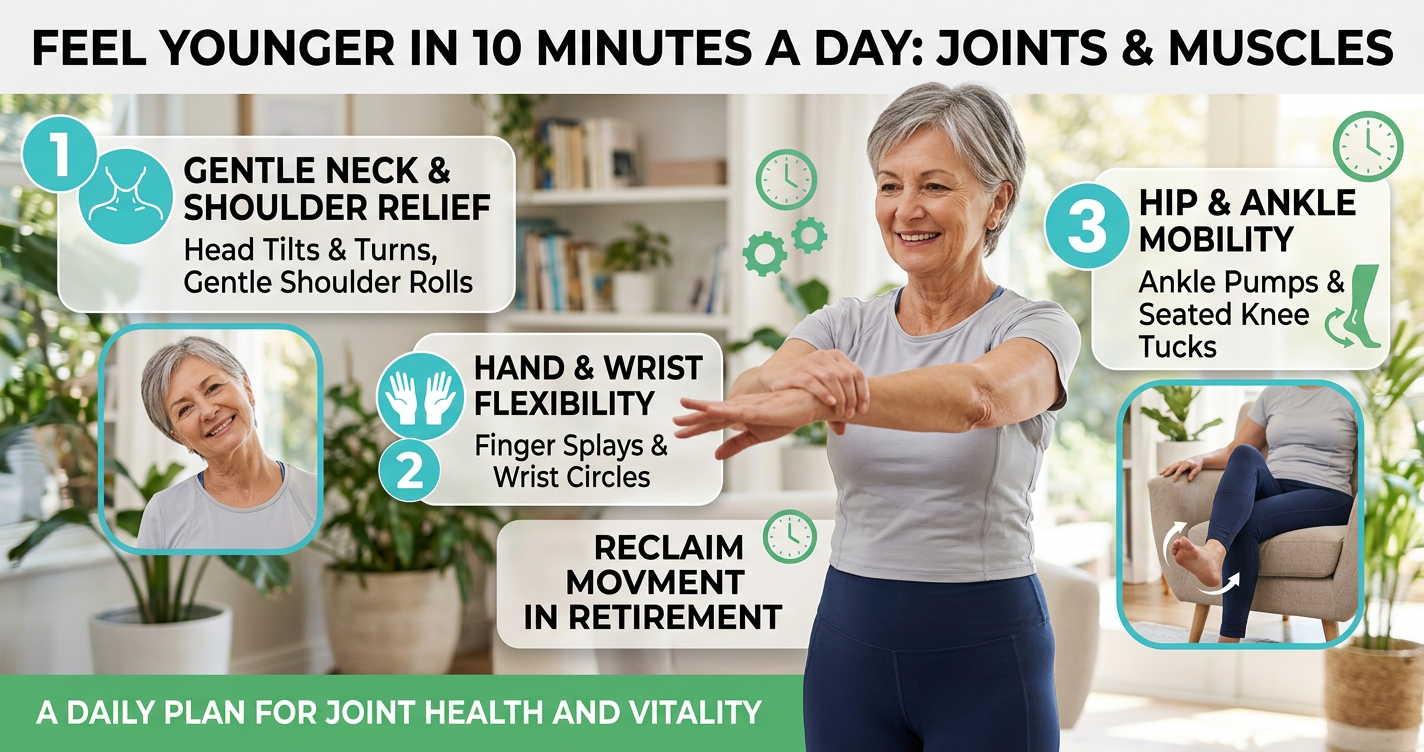
We begin with the neck and shoulders, areas where most people carry the bulk of their tension. Start with gentle neck semi-circles, moving your chin slowly from one shoulder to the center of your chest, then to the other shoulder. Avoid tilting your head backward, as this can compress the cervical spine. Follow this with "shoulder rolls"—shrugging your shoulders toward your ears and then sliding your shoulder blades down your back as if trying to put them in your back pockets.
Next, focus on the wrists and fingers. In our digital age (and even for those who enjoy gardening or knitting), the small joints of the hands are prone to stiffness. Perform "finger fans," spreading your fingers as wide as possible and then making a soft fist. Rotate your wrists in both directions to maintain the integrity of the carpal tunnel and improve dexterity.
Phase 2: Core and Spinal Fluidity (Minutes 4-6)
The spine is the central highway of your nervous system. Keeping it mobile is essential for overall retirement health. While seated or standing, perform gentle "torso twists." Keep your hips facing forward and slowly rotate your shoulders to the left, hold for a breath, and then rotate to the right. This micro-movement helps decompress the vertebrae and stimulates the core muscles that support your posture.
Pelvic Tilts: Small forward and backward tilts of the pelvis help release the lower back muscles.
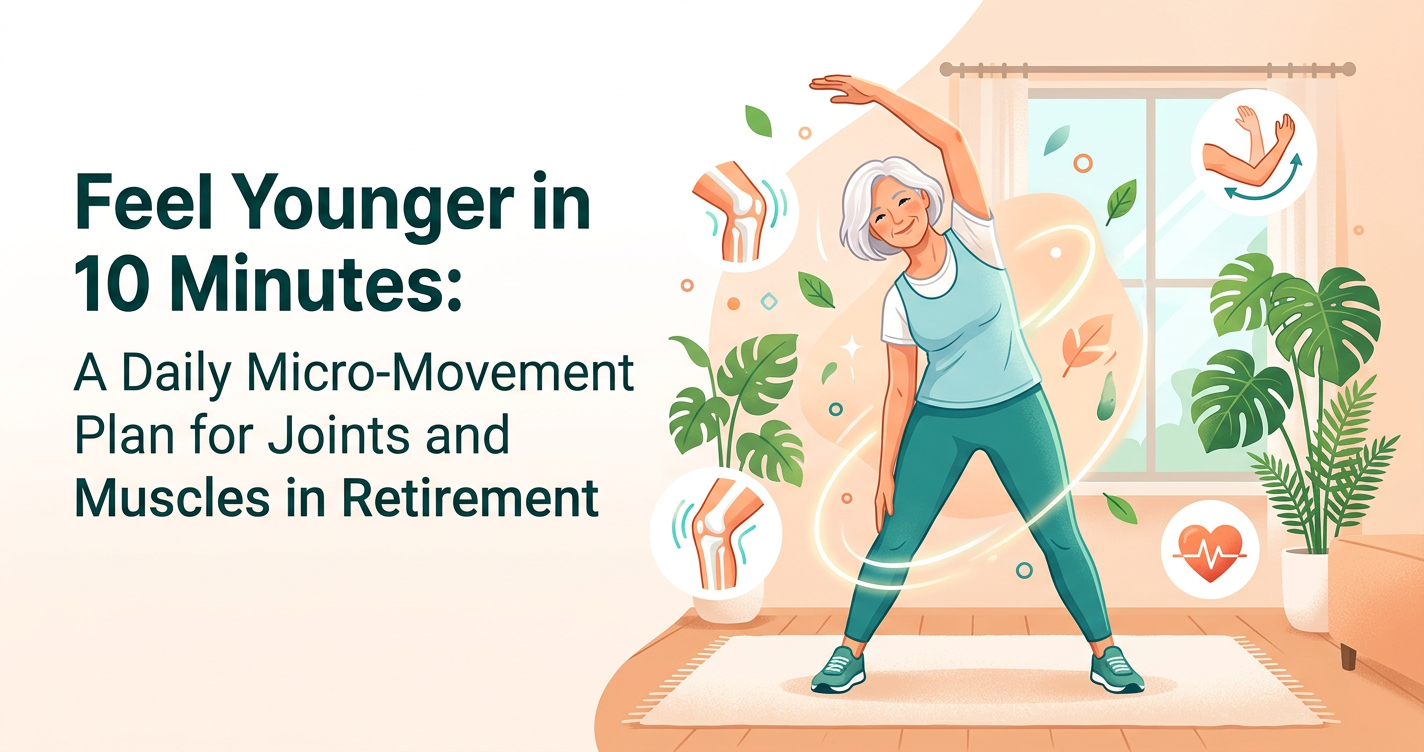
Lateral Bends: Reach one arm toward the ceiling and lean slightly to the opposite side to open the ribcage and intercostal muscles.
Seated Cat-Cow: Arch your back slightly while looking up, then round your spine while tucked your chin, mimicking the yoga pose from a chair.
Phase 3: Lower Body Activation (Minutes 7-10)
Finally, we address the hips, knees, and ankles. Since we spend a significant portion of our time sitting, the hip flexors often become chronically short and tight. While standing, perform "leg swings"—simply holding onto a chair for balance and swinging one leg forward and back like a pendulum. This uses gravity to open the hip joint without forceful stretching.
For the knees, perform "air extensions." While sitting, straighten one leg out in front of you, squeeze the thigh muscle (quadriceps) for two seconds, and lower it back down. Finish the routine with ankle circles and toe scrunches. These movements ensure that when you stand up after your 10-minute break, your base of support is stable and your joints are ready for the rest of the day's activities.
Beyond the 10 Minutes: Integrating Micro-Movements into Your Lifestyle
While a dedicated 10-minute routine is incredibly effective, the true power of micro-movements lies in their integration into your daily lifestyle. Retirement health isn't just about what you do during a "workout"; it's about the quality of your movement throughout all sixteen waking hours. Small, natural adjustments can prevent the accumulation of stiffness that often leads to chronic pain.
Consider the "Interrupt Rule." For every hour you spend in a stationary position—whether reading, watching television, or working on a hobby—aim to move for just sixty seconds. This could be as simple as standing up and sitting back down five times (mini-squats) or doing a quick lap around the kitchen island. These interruptions prevent the "setting" of connective tissue and keep your metabolic rate slightly elevated.
Creating a Proprioceptive Environment
You can also encourage micro-movements through your environment. For example, place frequently used items on higher or lower shelves, forcing a gentle reach or a shallow squat. If you have a backyard, walking on uneven surfaces like grass or gravel (with supportive footwear) engages the tiny stabilizing muscles in your ankles and feet that aren't used on flat linoleum or carpet. This type of "functional micro-movement" provides a constant source of relief and strengthening for the body.
The Mental Benefit: Mind-Body Connection
Beyond the physical benefits for joints and muscles, micro-movements have a profound effect on mental well-being. Retirement can sometimes bring a sense of stagnation. By checking in with your body through these small movements, you foster a sense of "physical mindfulness." You begin to notice the subtle signals your body sends you before they turn into full-blown aches. This allows for proactive care rather than reactive treatment.
Furthermore, the success of completing a daily routine—no matter how small—releases dopamine, the brain's "reward" chemical. This can help clear the mental fog of the 2 pm slump and improve your mood for the evening ahead. When you feel capable in your body, you are more likely to engage in social activities, travel, and the hobbies that make retirement fulfilling.
Hydration: Pair your micro-movements with a glass of water to maximize the lubrication of joints.
Breathing: Always breathe deeply during these movements; oxygen is the fuel your muscles need to repair and relax.
Gratitude: Use these ten minutes to appreciate what your body *can* do, rather than focusing on limitations.
In conclusion, feeling younger doesn't require a fountain of youth or an Olympic training schedule. It requires a commitment to the small stuff. By dedicating ten minutes to micro-movements, you can combat inflammation, skyrocket your range of motion, and experience a level of physical freedom that allows you to enjoy every moment of your retirement to the fullest. Start today—your joints will thank you tomorrow.