The Science of Eating for Your Brain: Beyond Just Calories
We’ve all heard the saying, "You are what you eat," but usually, we’re thinking about our waistlines or our cholesterol levels when we say it. Rarely do we stop to consider that our brains are also part of that equation. As we get older, it’s natural to worry about "senior moments," misplacing the car keys, or forgetting the name of that one actor from that one movie. But what if the secret to keeping your wits about you was sitting right there on your dinner plate? The emerging field of nutritional psychiatry and neurology is showing us that what we fuel our bodies with has a profound impact on cognitive decline, memory retention, and overall brain health.
Think of your brain as a high-performance engine. It’s always "on," even when you’re sleeping. It takes care of your thoughts, movements, breathing, and heartbeat. To keep that engine running smoothly, it requires a premium grade of fuel. That fuel comes from the nutrients in your food. When you provide high-quality fuel—vitamins, minerals, and antioxidants—it protects the brain from oxidative stress, which is essentially the "rust" that accumulates in our cells over time. Conversely, a diet high in processed sugars and "junk" can be like putting low-grade gas in a Ferrari; it might run for a while, but eventually, the engine is going to sputter.
The Inflammation Connection
One of the biggest culprits in age-related mental decline is chronic inflammation. While inflammation is a healthy response when you cut your finger or fight off a cold, long-term "smoldering" inflammation in the body can damage brain cells. Diets high in refined sugars and saturated fats promote this inflammation. On the flip side, diets rich in vegetables, fruits, and healthy fats help dampen it. When we talk about staying mentally sharp, we’re really talking about protecting the neurons in our brain from this inflammatory damage.
Neuroplasticity and Nutrition
For a long time, scientists thought that we were born with a certain number of brain cells and that was it. We now know that the brain is capable of "neuroplasticity"—the ability to form new neural connections throughout life. Certain nutrients act like fertilizer for the brain, promoting the production of Brain-Derived Neurotrophic Factor (BDNF). This protein helps grow new brain cells and keeps existing ones healthy. By eating the right foods, you aren't just preventing decline; you are actively supporting your brain's ability to rewire and adapt as you age.
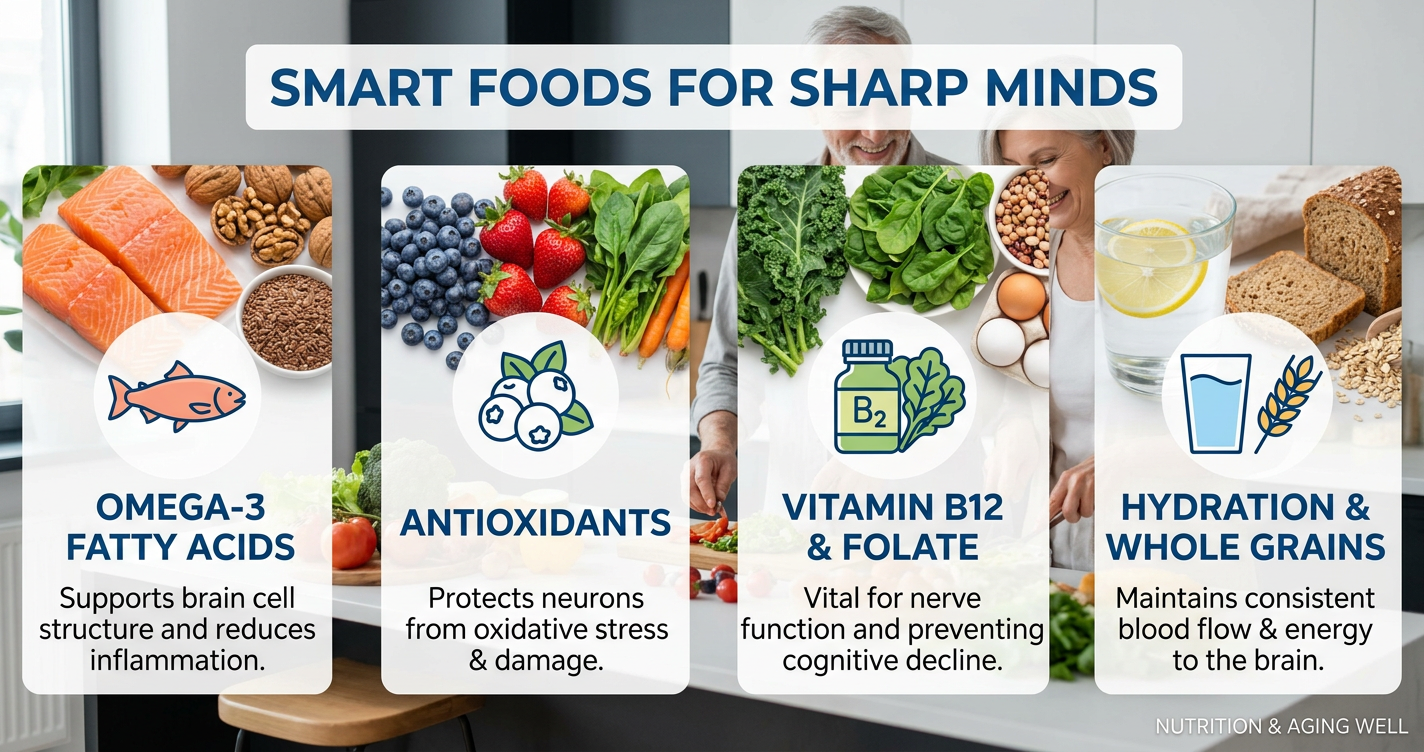
Omega-3 Fatty Acids: These are the building blocks of your brain cells.
Antioxidants: Think of these as the cleanup crew for cellular waste.
B-Vitamins: Essential for energy production and neurotransmitter function.
The Heavy Hitters: Foods That Keep the Gears Turning
If you're looking to overhaul your pantry for the sake of your gray matter, you don't need to look for "miracle" supplements. The most powerful brain boosters are found in the produce aisle. Let’s break down the "superstars" of a brain-healthy diet. These aren't just trends; they are backed by years of longitudinal studies showing a direct correlation between their consumption and better cognitive scores in older adults.
Leafy Greens: The Cognitive Fountain of Youth
If there is one thing you should add to your plate every single day, it’s leafy greens. We’re talking spinach, kale, collards, and Swiss chard. Research published in the journal Neurology found that people who ate at least one serving of leafy green vegetables a day had the cognitive focus of someone 11 years younger than those who ate little to no greens. They are packed with vitamin K, lutein, folate, and beta-carotene, all of which play a role in slowing down the aging process of the brain.
Fatty Fish and the Power of Omega-3s
Your brain is about 60% fat, and half of that fat is the omega-3 kind. This is why fatty fish—like salmon, trout, albacore tuna, and sardines—are often called "brain food." These fats are used to build membranes around every cell in your body, including your brain cells. They can improve the structure of brain cells called neurons. A diet rich in these fats has been linked to higher levels of gray matter in the parts of the brain that control memory and emotion.
Berries and Flavonoids
Berries, especially those with dark pigments like blueberries, blackberries, and strawberries, contain flavonoids. These are natural plant pigments that give berries their brilliant colors and also help improve memory. A study conducted by researchers at Harvard’s Brigham and Women’s Hospital found that women who consumed two or more servings of strawberries and blueberries each week delayed memory decline by up to two-and-a-half years. It turns out that those little bursts of sweetness are actually high-powered protectors for your hippocampus.
Nuts, Seeds, and Whole Grains
Don't forget the crunch! Walnuts, in particular, are excellent for heart and brain health because they are high in a type of omega-3 fatty acid called alpha-linolenic acid (ALA). Meanwhile, whole grains like oatmeal, quinoa, and brown rice provide a steady stream of energy. The brain can’t store energy, so it needs a consistent supply of glucose. Whole grains have a low glycemic index, meaning they release energy slowly, keeping you mentally alert throughout the day instead of causing the "sugar crash" that comes from white bread or pastries.
Turmeric: This yellow spice contains curcumin, which has been shown to cross the blood-brain barrier and has potent anti-inflammatory benefits.
Pumpkin Seeds: Rich in magnesium, iron, zinc, and copper—all vital for nerve signaling.
Dark Chocolate: High in cocoa flavanols which can improve blood flow to the brain (and it tastes great!).
Lifestyle Patterns: It’s Not Just One Meal, It’s a Habit
While it’s tempting to think that eating a bowl of blueberries once a week will solve everything, the real magic happens when these foods become a consistent lifestyle pattern. Scientists have spent decades looking at specific "diets" that seem to produce the most resilient brains. The winners are almost always the Mediterranean diet and the MIND diet. These aren't restrictive "fad" diets but rather frameworks for how to eat for the long haul.
The MIND Diet Explained
The MIND diet stands for Mediterranean-DASH Intervention for Neurodegenerative Delay. It’s a hybrid of two famous diets, specifically tailored to boost brain health. It prioritizes ten food groups: green leafy vegetables, all other vegetables, nuts, berries, beans, whole grains, fish, poultry, olive oil, and wine (in moderation). It also asks you to limit five "unhealthy" groups: red meats, butter and margarine, cheese, pastries and sweets, and fried/fast food. What’s amazing about the MIND diet is that even people who followed it "moderately well" still saw a reduced risk of Alzheimer’s disease.
Hydration and the Mental Fog
Often, when we feel "foggy" or "slow," the culprit isn't our age—it’s dehydration. Your brain is mostly water, and even mild dehydration can impair your concentration, short-term memory, and mood. If you find yourself struggling to find words in the middle of the afternoon, try drinking a large glass of water before reaching for a caffeinated snack. Keeping your brain hydrated ensures that the chemical reactions necessary for thinking can happen at peak speed.
The Role of the Gut-Brain Axis
We can't talk about diet and the brain without mentioning the gut. There is a "highway" of communication between your stomach and your brain, often called the gut-brain axis. Your gut bacteria produce hundreds of neurochemicals that the brain uses to regulate basic physiological processes as well as mental processes like learning, memory, and mood. For example, about 95% of the body's supply of serotonin, which influences both mood and GI activity, is produced by gut bacteria. Eating fermented foods like yogurt, kefir, and sauerkraut helps maintain a healthy "microbiome," which in turn sends "happy" and "clear" signals back up to your brain.
Ultimately, staying mentally sharp as you age is about creating a protective environment for your neurons. While genetics play a role, your daily choices have a massive impact on how those genes are expressed. By filling your plate with colorful plants, healthy fats, and lean proteins, you aren't just eating for today; you're investing in your future self. So, the next time you go grocery shopping, remember: your brain is on the guest list. Treat it well, and it will keep you sharp, curious, and vibrant for decades to come.