The invisible Crisis of Nutrient Density in Modern Produce
In an era where health-consciousness is at an all-time high, many of us spend a significant portion of our weekly budget at the produce aisle. We select the brightest peppers, the firmest apples, and the greenest kale, believing that we are fueling our bodies with the essential vitamins and minerals required for peak performance. However, a silent crisis is unfolding in our kitchens: the fruits and vegetables we consume today are often shadows of their nutritional ancestors. Understanding why this is happening is the first step toward reclaiming your health and ensuring that every bite you take is actually delivering the fuel your body craves.
Historically, our ancestors consumed wild plants that were dense with phytonutrients. Modern agriculture, while successful in feeding billions, has focused primarily on yield, pest resistance, and visual appeal. This has led to the "dilution effect," where the rapid growth of crops fueled by synthetic fertilizers results in plants that are larger and more sugary, but significantly less concentrated in minerals like magnesium, calcium, and iron. Furthermore, the modern food supply chain often requires produce to be harvested before it is ripe, meaning the complex chemical reactions that produce vitamins are cut short.
The Impact of Soil Health on Your Plate
The foundation of any nutrient-dense plant is the soil it grows in. Soil is not just dirt; it is a living ecosystem of fungi, bacteria, and minerals. Decades of intensive monocropping and the heavy use of chemical pesticides have depleted the microbial life in much of the world's topsoil. When the soil lacks diversity, the plants cannot absorb the trace minerals necessary for human health. This is why a carrot grown in depleted soil will have fundamentally different nutritional values than a carrot grown in regenerative, mineral-rich earth.
The Logistics of Lost Nutrition
Distance is the enemy of nutrition. From the moment a vegetable is harvested, its nutrient profile begins to degrade. For example, spinach can lose up to 50% of its folate and carotenoids within eight days of being picked if stored at room temperature. Considering that much of our produce travels thousands of miles across continents, by the time it reaches your local supermarket, it may have already lost a significant portion of its biological value. This transit time, combined with exposure to light and heat, triggers oxidation, effectively aging the vegetables before you even have a chance to cook them.
Vitamin C Degradation: Highly sensitive to heat and air.
Enzymatic Activity: Decreases as soon as the plant is severed from its life source.
Oxidation: Air exposure turns healthy antioxidants into inactive compounds.
Mastering the Art of Sourcing and Storage
If you want to maximize your nutrient intake, you must become a conscious consumer. It is no longer enough to just "eat your greens"; you must know where they come from and how they were handled. The most effective way to ensure you are getting the most nutrients from your fruits and vegetables is to shorten the distance between the farm and your fork. This means shifting your shopping habits away from global supermarkets and toward local, seasonal sources.
Why Local and Seasonal Should Be Your Golden Rule
When you buy local, the produce is typically harvested at its peak ripeness. This is the moment when the plant has maximized its production of secondary metabolites—the compounds that serve as antioxidants in the human body. Seasonal eating also aligns with our biological needs. Nature provides cooling, hydrating fruits in the summer and hearty, mineral-rich root vegetables in the winter. By following these cycles, you ensure that you are consuming food when its nutrient density is at its absolute zenith.
The Organic vs. Conventional Debate
While the debate over organic food often centers on pesticide residues, the real advantage of organic and regenerative produce lies in the phytonutrient content. Studies have shown that organic crops frequently contain higher levels of polyphenols and antioxidants. Because organic plants are not "protected" by synthetic pesticides, they must produce their own chemical defenses to ward off insects. These defense chemicals are exactly what we call "antioxidants" when we eat them. By choosing organic, you aren't just avoiding toxins; you are actively seeking out a more robust chemical profile.
Strategic Storage Practices to Preserve Quality
Once you bring your high-quality produce home, the clock is ticking. How you store your vegetables determines whether those vitamins make it into your bloodstream or go down the drain. For instance, most people don't realize that light can destroy the riboflavin in leafy greens, or that storing certain fruits together can lead to premature spoilage. Ethylene-producing fruits like apples and bananas should be kept away from ethylene-sensitive vegetables like broccoli and peppers to prevent them from "over-ripening" and losing their structural integrity.
Keep it Cool: Refrigeration slows down the metabolic processes of the plant.
Humidity Matters: Use the crisper drawer to maintain the hydration of leafy greens.
Don't Pre-Wash: Moisture on the surface of produce can encourage mold growth and nutrient leaching; wash right before consumption.
Root Vegetables: Store potatoes and onions in cool, dark, dry places—but never together!
The Case for Frozen Produce
Contrary to popular belief, frozen vegetables can sometimes be more nutritious than the "fresh" options in the grocery store. This is because produce destined for the freezer is usually picked at its peak and flash-frozen within hours. This process "locks in" the nutrients, preventing the gradual loss that occurs during long-haul transport. If you cannot find high-quality local produce, the freezer aisle is your next best friend for maintaining a high-nutrient diet.
Preparation Techniques: To Raw or To Cook?
The final hurdle in your quest for maximum nutrition happens in the kitchen. Many people assume that raw is always better, but the science of bioavailability tells a more complex story. The way you prepare a vegetable can either unlock hidden nutrients or destroy sensitive ones. Balancing your intake between raw and cooked foods, and choosing the right cooking methods, is essential for a truly nutrient-dense lifestyle.
Unlocking Bioavailability Through Heat
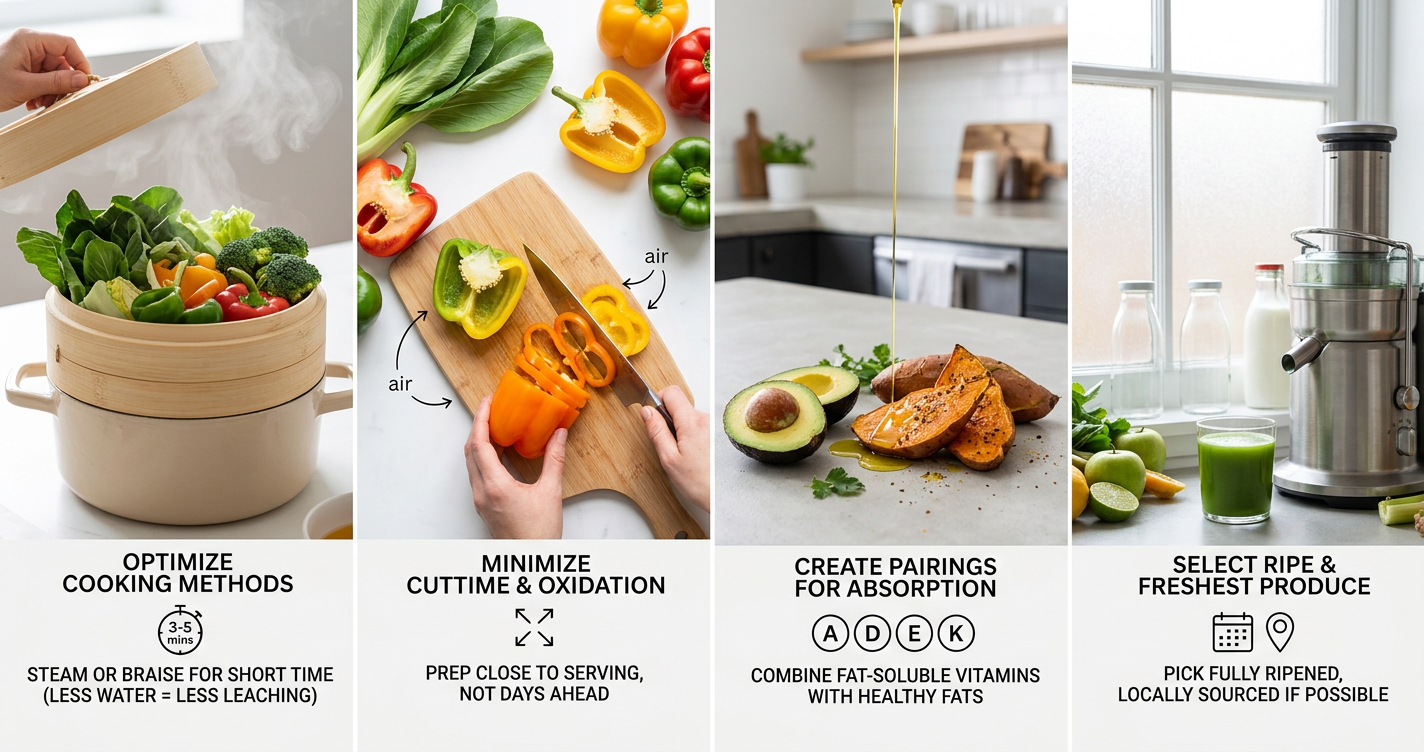
While heat can destroy Vitamin C and certain B vitamins, it is essential for making other nutrients accessible. For example, the lycopene in tomatoes—a powerful antioxidant linked to heart health—is tightly bound within the plant's cell walls. Cooking tomatoes breaks down these walls, significantly increasing the amount of lycopene your body can absorb. Similarly, the beta-carotene in carrots and the lutein in spinach are much more bioavailable after these vegetables have been lightly steamed or sautéed.
The Best and Worst Cooking Methods
Not all cooking methods are created equal. Boiling is often the worst offender, as many vitamins (specifically B-complex and C) are water-soluble. When you boil broccoli and pour the green water down the sink, you are literally discarding the nutrients you bought the broccoli for. If you must boil, try to use the water for a soup or sauce later. On the other hand, steaming, blanching, and stir-frying are excellent ways to retain color, texture, and vitamins.
The Power of Pairing: Synergistic Nutrition
Nutrition doesn't happen in a vacuum. Your body needs certain "helpers" to absorb specific vitamins. Fat-soluble vitamins, such as A, D, E, and K, require a source of healthy fat to be absorbed into the lymphatic system. If you eat a dry salad with no dressing, you might be missing out on the nutrients in your kale and carrots. Adding a splash of olive oil, a slice of avocado, or some toasted walnuts can increase your nutrient absorption by several hundred percent.
Vitamin C + Iron: Eat citrus or bell peppers with your spinach to increase the absorption of non-heme iron.
Sulforaphane Activation: If you cook cruciferous vegetables like broccoli, add a pinch of mustard seed powder to "reactivate" the cancer-fighting enzymes destroyed by heat.
Black Pepper + Turmeric: Always pair these together to increase the bioavailability of curcumin.
Mindful Consumption and Digestion
Lastly, remember that you are not just what you eat; you are what you absorb. If you are eating in a state of stress (fight or flight), your digestive system shuts down, and you will not efficiently extract nutrients from even the most perfect organic meal. Slowing down, chewing thoroughly, and enjoying the flavors of your food triggers the cephalic phase of digestion, signaling your stomach and pancreas to produce the enzymes necessary for nutrient breakdown. To get the most from your fruits and vegetables, your mind must be as present as your palate.
By shifting your focus toward nutrient density—from the soil and the source to storage and preparation—you can transform your diet from a simple routine into a powerful tool for longevity. Start small: visit a local farmer's market this weekend, buy a bottle of high-quality olive oil for your greens, and stop boiling your vegetables into oblivion. Your body will feel the difference almost immediately.