The Sinking Feeling: Why Your "Normal" Might Actually Be Dehydration
Let’s be honest for a second. How many of us actually hit that mythical "eight glasses a day" goal? Between the third cup of coffee and that afternoon soda, water often feels like a secondary character in the movie of our lives. Most of us assume that if we aren’t wandering through a desert with cracked lips and a literal thirst for survival, we’re doing just fine. But here is the kicker: dehydration isn't just an extreme state; it's a spectrum. There is a sneaky middle ground known as mild dehydration, and most of us are living in it right now without even realizing it.
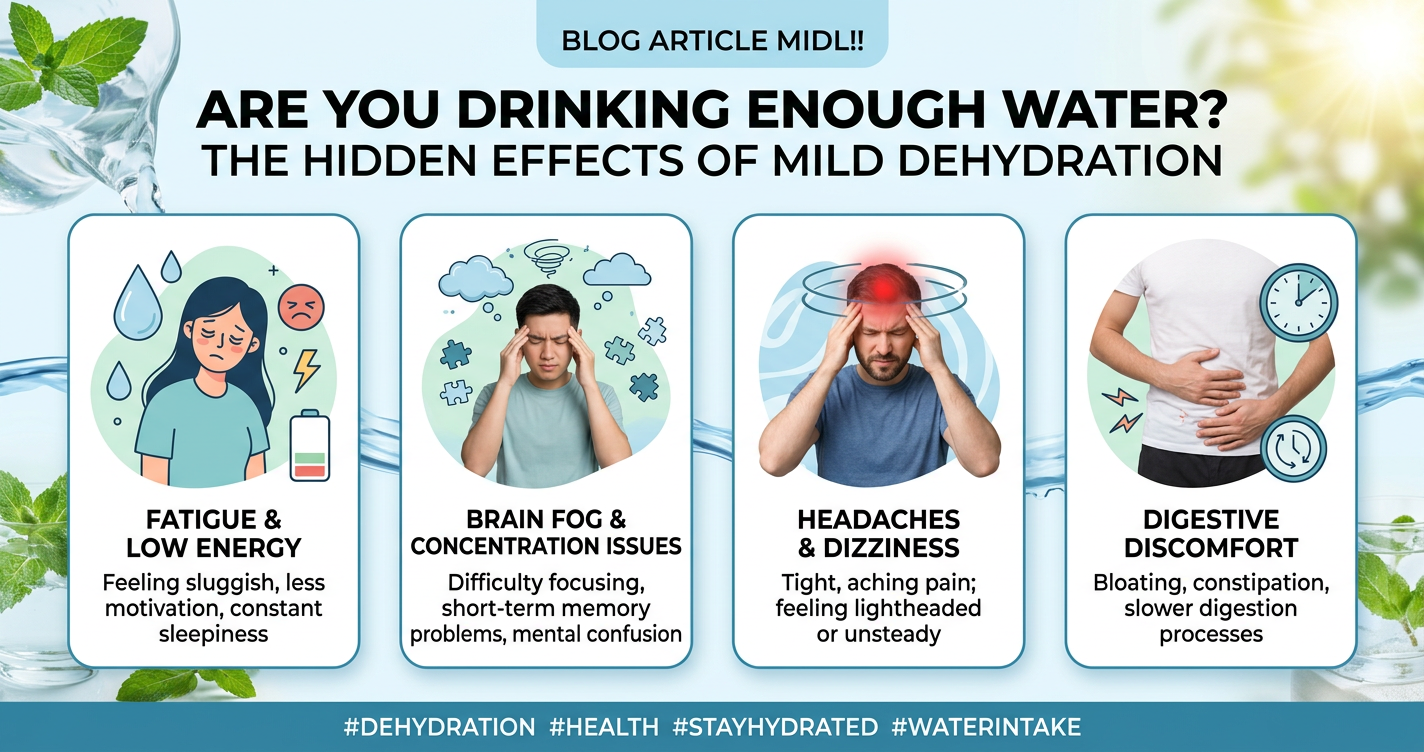
Mild dehydration occurs when you lose just 1% to 2% of your body’s water content. It sounds like a tiny margin, right? But your body is a finely tuned machine that relies on water for almost every chemical reaction it performs. When that percentage dips, the "check engine" lights start flickering, but they don't always look like thirst. Instead, they look like a foggy brain, a short temper, and a mysterious desire to nap at 2:00 PM. We tend to blame these things on a bad night's sleep or a stressful job, but often, the solution is sitting right in a reusable bottle on your desk.
The Brain Drain: Focus and Mood
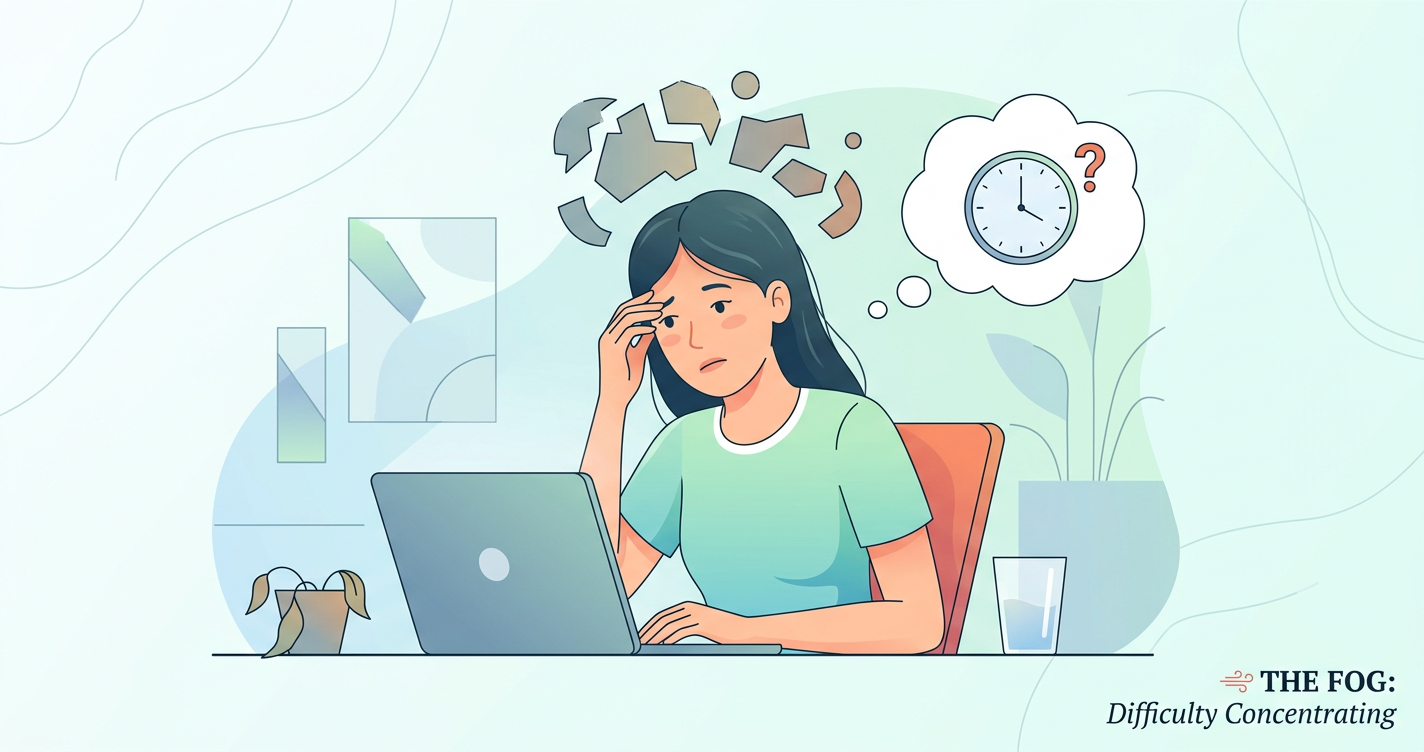
Have you ever sat down to work and realized you’ve been staring at the same email for fifteen minutes? Or maybe you found yourself snapping at a coworker over something incredibly trivial. Research has shown that even slight fluid loss can impair your cognitive performance. Your brain is roughly 75% water, and when it’s running low, it literally shrinks in volume. This leads to what many call "brain fog." You might feel less alert, struggle with short-term memory, or find it harder to solve simple problems. It turns out that being "hangry" has a cousin: being "drangry" (dehydrated and angry). If your mood is swinging like a pendulum, try a glass of water before you reach for the chocolate or another espresso.
The Physical Toll: More Than Just Dry Skin
While we might notice our skin looking a bit dull or our lips feeling chapped, the internal effects of mild dehydration are far more reaching. Water acts as a lubricant for our joints and a shock absorber for our brain and spinal cord. When you’re even slightly dehydrated, your blood volume actually decreases. This means your heart has to pump harder to circulate blood and oxygen throughout your body. This is why you might feel your heart racing a bit faster or why a flight of stairs feels like a marathon. It’s also a common, yet overlooked, trigger for tension headaches. Before reaching for the ibuprofen, ask yourself when you last had a full glass of H2O.
Physical Fatigue: Your muscles can’t function efficiently without proper electrolyte balance and hydration.
Digestive Sluggishness: Water is essential for moving things along. Without it, everything slows down, leading to bloating and discomfort.
Temperature Regulation: Water helps dissipate heat. If you’re feeling unusually hot or can't stop shivering, your hydration levels might be the culprit.
The False Hunger: Why Your Cravings Are Lying to You
One of the most fascinating—and frustrating—side effects of mild dehydration is how it messes with our hunger cues. The part of your brain called the hypothalamus is responsible for regulating both hunger and thirst. Sometimes, the wires get crossed. You might feel a gnawing sensation in your stomach or a sudden, intense craving for sugary snacks or salty chips. In reality, your body isn't asking for calories; it’s asking for fluid to help process nutrients and maintain energy levels.
This "false hunger" is one of the leading reasons people struggle with weight management or midday energy crashes. When we eat in response to thirst, we aren't actually satisfying the underlying need. We get a temporary glucose spike, followed by a crash, which makes us feel even more tired and—you guessed it—thirsty. Breaking this cycle requires a bit of mindfulness. The next time you feel a sudden urge to snack shortly after a meal, try drinking a large glass of water and waiting fifteen minutes. More often than not, that "hunger" will evaporate.
The Role of Glycogen
To understand why we crave sugar when we’re thirsty, we have to look at how the body stores energy. We store sugar in the form of glycogen. Releasing that glycogen into the bloodstream to be used as energy requires water. If you’re dehydrated, your body has a harder time accessing those energy stores. As a result, it sends out a signal for a quick hit of energy—sugar. By staying hydrated, you’re actually helping your body use the energy it already has more effectively, leading to more stable blood sugar levels throughout the day.
The Electrolyte Connection
It isn't just about pure water; it's about balance. Sometimes we drink plenty of water but still feel the effects of dehydration because we are low on electrolytes like sodium, potassium, and magnesium. These minerals are what allow the water to actually enter your cells rather than just passing straight through you. If you’ve been sweating or drinking nothing but filtered water, you might need a pinch of sea salt or a slice of fruit in your drink to help that hydration "stick."
Salt Cravings: Often a sign your body needs help retaining the water you’re drinking.
Sweet Cravings: Usually a sign your body is struggling to release glycogen for energy due to low water levels.
The Pinch Test: Pinch the skin on the back of your hand. If it doesn't snap back instantly, you're likely needing both water and minerals.
Small Changes, Big Results: Practical Ways to Stay Hydrated
Now that we know how much mild dehydration can mess with our heads and our bodies, the question is: how do we fix it without feeling like we’re tethered to the bathroom all day? The goal isn't to chug a gallon of water in one sitting. In fact, your body can only absorb so much water at once; the rest just filters through your kidneys and out of your system. The secret to effective hydration is consistency and "eating" your water through moisture-rich foods.
Start your day with a "water win." Before you even touch the coffee pot, drink eight to twelve ounces of water. You’ve just gone seven or eight hours without any fluids, and your brain is essentially a shriveled raisin at that point. Rehydrating first thing sets a tone for the rest of the day and jumpstarts your metabolism. From there, it's about making water the easiest choice. Keep a bottle in your line of sight. If you have to get up and go to the kitchen every time you're thirsty, you're less likely to do it when you're busy.
Infuse Your Way to Success
If you find plain water boring, don't force it—flavor it! Infusing your water with cucumber, lemon, mint, or berries adds a hint of flavor and a tiny boost of antioxidants without the sugar of sodas or juices. Additionally, remember that "water" doesn't just come from a glass. Many fruits and vegetables are over 90% water. Incorporating things like watermelon, celery, cucumbers, and strawberries into your diet contributes significantly to your overall hydration levels. These foods come with the added benefit of fiber and naturally occurring electrolytes, which help your body absorb the moisture more slowly and effectively.
Listen to Your Body’s Signals
Finally, the best tool you have is self-awareness. We’ve become so accustomed to feeling "fine" while slightly dehydrated that we’ve forgotten what it feels like to be fully hydrated. Notice the color of your urine (it should look like pale lemonade, not apple juice). Notice the clarity of your thoughts. Notice how much energy you have at 4:00 PM. Hydration isn't a chore; it's an investment in your daily performance and long-term health. You’ll be amazed at how many "health problems" simply disappear when you give your body the basic fuel it’s been screaming for.
The "One-for-One" Rule: For every cup of coffee or alcoholic beverage, match it with a full glass of water.
Set Reminders: Use an app or a simple phone alarm to nudge you to take a few sips every hour.
Invest in a Good Bottle: Sometimes, simply having a bottle you enjoy drinking from (whether it has a straw or a wide mouth) makes all the difference.
In the end, staying hydrated is one of the cheapest and most effective ways to improve your quality of life. It’s the ultimate "life hack" that’s been hiding in plain sight. So, before you click away to the next article, go ahead—take a big sip of water. Your brain will thank you later.